
• The move to the new server is done. There are some software and database maintenance updates in process. This has us passing the hat around to help out. We appreciate any donations. Seriously, even a dollar helps. The payment page may be found here - https://www.audiokarma.org/support.html

Tweeter Dome Damage Effect

Brewdawg

Member
Newbie question: When a tweeter dome is damaged (pushed in/dented), how much of an audible effect does it actually have? I've seen posts about the methods to repair, such as painter's tape, removal and gently pushing from behind, etc. I know it doesn't bring it back to perfection, but seems to work well enough for many.

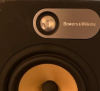
I ask because I'm looking for another set of speakers (used), and occasionally see some like this one:
upload_2021-12-15_15-21-55.png

Would it being misshapen (but still functioning) make the change in sound really noticeable to a non-audiophile like myself, if it wasn't easily repaired without removing it?
 
Register to hide this ad
As long as the domes have not suffered structural damage the one thing that will be altered is the normal dispersion pattern of the sound waves emanating from the tweeter. The effect this will have on the perceived sound is usually minor unless a person is a super critical listener positioned in front of the speakers in a sweet spot. The appearance of pushed in domes is usually more psychologically troubling than the sonic consequences.
 
As I layman, a crushed dome would suggest to me a disturbance in the resonance of the dome surface and its ability to create all frequencies—in addition to those dispersion impairments mentioned by stickman. If you could measure it, we would know. If you can't, and if you're old, you may not notice it compared to another in good shape. Is ignorance really bliss, even if your eyes tell you there's a problem?
 
Dispersion pattern as others have stated.
I have fixed dents similar to the one shown. While not perfect, the repair is much better than left alone.
There are two methods I have used. First, I put a small piece of tape on the eraser end of a pencil. Then carefully touch the sticky tape end to the tweeter dent. Many times you get just enough stickiness to pull the dent out.
Next, I have rigged a straw to a vacuum. It’s a pain to do because you have to go from a quite large tube to a straw tube. I did it by overlapping duct tape from the vacuum hose to the straw. I also make sure the slide on the vacuum hose used for drapes is wide open.
You can then turn on the vacuum and slowly bring the straw to the dent. BE CAREFUL! I’ve done this several times and never had it fail.
That’s my 2 cents.
 
I've also used the vacuum trick and also have had success.

Which B&W speakers are those? I got a set of DM604S3's a couple of years ago and I'm very happy with them.
 
I've also used the vacuum trick and also have had success.

Which B&W speakers are those? I got a set of DM604S3's a couple of years ago and I'm very happy with them.
They're the 685's. I'm thinking of getting them and taking the chance. Looks to me though, like owner tried to fix it already. I don't know how else it'd get 2 separate "dimples," leaving the center protruding. I might get them, and if it sounds bad enough, I could try tape/vacuum, etc. They're aluminum domes, and I don't know how much risk there is in damaging them further by trying to fix it. A quick DDG shows a replacement tweeter can be had for about $70. The speakers are semi-local, and price is far less than I'd have expected, especially since it includes stands.

Thanks, all!
 
Those look like metal domes, in which case you probably won't be able to do anything with them. I know from ruining a tweeter dome on an expensive Boston Acoustics center channel speaker. Didn't realize they were metal until they were already ruined. Been looking for a replacement for over 2 years.
 
They're the 685's. I'm thinking of getting them and taking the chance. Looks to me though, like owner tried to fix it already. I don't know how else it'd get 2 separate "dimples," leaving the center protruding. I might get them, and if it sounds bad enough, I could try tape/vacuum, etc. They're aluminum domes, and I don't know how much risk there is in damaging them further by trying to fix it. A quick DDG shows a replacement tweeter can be had for about $70. The speakers are semi-local, and price is far less than I'd have expected, especially since it includes stands.

Thanks, all!

I managed to blow one of the tweeters in mine and was able to get a replacement factory diaphragm for it. It was easy to do and cheaper than replacing the entire
tweeter.
 
I checked and the tweeter has an aluminum dome. Probably not fixable unless you can remove it and push out from behind. There were several on ebay.
 
I managed to blow one of the tweeters in mine and was able to get a replacement factory diaphragm for it. It was easy to do and cheaper than replacing the entire
tweeter.
Good to know. If it works out and I get them, I'll hit you up for tips & tricks.
 
If you search for "micro vacuum attachments", there are inexpensive vacuum attachments that are turnkey attaching to a regular vacuum hose. A lot of them have a hole in the side of the small suction inlet so you can control how much suction is actually applied with your thumb. These attachments are also handy for computer keyboard cleanup, cleaning circuit boards etc.

I used the micro vacuum attachment to fix a severely dented tweeter on my Allison 6's in the garage. I'm pretty sure there was a pretty big different in tweeter output (I agree with a prior poster that it's probably not just dispersion that is affected). I say I'm "pretty sure" because I could not have been less scientific in my approach. I just listened to jazz FM before and after. I wish I had cued up a recording before and after, but it was high-end shy before and much better after, so I think it made a significant difference.

If somebody is doing tweeter dome repair and has REW, it would be great to capture on-axis and off-axis before and after response characteristics. I'm not a big "data" guy in general, but it seems like it would reveal a lot in this case.

In the case of the aluminum domes, given that replacement tweeters aren't expensive, and maybe a replacement diaphragm being potentially even less expensive, there is no harm in giving the repair a go given there is a safety net. Aluminum is typically not cooperative though :), so probably won't work.
 
I always wonder if bad dents wont distort the voice coil as well. :dunno:

I've had good results from using Mortite. Take a ball and work and warm it in your hand...press it onto the dome with a slight twisting motion...then wait a bit until it cools back down. Pull it off then wipe off any residue...which is almost nothing more than a fingerprint would leave.

Remember to work it out opposite the angle and direction it looks like it was pushed in.
 
I see lots of B&W speakers for sale with pushed in domes, I also see replacement diaphragms for sale from China on eBay, always wondered if they would work as well as the B&W ones.
 
How about that...I was still on the fence about making an offer, and wondering about how hard it is to replace a dome...DDG'd "how to replace tweeter dome," and 4th video shown happened to be a B&W 68X series. Looks pretty easy, and could save the cost of a replacement dome or whole tweeter.
 
I did a titanium JBL tweeter a friend gave me. Turned out pretty well but it was easy to disassemble to get behind the dome.
Here is before, during the repair, and all back together:

51644998843_8f1fd1a4d7_b.jpg


51645626520_d94b32a29e_b.jpg


51644771731_8176bc0825_b.jpg


To be honest, the titanium felt a bit brittle but I figured with the foam damper to support the dome, it was pretty functionally as-new.
 
I have JBL speakers with the 066 tweeters.

I had one that was pushed in similar to your pic and I used an attachment to my house vacuum, created as tight of a seal as I could around the dented-in part by applying pressure to the vacuum attachment around the outside of the actual tweeter itself and voila! It popped out all nicey nice and sounded great to me
 
As I layman, a crushed dome would suggest to me a disturbance in the resonance of the dome surface and its ability to create all frequencies—in addition to those dispersion impairments mentioned by stickman. If you could measure it, we would know. If you can't, and if you're old, you may not notice it compared to another in good shape. Is ignorance really bliss, even if your eyes tell you there's a problem?

"IF I'M OLD"?
Since I'm old ..... ah, never mind.
I forgot what I was going to say.
 
Back
Top Bottom