• The move to the new server is done. There are some software and database maintenance updates in process. This has us passing the hat around to help out. We appreciate any donations. Seriously, even a dollar helps. The payment page may be found here - https://www.audiokarma.org/support.html

Upgrade Phono Preamp next?

Wray & Ting

Member
Hi all, I have a vinyl setup that I'm fairly happy with at the moment, but I'm always looking for the next weakest link to upgrade, especially if I can do it on the cheap. I'm wondering if the next move is to upgrade to a separate phono preamp. Here's my current signal path:

Planar 3 w/ R200 arm and AT-VM95ML cart -> phono stage of Optonica SM-3636 amp -> either computer sound card (needle drops) or amp for speakers or headphones

The amp is from '76 and still has the original caps, but I don't really know how much that would affect the phono stage. If the signal goes through the amp (to headphones) the signal is kind of soft and imprecise, which is totally different from how it sounds if the signal goes through the computer sound card to headphones (brighter, tighter). So, if the phono stage has degraded over time as well, maybe a standalone phono preamp would help. Does it sound like a decent entry-level phono preamp would be the easiest/cheapest way to improve my setup at this point? I have my eye on a used NAD PP2e.
 
Register to hide this ad
Hi, Your weakest link is the Rega Arm, then the cartridge, A more expensive phono amp will not be able to do much as the arm will be preventing the cartridge retrieving the information.

Cheers
 
Think you weakest link is your integrated amp w/phono-stage. As you said, the caps are old (44yr is quite old for 'lytics and your Optinica will be full of them). A full recap of same is where I would start. You will be pleasantly surprised how much better all your music will sound, not just from your TT.
 
I think a separate phono pre-amp would be a good move. The AT cartridges prefer a low capacitive load (100-200pF advised by AT), so choose one with low capacitance - there are quite a few with 100pF capacitance (you then add in the phono-cable capacitance to get the total load). The NAD has 200pF capacitance, so is a bit high.

I can't imagine why the R200 arm would be a weak link, apart from its disintegrating anti-skating belt, which means that your anti-skating is probably not adjustable unless you have replaced the belt. It's a very decent arm. I have used many different cartridges on it with oodles of detail!

Btw, what is doing the job of the phono-stage in the computer path? Also, how does the sound of your turntable through the Optonica amp compare with CD - do CDs sounds soft and imprecise via this path too? If so, a new amp may be warranted.
 
If you google Rega arm modifications you will be overwhelmed by how many there are. Maybe peruse them because some modifications you can do yourself.
 
Interesting. I have compared the phono sections of my two vintage integrated amps (Kenwood 600 and Pioneer A91D) to my phono stage (Dynavector P75 gen1) and, while the Dynavector was slightly better, the difference was pretty small (using a Denon DP72L table with curved arm and the Denon DL-103r cart) . Granted, the two integrated amps were top-of-the-line in their day, but your amp also came from the days when the phono stage mattered . My gut feeling is the weak link is the cartridge in your setup. Of course, without listening and trying some other things this is just a guess.

Having said that, having a dedicated phono stage opens up the possibility of running mc carts as well. It also means you are not tied to any one integrated for the phono stage. That's why I bought one.

Another thing to keep in mind is the quality of the headphone out on your amp. This may well be affecting your sound in a negative way.
 
Last edited:
Thanks to everyone who replied. I would expect no less given the breadth of expertise and points of view of AK members.

Hi, Your weakest link is the Rega Arm, then the cartridge, A more expensive phono amp will not be able to do much as the arm will be preventing the cartridge retrieving the information.

I'm sure this was meant to be helpful, but it misses the mark a bit for me. The R200 isn't a world beater, but it has just as many defenders as detractors. If I had access to tonearms under $100 I might consider something different, but I'm not looking to spend much at this point.

Think you weakest link is your integrated amp w/phono-stage. As you said, the caps are old (44yr is quite old for 'lytics and your Optinica will be full of them). A full recap of same is where I would start. You will be pleasantly surprised how much better all your music will sound, not just from your TT.

I completely agree that a full recap of my amp would be a rewarding project and would help more than just my vinyl playback. I have two sets of speakers that I definitely want to recap, and I haven't gotten to that much easier project yet.

I think a separate phono pre-amp would be a good move. The AT cartridges prefer a low capacitive load (100-200pF advised by AT), so choose one with low capacitance - there are quite a few with 100pF capacitance (you then add in the phono-cable capacitance to get the total load). The NAD has 200pF capacitance, so is a bit high.

I can't imagine why the R200 arm would be a weak link, apart from its disintegrating anti-skating belt, which means that your anti-skating is probably not adjustable unless you have replaced the belt. It's a very decent arm. I have used many different cartridges on it with oodles of detail!

Btw, what is doing the job of the phono-stage in the computer path? Also, how does the sound of your turntable through the Optonica amp compare with CD - do CDs sounds soft and imprecise via this path too? If so, a new amp may be warranted.

Thanks for reminding me about capacitance. I've heard people talk about matching that spec to their cart, but it's a consideration I had forgotten about. I have no idea what the capacitance of my amp's phono stage is, but it may be on the high side as well. I'll probably pass on the NAD preamp given its high capacitance.

We've talked before about the R200 (and I've read some articles from your website). I prioritized getting a line contact stylus and opted for the 95ML which has done wonders for playback of inner grooves, as well as records that exhibit sibilance. I have replaced the anti-skate belt and the tonearm wiring, and everything seems to be good there.

When the signal goes to the computer: turntable -> Optonica phono stage -> Tape out -> sound card. I do hear the same increases in brightness and tightness when playing back digital media through the computer's headphone jack versus the Optonica's headphone jack, so some of the difference is certainly the amp, just not sure how much if any degradation has occurred in the phono preamp caps.

If you google Rega arm modifications you will be overwhelmed by how many there are. Maybe peruse them because some modifications you can do yourself.

This is something I haven't really looked into, so thanks for the suggestion. Most of the articles refer to Rega RB series tonearms, but I'm sure there are modifications that can be done to the Acos made R200 as well.

One guess is that your soundcard uses an opamp, which will certainly sound different from a vintage phono stage.

Typically, phono stages don't have too many electrolytic capacitors, so it should be fairly quick and easy to change them out. The rest of the amp would probably also benefit from a recap. Otherwise, you probably wouldn't gain a lot by adding a separate phono amp.

The R200 has a reputation for being finicky but there is nothing wrong with it sonically, in my opinion.

I would absolutely expect the amplification to sound different between the sound card and the Optonica, even if both were built yesterday. If there aren't many degraded capacitors in the Optonica's phono stage, then maybe it sounds closer to spec than the rest of the amp as you say, and the sonic difference is due more to opamps vs discrete transistors. If I had a reasonable phono preamp to borrow from someone I might be able to answer this question fairly easily.

Interesting. I have compared the phono sections of my two vintage integrated amps (Kenwood 600 and Pioneer A91D) to my phono stage (Dynavector P75 gen1) and, while the Dynavector was slightly better, the difference was pretty small (using a Denon DP72L table with curved arm and the Denon DL-103r cart) . Granted, the two integrated amps were top-of-the-line in their day, but your amp also came from the days when the phono stage mattered . My gut feeling is the weak link is the cartridge in your setup. Of course, without listening and trying some other things this is just a guess.

Having said that, having a dedicated phono stage opens up the possibility of running mc carts as well. It also means you are not tied to any one integrated for the phono stage. That's why I bought one.

Another thing to keep in mind is the quality of the headphone out on your amp. This may well be affecting your sound in a negative way.

It's useful to me that you didn't hear tremendous differences between the phono stages of good integrateds and a standalone phono preamp. I'm guessing that the phono section of my amp would benefit from a recap, but as you say, there are other benefits to having a standalone preamp. As far as my cart goes, it may not be a heavy hitter in the grand scheme of things, but it's only a couple months old, and it was the only way I could afford a line contact stylus. I'm going to get my money's worth out of it :) I have no idea about the headphone out on my amp.

I guess I need to get my hands on another phono preamp, one way or another, and see if that makes a discernable difference. If it doesn't, then the weakest link in my setup probably lies somewhere more expensive, and I'll just enjoy what I have and keeping buying more vinyl to spin!

 
you did not reply to Crab33's question above but I was going to ask the same. Do CDs or digital source sound the same (low treble, soft, imprecise as you describe the phono) thru the amp as compared to on the computer ?
it would also be worth plugging the same headphones to the amp. that way you will be able to rule out if your speakers have low treble.

Or you could just get a new phono pre-amp AND an amp.
and new speakers :)
 
you did not reply to Crab33's question above but I was going to ask the same. Do CDs or digital source sound the same (low treble, soft, imprecise as you describe the phono) thru the amp as compared to on the computer ?
it would also be worth plugging the same headphones to the amp

I do hear the same increases in brightness and tightness when playing back digital media through the computer's headphone jack versus the Optonica's headphone jack
 
sorry missed that. then you likely need a new amp (and seperate phono preamp). if you can borrow or buy something with a return policy you can do further comparisons if you want.
It could be just one or two bad caps in the amp or it could be all. it could be resistors too as they change values over long time and shift bias points. So if you have the patience and know-how for diagnosing and replacing lots of components otherwise I'd say its time to say good bye to the amp.
 
if you can borrow or buy something with a return policy you can do further comparisons if you want

Yeah, this is pretty much what I need to make useful comparisons. I'll probably order something inexpensive that has a ~100 pF capacitance and do some needle drop comparisons and crude A/B.
 
I'll mention, you could subscribe to AK, for $25 for year. Would give you access to Bartertown where subscribes buy, sell and trade equipment. Can't guarantee you would find what you want there. Some phono preamps show up there time to time.

I see you have been a member a while. So you're likely already aware of Bartertown.

Edit: I've had good experiences buying on Bartertown. I bought a Mani and Emotiva XPS-1 phono preamps there. If you don't mind hassle of possibly reselling one you don't like. You can try one and get most of your investment back. I think there are a many AKers that churn through phono preamps, looking for improvement.
 
Last edited:
That is a very nice dual mono amp, with an especially good phono stage. They have some value in the marketplace, as is, but in my opinion is worthy of a "full restoration".
 
I agree that the last thing I think you should replace is the cartridge - the AT-VM95ML has a very strong following and it features the MicroLine stylus which is unbeatable for tracking.

If you want to try a good but cheap'n'cheerful phono pre-amp, I would suggest the ART DJ Pre II at around $65. It has 100pF capacitance but is switchable to 200pF.

P.S. Just read your responses again and it does seem that you need an alternative amplifier for comparison. If you get a new amplifier, I wouldn't worry too much about the in-built phono-stage as adding a good external unit is always a possibility.
 
Last edited:
I'll mention, you could subscribe to AK, for $25 for year. Would give you access to Bartertown where subscribes buy, sell and trade equipment. Can't guarantee you would find what you want there. Some phono preamps show up there time to time.

I see you have been a member a while. So you're likely already aware of Bartertown.

I was aware there was a marketplace here, but I haven't looked into using it. I'll keep that in mind, as I do like to window shop, and sometimes that leads me to actually buying something!

That is a very nice dual mono amp, with an especially good phono stage. They have some value in the marketplace, as is, but in my opinion is worthy of a "full restoration".

When I was looking to buy my first decent vintage amp, the dual mono design was the feature that really sold me. I'm glad to hear you think it's worthy of restoration, and as I mentioned above, I would like to do that at some point. I wasn't aware that its phono stage was particularly well-designed, but that also makes me think it is worth keeping around. I will probably still seek out another preamp to test with, as it's much easier than committing to recap my amp!

I agree that the last thing I think you should replace is the cartridge - the AT-VM95ML has a very strong following and it features the MicroLine stylus which is unbeatable for tracking.

If you want to try a good but cheap'n'cheerful phono pre-amp, I would suggest the ART DJ Pre II at around $65. It has 100pF capacitance but is switchable to 200pF.

P.S. Just read your responses again and it does seem that you need an alternative amplifier for comparison. If you get a new amplifier, I wouldn't worry too much about the in-built phono-stage as adding a good external unit is always a possibility.

Yup, replacing the cart for me is a non-starter. I researched my options and when for that specific cart/stylus to help me where I needed improvement most, which was improved tracking on inner grooves. I could have paid the same for a slightly better cart with an elliptical stylus, but I would probably have no further ahead versus the one I was replacing (Clearaudio Concept MM v1).

I've heard a lot of people using the ART DJ Pre, and it certainly comes up quickly in low-cost preamps with ~100 pF capacitance (or switchable). The other is the Rolls VP29 for about the same price (120 pF non-switchable).

Once I figure out the preamp situation, that will probably guide me in thinking about the amplifier itself.
 
I own the Optonica SM4646 and SM4545, both rebuilt. Both serve in secondary systems now, but the 4646 - very similar to your 3636 - served very nicely as a preamp in one of my primary systems for a while last year.
 
since OP is asking about a cheap-but-solid phono pre and mentionned the Rolls, I'll take the opportunity to ask everyone here : is the $30 more expensive Pro-ject Phono Box a solid machine?

this reviewer made comparisons between it, the Rolls, the Mani and the Art, and I gotta say, I'm really intrigued by this preamp now. The ''MM'' variant of phono box is presented here but the variant that accepts MC carts (called ''DC'' I think? their name are confusing a bit) has improved specs :

This second video has all units graded by the author according to their price performance(but mostly performance). all of them are cheap costing preamps :
 
Last edited:
I bought an ART DJ Pre II yesterday as my local music store had them on sale. I've made a few attempts so far to hear a difference between it and the phono stage in my amp, and so far the results are pretty inconclusive. I've been making short needle drops with both phono stages and then listening to A/B comparisons. There is a subtle sonic difference between the two, but I can't (yet) articulate how they're different. I've been running it at -4 dB on the gain trim, and 100pF, though I can't hear a difference compared to 200pF. I can't imagine I'd use the low cut filter as I perform a 20Hz high-pass on my needle drops anyway, and my amp has a low cut for general listening. The article on audiosciencereview shows that the low cut switch also imposes a sharp roll-off at 19kHz, which I can't necessarily hear, but it's a little weird. I've only powered it so far with the power supply it came with, but I've heard many others suggest it sounds better with a 12V supply instead of 9V, a DC adapter instead of AC, and especially 12V DC via battery. If I can't find a configuration that sounds better than my amp's phono stage I'll probably return it, because even though it's inexpensive, there's no benefit to keeping it if there's no tangible sonic improvement.

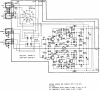
I've obtained my amp's schematic from VE and there are a few electrolytic caps in the phono stage, so there are probably some small gains to be had by replacing those, and of course, all the other dried out caps in the signal path. I can't read the schematic well enough to estimate the capacitance of the phono stage, but I am curious what it is.

In the end, I think the soft or imprecise sound I was hearing when using headphones connected to my amp is probably due to deterioration in the components of the amp's other circuits. The signal goes through so much more of the amp to get to the headphone out than the phono stage and tape out to get to my computer's sound card. Anyway, it's been a good exercise to try another preamp that doesn't noticeably improve my sound. I was hoping for some miraculous improvement, but it makes me appreciate my amp's phono stage more, and also motivates me to give it a full recap... someday.
 
Welllllllll.............. I won't expect much from a $65 phono-preamp so you likely got what you paid for. For me, "real" phono-preamps start on the high side of $500. Obvious, YMMV.

EchoWars (where are you???) always felt that most receivers/integrated amps in the '70-85 era had decent to very good (he was especially fond of the 1010/2010 Yamaha) built-in phono-preamps.

As for the caps in your receiver, the SM should also have a parts list. Just look at the number on the schematic (C110, for instance) and then look it up in the SM parts list. Other than ones that are directly in the signal path you are good going up in replacement value about 20%. Ones in the signal path are 'generally' 0.10 to 0.47 in value. Go up or down from there will roll off the lows or the highs as these are pretty well centered in the 20-20K range.
 
Welllllllll.............. I won't expect much from a $65 phono-preamp so you likely got what you paid for. For me, "real" phono-preamps start on the high side of $500. Obvious, YMMV.

Sure, I know it isn't a world-beater, I just thought if there was something out of spec with my amp's phono stage even a modest but new preamp would reveal that. Since it didn't, I guess my amp's phono stage isn't in as bad a shape as I thought. If recapping would freshen it a bit then it would probably serve me for a long time until I may benefit from / afford something better.

EchoWars (where are you???) always felt that most receivers/integrated amps in the '70-85 era had decent to very good (he was especially fond of the 1010/2010 Yamaha) built-in phono-preamps.

From what people have told me, it seems to be a basic truism that well-designed amps from the pre-CD era had great phono stages, and Sharp's Optonica line was no exception.

As for the caps in your receiver, the SM should also have a parts list. Just look at the number on the schematic (C110, for instance) and then look it up in the SM parts list. Other than ones that are directly in the signal path you are good going up in replacement value about 20%. Ones in the signal path are 'generally' 0.10 to 0.47 in value. Go up or down from there will roll off the lows or the highs as these are pretty well centered in the 20-20K range.

The service manual does include a parts list, and reading the schematic and replacing those components is something I shouldn't have any problem with. When I said I couldn't read the schematic well enough, I meant in order to estimate the phono stage's total input capacitance for matching to my cart, which recommends 100-200 pF. This value isn't given in the service manual specs, but I'm sure someone here could probably estimate it from a quick glance. I'll post it below in case anyone wants to take a crack at it.

optonica_sm-3636_phono_stage_schematic.png
 
Back
Top Bottom