
• The move to the new server is done. There are some software and database maintenance updates in process. This has us passing the hat around to help out. We appreciate any donations. Seriously, even a dollar helps. The payment page may be found here - https://www.audiokarma.org/support.html

Using telechron clock to use tube receiver as "alarm clock"

Michiganamps

Active Member
Hello all, I had what I think is a pretty cool idea tonight. I had an old tube radio that I had scavenged for parts over the years except for the clock! Seeing that the switch portion was rated for 1100 watts I had an idea! At 9.1 amps for 120v AC I'm thinking about using this clock to power my stereo which in turn would power up my phonograph! I need to restore the clock, which won't take too long I figure today and tomorrow, and shave down the wood cabinet to give it a 'sleek design, I can use it as a pretty unique alarm clock. Since the outlet on the receiver is just directly powered by the AC line, if I plugged in the phono, put the needle on the start groove of the record and set the clock (five minutes ahead of course!) When it powers up the record will start spinning as the amp warms up and 2-3 minutes later, viola perfect alarm clock! Has anyone ever thought of this? Or put it into action? I figured I'd post a thread to give some people some ideas :)
John
 
Register to hide this ad
The telechron clock movements are often gummed up because the grease turned to wax. The cases can be unsoldered with a torch, and guides exist on the internet. I have two clocks which require fixing the telechron movements, and haven't done either. I managed to get one again working by liberally applying silicone near the gearshaft, but it's not really a good fix.

Instead of using the internal relay to switch the load, it would be better to use that to control a TRIAC which does the heavy lifting. A thread on AK describes using a TRIAC to offload unobtainum power switches. Has schematics.
 
Telechron made clocks designed for this sort of purpose:
twomoreteles.jpg

The one on the left, obviously. It's a model 8B53, also known as the Organizer. Pulling the metal tabs around the dial allow for controlling the outlet on the back in 15 minute increments. Telechron made various other switching models, including the 8B50 Select-O-Switch, the 8B51 Controlla, the 8B52 Voyager, the 8B54 Radio Traveler, the 8H55 Selector, the 8H58 Select-O-Switch (yes, they re-used the name), among others. Note that all of these are 12 hour timers, so the system will turn on twice a day unless you intervene. Also, none of them offer a snooze button, sadly.
-Adam
 
Telechron made clocks designed for this sort of purpose:
twomoreteles.jpg

The one on the left, obviously. It's a model 8B53, also known as the Organizer. Pulling the metal tabs around the dial allow for controlling the outlet on the back in 15 minute increments. Telechron made various other switching models, including the 8B50 Select-O-Switch, the 8B51 Controlla, the 8B52 Voyager, the 8B54 Radio Traveler, the 8H55 Selector, the 8H58 Select-O-Switch (yes, they re-used the name), among others. Note that all of these are 12 hour timers, so the system will turn on twice a day unless you intervene. Also, none of them offer a snooze button, sadly.
-Adam
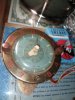
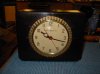
Those are beautiful clocks you have there! They really don't make stuff like they used to, that's for sure! The clock I have is the same way, it's a 12 hour clock. It has the following functions from being built in with a radio, on-off-auto (alarm), a knob to set the alarm, with a neat little disc where you have to count down how many hours from the current time to set the alarm at, and a delay function, which to the best of my knowledge is a snooze type function I believe. It's from a philco model from 1952. It's a pretty cool looking clock, with a nice bright blue dial and a brass bezel around it! I think what I'm going to do is cut the chassis in half and run a toggle switch to bypass the clock altogether and then add a light to let me know when the alarm is set so I know that the alarm is active. It's actually kind of funny I got lucky and have an octal socket relay in the garage I think will work perfect for this application! I will post photos in a second :D I'm way to excited about this than I should be haha
 
Telechron made clocks designed for this sort of purpose: ...The one on the left, obviously. It's a model 8B53, also known as the Organizer. Pulling the metal tabs around the dial allow for controlling the outlet on the back in 15 minute increments.

Yes, that's a great piece of technology!

I have one of those in storage, which I bought to use as an alarm clock. I totally forgot it was made by Telechron. It's an amazing piece. Mine also has an outlet on the back to control a device which I would not directly use. Low-voltage TRIAC would be fine.

The problem, alas, is the steel was not so great in those days. Mine has just enough corrosion which prevents proper clock movement and setting, and the tabs are all dusted in rust. Requires a disassembly, trip to the electrolytic rust remover or maybe just some time with metal polish and a buffing wheel, and rebuild. Which is why it's somewhere buried in a box. The other issue is that the plastic case is very brittle. Some sort of formaldehyde phenolic. It looks a lot more substantial than it is, at least until the back comes off.

Definitely don't commonly see clocks like this. Good post.
 
8H58-1.jpg
For a while I used to use my 8H58 for morning timer duty with my tube amp. These Telechron clocks are great when they work. Unfortunately, the switch mechanism jammed one morning and made me late for work. I love the look of the clock but after that episode, I took it out of service.

Now I have my amp plugged into one of the Belkin WEMO switch modules which is a much better alternative for me. I can use my cell phone to program the switch and can check it from anywhere on the planet, so I don't have to feel neurotic about having left the amp on when I'm out of town.
 
Those are beautiful clocks you have there! They really don't make stuff like they used to, that's for sure! The clock I have is the same way, it's a 12 hour clock. It has the following functions from being built in with a radio, on-off-auto (alarm), a knob to set the alarm, with a neat little disc where you have to count down how many hours from the current time to set the alarm at, and a delay function, which to the best of my knowledge is a snooze type function I believe. It's from a philco model from 1952. It's a pretty cool looking clock, with a nice bright blue dial and a brass bezel around it! I think what I'm going to do is cut the chassis in half and run a toggle switch to bypass the clock altogether and then add a light to let me know when the alarm is set so I know that the alarm is active. It's actually kind of funny I got lucky and have an octal socket relay in the garage I think will work perfect for this application! I will post photos in a second :D I'm way to excited about this than I should be haha
Yeah, that's typical of Telechron's clock radio movements. Telechron produced some of the first bedside clock radios ever in the form of the 8H59 and 8H67 in the mid '40s, and supplied clock movements to just about every manufacturer during the '50s and '60s for use in their own clock radios. Even some Sony clock radios can be seen to sport the words "Telechron Motored" in the center of the dial. Telechron themselves used these movements as part of their later lamp timers, like the 8H61 "Switch Alarm", the 8H64 "Tunealarm", and the unique 8H57 "Lite-Call", which was meant to flash a table lamp on and off when the alarm was triggered, similar to Westclox's famous "Moonbeam" light-up alarm clock.
-Adam
 
That's a different type of movement, I think. May be a conventional movement Does it have the sealed small induction motor? That's the kind I meant that's sealed. I've seen lots of clocks with that type.

This is the H type that my clocks have: http://telechronclock.com/page5.html

If you look at the rebuilding page on that website you'll see why I didn't yet take mine apart.
Yeah, it's the type H I've been reading about, I have white lithium grease in a can I'm going to heat it and spray it in the little rudder gear
 
Yeah, it's the type H I've been reading about, I have white lithium grease in a can I'm going to heat it and spray it in the little rudder gear

I suggest not using that.

A lightweight oil will enter in the gap around the shaft and gradually soften the hardened grease.

Like any grease, lithium grease is an oil plus a thickener, in this case a metallic soap. You don't want a thick lubricant, you want thinner to loosen up what's in there. The spray can adds some solvent and you don't know what that will do to the plastics inside the motor.

I suggest using turbine oil or silicone.
 
I suggest not using that.

A lightweight oil will enter in the gap around the shaft and gradually soften the hardened grease.

Like any grease, lithium grease is an oil plus a thickener, in this case a metallic soap. You don't want a thick lubricant, you want thinner to loosen up what's in there. The spray can adds some solvent and you don't know what that will do to the plastics inside the motor.

I suggest using turbine oil or silicone.
I didn't think about that.. I have been waiting for a couple responses to see my best route to plan how to go about fixing this part.it used to work very loudly, but I let it sit for a couple years, while I worked on other projects. When I got back to it the motor was seized. I have heard that if you fix them correctly it will be almost dead quiet.
--john
 
I didn't think about that..

Nobody expects the lubricant inquisition.

I have been waiting for a couple responses to see my best route to plan how to go about fixing this part.it used to work very loudly, but I let it sit for a couple years, while I worked on other projects. When I got back to it the motor was seized. I have heard that if you fix them correctly it will be almost dead quiet.

This is true. If you hear the ticking sound that's unbalanced and wearing. This is why I'm not using my clocks. Erratically runs, but it's clearly not happy.

I suspect yours just has congealed grease, and the heat of operation either gradually worked the solids in to interfere with the armature so it jammed, or finished congealing the grease into wax.

Solution is disassembly with a torch, followed by a thorough cleaning and degreasing using a solvent, reassembly with thinned silicone grease, and taping it together, maybe using a tack-solder point, but not fully canning it. Should forever last if properly cleaned and lubed. Look at the guides on the interwebs.

Many of those older motors used brass bearings which absorb oil. My venerable table fans are like that, including the Westinghouse which was my dad's in college. Properly lubricated, and regularly re-lubricated, they'll run 24-7-365 for my life and beyond.
 
Back
Top Bottom