
• The move to the new server is done. There are some software and database maintenance updates in process. This has us passing the hat around to help out. We appreciate any donations. Seriously, even a dollar helps. The payment page may be found here - https://www.audiokarma.org/support.html

Vellum Replacement

Mike Sweeney

Well-Known Member
So I know everyone uses vellum paper for their light diffusing material. And I know there are discussions as to paper weight, yellowing etc.

Has anyone tried photography filter paper like Lee "Opal" diffuser or other variant? I ask because before I came here, I used to shoot professionally and I lived on that stuff with strobes. It comes in different weights and styles. And it's light-fast.. strobes are significantly more powerful then the itty bitty LEDs. And most of them are synthetics like spun Tyvek so it's pretty stable.

https://www.amazon.com/Opal-Frost-Filter-Sheet-410/dp/B0089V884C/
 
Register to hide this ad
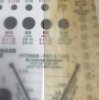
Here is what Rosco 116 looks like compared to the old yellowed vellum in my marantz 2230. It's thinner but the diffusion is almost the same when I tested it with an LED flashlight about 2 inches away. I would use my 2230 but I've got one channel taken apart right now :) the flashlight is five LEDs in a circle so at 2 inches, it's all blended together. 24 inch x20 inch piece of tough white is 7 bucks at most well equipped camera supply shops that deal in strobe photography or cinematography
 

Attachments

  • EDFB743A-FA79-4491-B97C-7BE589DBF8F8.jpeg
    EDFB743A-FA79-4491-B97C-7BE589DBF8F8.jpeg
    39.2 KB · Views: 43
  • 5D0DC694-9005-439E-80B1-4BF56C601DC5.jpeg
    5D0DC694-9005-439E-80B1-4BF56C601DC5.jpeg
    61.1 KB · Views: 38
Acid free vellum paper won't yellow since it's used for archival purposes (last a long time too, 1000 years). I would get that (note, most paper today is acid free due to changes in manufacture).

Tyvek is polyethylene so it very likely has been borated and will yellow.
 
Acid free vellum paper won't yellow since it's used for archival purposes (last a long time too, 1000 years). I would get that (note, most paper today is acid free due to changes in manufacture).

Tyvek is polyethylene so it very likely has been borated and will yellow.

Your comments make me wonder about what kind of aging tests have done against TYVEK.. ( I know, rathole :D ) so far I've found accelerated testing for 10 years under some pretty harsh conditions including gamma radiation, heat, moisture, dry heat, cold and so on. Zero failures on packaging or integrity of the material. I'm thinking that it's tougher then we think. And the LEDs wont produce anything like the test environment that it's be subjected to.. just plain old age :) And I've seen "archival" paper and inks react badly with UV and airborne pollutants so acid free is a help but not a cure all. I did look to see if LEDs put out any UV and it's zero to minimal for the new LEDs. Unless you crank some serious power out of them. This is actually pretty interesting stuff so I'm going to keep reading some more tonight :)
 
And I've seen "archival" paper and inks react badly with UV and airborne pollutants so acid free is a help but not a cure all.

True that.

In the late 1990s I bought one of the first wide-format inkjet printers released by Epson. It cost about $1,500 plus another $300 for a FireWire interface instead of a Centronics parallel port which was like drinking through a cocktail straw. (USB? USB? You kids and your modern technology!) The ink was quoted as being archival for a millenium. Ummm, not so much. Turned out to be under ten years before the colors shifted. Epson told me to go pound sand when I explained it was unsuitable to have color drift in photographs as I should have noticed this inside the warranty period of one year. I can tell exactly you how many Epson printers I bought after that.

Inks comes as metal pigments or dyes. The pigments tend to be far more stable in the presence of UV, NOX, and oxygen, as a general rule, than are the dyes. But pigments are much more expensive to make. So many of the aftermarket inkjet kits use dyes, because consumers usually can't tell the difference or don't care about longevity.
 
yeah.. I learned all that with my Epson 1280 printer and my CIS ( continuous ink system). To get the inks to last, they had to be coated after printing with a lacquer. But the pigments are definitely a step up. And that is where I saw paper fail just from exposure to various stuff in the air. When you pull a sheet of expensive printer paper out and you can see the outline of the piece on top of it, it's not stable. And "vellum" paper is not the 500 year old vellum of yore. That was made from very thin skins.. the stuff we call vellum is paper, not treated skins. So acid free would be a step in the right direction.
I did find this:
"Acid free means that the paper’s pH is 7.0 (neutral) or higher (alkaline). Acid free papers will last up to 200 years under normal use and storage conditions." I'm guessing we will not see 200 years on our audio gear :D And I wouldn't call it "stored properly". So I'm guessing every 30 years we need to set a reminder to replace our caps and vellum :D
PS.. I had fun chasing down some of this info.. learned a few things along the way. That makes it a win for my book ..
 
There was a product called 'frosted Mylar' if I recall correctly, that was widely used for plotting PCB artwork back in the glory days of pen plotters. I suspect it would hold up pretty well as a light diffuser in tuner dial lighting applications.
 
Back
Top Bottom