• The move to the new server is done. There are some software and database maintenance updates in process. This has us passing the hat around to help out. We appreciate any donations. Seriously, even a dollar helps. The payment page may be found here - https://www.audiokarma.org/support.html

VHF Hi/UHF for FM?

oldflame

AK Subscriber
Subscriber
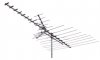
I'm thinking a new "extreme fringe" rooftop antenna, with amplifier, should be satisfactory for FM & TV. I'm about 40 miles from the FM stations, in the same direction, and indoor rabbit ears already give fair reception. This particular antenna is larger than the smaller ones usually installed here, but it's only the UHF elements that are extended. It looks like there's only one VHF element on the back side.

Providing the ant/amp doesn't block FM, might VHF hi-band be close enough even though the frequencies are right below TV channel 7? Or, does that depend on the particular antenna?
 
Register to hide this ad
FM isn't right below channel 7 (it's low band, right below channel 6). There
will be some loss of signal with a hi-band-only antenna, but it will probably
get stations at 40 miles.

Just checking... Solid Signal has three different combo antennas that
include FM. This one looks like a clone of an old Philips model I have
that pulls in 100 mile stations regularly without an amp...

8200XL.JPG
 
Thanks RxDx. You're probably right that I'm close enough that the TV antenna should work, especially moving it to roof-top with an "embedded" amp.

Not that it matters much, but I continue reading conflicting info re. channels. As you've posted I've seen FM being listed below TV Ch 6 ( low band) and other sources claim between ch 6 & 7. One list I have indicates that TV ch 6 is from 82 - 88 MHz which is right below FM.

Apparently, info on FM blocking isn't published by antenna manufacturers or understood by current installers. I'm hoping new antennas and unadjustable amps don't automatically block FM. If a separate FM antenna is necessary is 6' below the UHF sufficient spacing? It may have to sit right above the tripod, which may be less that ideal, but maybe OK. Any suggestions?
 
Channel 6 is below FM and has been since 1945. Any other listing
is probably from before that date.

If a combination TV/FM antenna is advertised for FM, it's highly
unlikely FM is blocked. Check with the manufacturer (or seller).
Typically there's an element that can be shortened to block FM.
 
I'm thinking that today's digital TV bands are way up in the UHF range while the FM is still down low in the VHF. My digital antenna still does do a pretty good job on FM with the FM block turned off on the antenna preamp. I'm in a deep fringe area so I don't use any splitters, just an A/B switch to go from TV to FM.
 
I'm still trying to get useful info from the manufacturer who's tech dept. rep. is less knowledgeable than I am. The amp is "embedded" and has no adjustment. The antenna has no FM blocking elements so maybe I'll be OK. The installer, while having a reliable reputation and reasonable prices, is even less in the loop technically.

However, the guy will install everything my way, including an 8' ground rod with my own double run of 10ga copper wire, which I already have in excess. In our rural county antenna installations aren't checked for code violations and often don't use a separate ground cable.

Would you recommend a gas-discharge (or other type) lightning arrester rather than only a normal grounding coupling for the cable? I know it won't protect me from a strike but maybe a heavy static discharge.
 
I'm of the mind to satisfy my paranoia, insurance policy, and codes,
then disconnect everything when not in use. What I actually do
is disconnect when weather threatens. As you point out, there's
no way to win an argument with lightning.

I have a rooftop rotor, mounting mast and antenna grounded
separately to an 8' rod, which is bonded to the house breaker box.
Coax feeds through typical grounding connectors at the 8' rod.
 
Channel 6 is below FM and has been since 1945. Any other listing
is probably from before that date.

If a combination TV/FM antenna is advertised for FM, it's highly
unlikely FM is blocked. Check with the manufacturer (or seller).
Typically there's an element that can be shortened to block FM.
Ya, I remember being amused as a kid to find that I could listen to local TV Channel 6 at the bottom of the dial. :D
 
BTW, after the old roof-top antenna/amp pooped out last year, I bought a common ~$40 8-element RCA UHF/VHF antenna and set it on top of the insulation in the attic for a "temporary" fix until deciding how to proceed. That one has a couple larger dipoles for VHF and works fine for FM too. I can always use that if the new one doesn't cut the mustard.

Surprisingly, a very small adjustment make a huge improvement on a few UHF stations. This small antenna should have a broad reception pattern and worked well on most other channels. All the TV stations are in the same close direction, so I'm amazed such a small tweak would make an improvement. I'm in the middle of a residential area with no tell structures, but might reflections be affecting my reception angle?

I hope it's OK that I started a separate thread regarding just the physical installation, because a couple things are repeated. I didn't want to clutter this one too much.
 
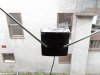
Finally got that new TV antenna up on the roof a few feet higher than the 35 year old combo, with new RG-6 feeding three TVs & a tuner. Even though the antenna has no dipoles for VHF, the amplified bow-tie, alone, supplies enough signal-strength to pull in noise free stereo FM signals from about 40 miles away.

After repairing the amp for the attic mounted, small, VHF/UHF antenna, that one also provides decent reception at the end of 75' of old RG-59. I'm surprised both antennas work as well as they do.
 
I may have found the reason the new antenna is advertised as VHF-hi & UHF and works well for FM too - even though it only has a bow-tie active element. A 1963 publication about antennas indicated that the large surface area of a bow-tie increases bandwidth. This antenna appears to have a larger than usual bow-tie.
 
Yes, 8-Tracked, I may end up using that antenna or a folded-dipole version for omni reception. Multipath is almost non-existent and the FM stations are in several directions. I'm receiving some signals off the side of the existing attic antenna, but at reduced signal strength, so that Winegard should do the trick.
 
This is my FM analog on air non amplified 100% passive antenna solution. Till further notice :D

IMG_20220512_131400792.jpg IMG_20220512_131408869.jpg
 
Last edited:
Yes, 8-Tracked, I may end up using that antenna or a folded-dipole version for omni reception. Multipath is almost non-existent and the FM stations are in several directions. I'm receiving some signals off the side of the existing attic antenna, but at reduced signal strength, so that Winegard should do the trick.
Are you shure your FM multiplex board can't use a capitor etc refurbish or alignment? I say that. On my aligned Sansui 9090 (which i know can use partly a preamp recap) I loose 50% percent of analog on air broadcast's stereo multiplex signals compared to my 100% fit and healthy Pioneer SX-838 I found out yesterday!. 50% of all dx and some local even fm stereo on air channels, are only in mono to listen on this Sansui, compared to the Pioneer. The Pioneer for example pulls in the full 100% of the received FM stereo channels in stereo. And that wile in healthy state my Sansui has the better FM band multiplex RX on air factory specifications.
In other words. Could your tuners or receivers maybe need some FM multiplex (and AM also?) alignment and a tunerboard recap, or both. Or just some air and deoxit cleanig maybe! Just trying to help, course it could be part of the problem?
Note: My indoor analog FM antenna is 100% passive, non amplified thus!
 
Last edited:
Hello again 8T, what I meant to indicate is that my tuners will pull in some stations even with the directional TV antenna aimed 90deg away. I'm thinking that since I don't experience multipath distortion, the antenna you and others suggested should work better at receiving multidirectional signals, being an omni. Do I understand this correctly?

Do you know if a folded dipole version of that Winegard you linded too has any advantages or disadvantages? Thanks.
 
Would you recommend a gas-discharge (or other type) lightning arrester rather than only a normal grounding coupling for the cable? I know it won't protect me from a strike but maybe a heavy static discharge.

Yes, and can mitigate a direct lightning strike damage, and very nearby strike`s EMP, if properly installed..

As I`ve directly experienced here in the upper portion of FL.`s infamous "Lightning Alley" a direct strike to a log periodic antenna (a similar to a VHF/FM/UHF TV ant, but mounted vertically) in the summer of 1997.
The strike damaged (vaporized !) the coax to the ant. connection, but zero damage to my multiple connected $$$ HQ VHF/UHF scanning receivers.
And multiple very nearby lightning strikes to my house that killed tall (~ 100 ft. high) pine trees in my yard (~ 20ft distant from the antennas & the room with the receivers) and my next door neighbor since. No damage to all protected electronics with the exception of under rated & inexpensive to replace OEM switching type wall wart PSs.

For best protection results the ground connections for the ground block/surge protectors should not only be low resistance connected to the pole low to the earth before the coax is entering the building and it`s dedicated 8 ft. ground rod, but best results are obtained connecting that separate grounding system to the house`s main outside power meter`s ground rod connection`s copper wire if possible to help minimize (help equalize any voltage/current difference between the 2 earthing systems while discharging the lightning`s energy to earth as outlined in the IEEE`s: "Lightning proofing "manual and the NEC`s guideline on grounding outside antenna`s mounted on a person`s house.

These methods have been protecting my (some operating 24/7/365 for decades) house`s electronic/electrical equipment from the early to mid nineties since.
 
That's impressive, Bill, I'm surprised an arrestor would work so well. Even though I've been lucky for the past 40 years, we're experiencing heavier storms with more lightning now. Besides being a good investment, I'd be enjoying more peace of mind after installing one. Besides, a pair of new 8' ground rods are already there (and bonded to the house AC ground), with one only 3' from where the arrestor will be located.
 
That's impressive, Bill, I'm surprised an arrestor would work so well. Even though I've been lucky for the past 40 years, we're experiencing heavier storms with more lightning now. Besides being a good investment, I'd be enjoying more peace of mind after installing one. Besides, a pair of new 8' ground rods are already there (and bonded to the house AC ground), with one only 3' from where the arrestor will be located.

Thanks, oldflame. And good for your method, but shortest protector grounding connection path is best, but not always practical.

The 'trick", if you will, is to assist the lightning`s energy to find ground/earth as easily and quickly as possible to dissipate it so it doesn`t look for alternate destructive paths through electrical/electronics devices in your home during the "event".

During the nineties every time I installed a new antenna and its pole, a 8ft. earthing rod was driven into the ground inches from the pole, and also at that point the 8ga solid continuous copper wire that I buried in the ground next to my house`s footing along 3/4s of my house`s perimeter to attach all the multiple antenna`s poles grounds back to the house`s outside master power meter ground.

I ended up over the yrs. with over 20 8ft copper clad ground rods all tied together in very yr. round damp to wet soil, in effect a low resistance large ground field to effectively dissipate the lightning`s destructive energy as quickly as possible..

Seems to have been working in my case very well all these multi-decade yrs. and hundreds of local intense thunder storms for me, and I fear not any of them, and refuse to turn off, disconnect or unplug any of my 24/7/365 operating $$$$ electronics before or during one.

But this method/setup works for me very well, and may not for other folks, so it`s not a recommendation, or endorsement.
I have invested heavily over the yrs. in elaborate HQ surge/spike protection devices and technics, both power and signal for "all" the signal/power wire feeds routed through my attic at each end (send & receive)..

Good luck, Sir.

 
Back
Top Bottom