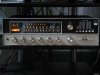
Vintage McIntosh & a couple vintage Fisher pieces
Once again, thanks to everyone for the compliments.
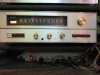
Chris, the Fisher FM-1000 rates about a 9/10, and I have attached a photo. I also have attached a photo of my 800-T which, unlike your R-200B or my TFM-300, also with an attached photo, does not have a tube front end. The first generation Fisher "transistor" tuners, in fact, had the "exclusive Nuvistor-Golden Synchrode front end." Typically, the Fisher installation had two 6CW4 nuvistors (very similar to the two 6DS4 nuvistors in the front end of the MAC1700 receiver, which I also have, and the MR67) and a glass 6HA5 tube.
The 800-T, on the other hand, has no tubes whatsoever. I got interested in this as a result of buying two Fisher 250-Ts ( a slightly less deluxe receiver) for $9.95 for the legendary Tune-O-Matic feature. Much to my surprise, the tuning section in the 250-T beat everything else I have, including the MR67, the MR7082, Pioneer TX-130, and every receiver in selectivity. It can find FM stations the others cannot detect.
Inspired by that performance, I bought the TFM-300 thinking that it would have even better selectivity and DXing performance as Fisher's top "transistor" tuner in 1964. Sorry - no such luck. It works all right, but no miracles. The quality of the audio falls short of the McIntosh tuners and the receivers from McIntosh, Fisher, Pioneer, etc. I paid $7.95 for it - before expensive repairs.
The search for cheap DXing capabilities led me to the 800-T, as the most expensive Fisher receiver of the 1969-72 time frame. I paid $10.50 for this one, prior to repairs. Its FM selectivity actually compares favorably with that of the 250-T. However, the complexity of the tuning section and the Tune-O-Matic feature, in particular, can give rise to repair bills in the hundreds of dollars. Simply not worth it unless you have a special attachment to the receiver or money to burn. Currently, my tech has it to fix a MPX problem and I will have spent at least $225 on repairs.
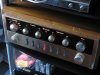
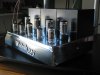
I also attached a front photo of the MC225. The "stuff" you see on the front is dust that reflected the odd light coming in from the window. So far the sound from the MC225 and C11 meets all the expectations.



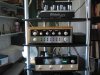



 .i'm curios also does the fisher 800-T have a nuvistor tube in the fm front end?i have myself a rare fisher r200b am/fm/sw tuner that uses one in it and it's suppose to be a excellent tuner. unfortunately mine needs some attention so i cant say i've had a chance to use it .hopefully one day i'll send it in to get fixed but like alot of people here i've gott alot more projects ahead of it