Francis55
Active Member
I just used some silicone glue for speakers, seemed to work pretty well--24 hours to cure, then I'll remount them and give a listen. I'm also posting a pic of the driver once I pulled it--since so old, a bit tricky to leverage it out even after the screws were out.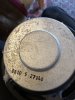
I bought my Stratus Golds used to have as a reference but also to reverse engineer
and learn from them. I removed the woofers and measured the T&S parameters finding
Fs to be very close to 50 Hz, 49. something from memory. I expected something closer
to 28 Hz or nearly half that. I wrote a letter to PSB and I think that they ignored the first
one probably thinking this guy doesn't know what he's doing or that the info was proprietary.
So, I sent the letter again registered mail and Paul Barton the, owner and designer, called
me at work. He said that's way off and said it should be nearly half that, he said to send
them back and they would look at them - which I never did. I got what I wanted which was
the correct Fs, he confirmed what I thought.
He suggested that I was measuring them incorrectly and I told him that Fs is not difficult to
measure and that I used a computer based measurement system that works fine with other
woofers. I said that I could see white poly fill that seemed to be loose behind the port, I
think he said to push it back away from the port with a ruler or something. Then he asked
me where do you think is the best spot for the damping material, I quickly said the center
of the box where the air velocity is highest, he expected me to get it wrong and said yes that's right.
I had done a lot of listening to these speakers and A/B compared them and
used them to improve the voicing on one of my own big designs (two 12" woofers per side).
I said did you know that the woofers experience thermal compression when you push
them really hard (325W/ch clipping on bass peaks)? I said you might want to use a metal
former in the woofer if you do not already. I also said, have you read the JBL AES paper
on thermal and port velocity compression?
https://www.aes.org/e-lib/browse.cfm?elib=5251
The port velocity is huge on the original design. I have a feeling that he thought about this
because the Goldi version has a bigger port, and slightly narrower enclosure which I also mentioned.
BOTTOM LINE:
I measured these woofers when they were probably less than 10 years old and the surrounds
were more than 3 times stiffer than they should have been. Yours are probably cracking because
this is what another 20 years of aging does to them. I still have not redone mine so I could/should
measure them again.
It is a common problem with rubber edges hardening with age and Wintergreen oil is commonly
suggested for softening them. I've done this with other woofers and while it works it only lasts
about a week or so. I'm going to try brake fluid but thought, in the past, that it would be too harsh.
It is probably worth trying on these PSB woofers, keep away from the paper cone. I'd give them
a few treatments with it, let them dry and then do the repair with a rubbery glue probably silicone,
I would not back it with anything, just glue.
Edit: You could try to find the correct rubber edge and replace them, make sure they are soft and
not 20 year old or more old stock. Or Miller Sound might be able to fix them.[/QUOTE]
I bought my Stratus Golds used to have as a reference but also to reverse engineer
and learn from them. I removed the woofers and measured the T&S parameters finding
Fs to be very close to 50 Hz, 49. something from memory. I expected something closer
to 28 Hz or nearly half that. I wrote a letter to PSB and I think that they ignored the first
one probably thinking this guy doesn't know what he's doing or that the info was proprietary.
So, I sent the letter again registered mail and Paul Barton the, owner and designer, called
me at work. He said that's way off and said it should be nearly half that, he said to send
them back and they would look at them - which I never did. I got what I wanted which was
the correct Fs, he confirmed what I thought.
He suggested that I was measuring them incorrectly and I told him that Fs is not difficult to
measure and that I used a computer based measurement system that works fine with other
woofers. I said that I could see white poly fill that seemed to be loose behind the port, I
think he said to push it back away from the port with a ruler or something. Then he asked
me where do you think is the best spot for the damping material, I quickly said the center
of the box where the air velocity is highest, he expected me to get it wrong and said yes that's right.
I had done a lot of listening to these speakers and A/B compared them and
used them to improve the voicing on one of my own big designs (two 12" woofers per side).
I said did you know that the woofers experience thermal compression when you push
them really hard (325W/ch clipping on bass peaks)? I said you might want to use a metal
former in the woofer if you do not already. I also said, have you read the JBL AES paper
on thermal and port velocity compression?
https://www.aes.org/e-lib/browse.cfm?elib=5251
The port velocity is huge on the original design. I have a feeling that he thought about this
because the Goldi version has a bigger port, and slightly narrower enclosure which I also mentioned.
BOTTOM LINE:
I measured these woofers when they were probably less than 10 years old and the surrounds
were more than 3 times stiffer than they should have been. Yours are probably cracking because
this is what another 20 years of aging does to them. I still have not redone mine so I could/should
measure them again.
It is a common problem with rubber edges hardening with age and Wintergreen oil is commonly
suggested for softening them. I've done this with other woofers and while it works it only lasts
about a week or so. I'm going to try brake fluid but thought, in the past, that it would be too harsh.
It is probably worth trying on these PSB woofers, keep away from the paper cone. I'd give them
a few treatments with it, let them dry and then do the repair with a rubbery glue probably silicone,
I would not back it with anything, just glue.
Edit: You could try to find the correct rubber edge and replace them, make sure they are soft and
not 20 year old or more old stock. Or Miller Sound might be able to fix them.[/QUOTE]