• The move to the new server is done. There are some software and database maintenance updates in process. This has us passing the hat around to help out. We appreciate any donations. Seriously, even a dollar helps. The payment page may be found here - https://www.audiokarma.org/support.html

Vintage Telefunken Stereo cabinet amp conversion

Ted Baker

New Member
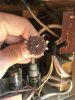
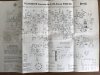
I have an old Telefunken cabinet. I love this thing, but the amp recently stopped working, and I can't afford the cost to repair, and don't have time to figure it out myself. As a result, I am trying to find a cheap fix to have sound coming out of it again. Here is where I'm at. I have a little class d amp (https://www.amazon.com/Lepai-LP7498E-Digital-Amplifier-Bluetooth/dp/B00U8NY5IM) that I purchased. I would like to connect it to the speakers that are in the cabinet, but I don't know if this is really possible. I have attached some images that show the wiring scheme, the wires that go to the crossover, and the crossover itself. Does anyone know if I would be able to achieve what I am going for here?IMG_0178.JPG IMG_0179.JPG IMG_0180.JPG
 
Register to hide this ad
Unlikely. Most of the time the power supply for the amp is also shared with the rest of the guts. Removing one kills all of it. The best way to fix it is to actually fix it, which is probably not going to be as expensive as you expect.

If you just want to use the speakers and none of the rest of it, you can do that.
 
Unlikely. Most of the time the power supply for the amp is also shared with the rest of the guts. Removing one kills all of it. The best way to fix it is to actually fix it, which is probably not going to be as expensive as you expect.

If you just want to use the speakers and none of the rest of it, you can do that.

I would like to just use the speakers, and the class D amp that I purchased. I need to find out how to connect the four outputs from my amp (L+, L-, R+ R-) to the nine wires going to the crossover. Any suggestions on that?
 
I would like to just use the speakers, and the class D amp that I purchased. I need to find out how to connect the four outputs from my amp (L+, L-, R+ R-) to the nine wires going to the crossover. Any suggestions on that?
Replacing the tubes would be the easiest thing to do. At least have them checked. i would think you would want to try that first.
 
There are quite a few. Should I just replace them one by one until it works again? Also, the benefit of connecting the speakers to the new amp is bluetooth connectivity :)
When one has a problem with a tube amp there are symptoms that can help with diagnosing what went wrong. You did not elaborate or describe the issue that you had. Troubleshooting requires a step by step approach. The first being describing what happened.
It is hard to read the schematic but it looks like the power amp has ECL86 in a single ended design. Many of the tubes are for the radio and would only affect the output if the stereo is set on radio. One can rule out the radio if you have an "auxiliary" input for a cd player or tape player. Then the remaining circuit to deal with is the preamp and power amp. The power amp section i believe is just the 1 tube (single ended) because the ecl86 is 2 tube sections, a triode for small signal and pentode for output, in one glass bulb. Thus, if you lost sound in one side, it maybe just the ecl86 failed, unless this is just a mono amplifier. It is really to follow the schematic. If both channels failed you would have larger issues.
 
Last edited:
The system suddenly, mid track (from record player), emitted a loud humming noise. The hum persists independent of volume control (except for a slight increase in volume at the very high end of the dial), input selected, or inputs connected. It is louder when the "Bass" setting is activated. When the unit is first powered on, and the tubes are warming up, the hum is quiet. Once the tubes are warm, it becomes loud.

I replaced one tube on what I thought was the pre-amp, but I'm not really sure. It was the 6BH6 tube.
 
Also, I should say that while the unit was working, I did not say it works well. The sound isn't great, the tone controls don't really work, etc. The speakers however look to be in great shape. That is part of what motivated the "use the speakers only" option.

Also, this is non-destructive, so that in a few years, when I am no longer running on student wages, I can have this thing thoroughly refurbished, while getting the most out of it in the meantime. So if anyone has ideas about how to connect my 4-wire, 2 channel stereo output to a three-way, two channel crossover (9wires), I would still like to hear them.
 
C is for the can that holds these ones
A is for the All in one
P is for the patience
A is just another letter
C is cause the hum is there
I is I is you
T is the love you put in it
O is only one that you need
R is for the restore that you will do

put them all together they spell CAPACITORS

That is what you need to do
 
Can you diagram the wiring connecting the six drivers and the 10(?) terminal block?
I'm sorry I don't understand what you are asking for. Can you point me to a spot on the diagram and be a little bit more specific about what you need?
 
Honestly I find the most reliable part of tube amps to be the tubes. Won't swear one isn't bad, but I'd bet the fault thats making it do nothing at all is not a tube.

but yeah, basically you're going to have to trace the wiring from that plug to the speakers. I have a Metz amp that uses a pair of those plugs for the speaker connections, but I'd all but guarantee its not the same. The Metz ran up to an external speaker jack that had switching and all manner of whatnot in it. Yours may or may not do the same.
 
Yes, I was suggesting that you draw a diagram. Looking at the shot of the rear of the cabinet in this thread: http://antiqueradios.com/forums/viewtopic.php?t=159393 , you have a tweeter, midrange, woofer, woofer, terminal block, midrange, tweeter. Draw the whole thing, showing wire colors, polarity indicators , etc.

I find the schematic very hard to follow. (If you could take a really clear close-up shot of the upper right part, it would help.) Part of it I think is because of the alternate connections for external speakers; also I don't understand how the woofers are wired/linked. Someone with more familiarity with these consoles could probably explain it; I'm not sure the DIY sub-forum is the best place to attract the attention of such a person. The tube amps forum, maybe, or the speakers one?

Keep in mind that with the chip amps, the speaker connections can't have a common ground. I think this console *may* be wired that way, although I'm not certain. What you may need to do is effectively re-wire the drivers so that you have two separate sets of three drivers each. It shouldn't be too big a deal to do this (or to revert to the original wiring once you're able to have the receiver repaired), but again, someone is going to have to explain how they're currently configured.
 
The system suddenly, mid track (from record player), emitted a loud humming noise. The hum persists independent of volume control (except for a slight increase in volume at the very high end of the dial), input selected, or inputs connected. It is louder when the "Bass" setting is activated. When the unit is first powered on, and the tubes are warming up, the hum is quiet. Once the tubes are warm, it becomes loud.

I replaced one tube on what I thought was the pre-amp, but I'm not really sure. It was the 6BH6 tube.
Well, if you had mentioned this first everyone would have probably said you need to change the power supply and coupling capacitors. From what you describe it is almost for sure the coupling caps, but usually, while replacing those it is also time to change the power supply caps too. Since you are on a student's stipend you might get away with just changing the coupling caps which can be fairly cheap parts.
 
yeah sounds like the usual old cap problems.

I'd bet its power supply more than coupling caps though. Coupling caps rarely cause hum, bad filters will though.

I cant blow the picture up enough to tell you anything about the speakers unfortunately.
 
Well, if you had mentioned this first everyone would have probably said you need to change the power supply and coupling capacitors. From what you describe it is almost for sure the coupling caps, but usually, while replacing those it is also time to change the power supply caps too. Since you are on a student's stipend you might get away with just changing the coupling caps which can be fairly cheap parts.
Cool. I will see if I can figure out where those are...
 
Back
Top Bottom