kevintaft
NOS
Around tax time this year I purchased a Voice Of Music 1428 tube amp. All original including VOM 6BQ5, 6EU7 and 12AX7 phono tube (except for one Channel Master that was obviously replaced many years ago) The plan was to make this a boutique amp since the topology was pretty simple (albeit in a small form factor so desoldering and soldering would be for some components a challenge) EL84 push pull design. Although, the cost from ebay was a little high at $249 the faceplate and other parts of the amp were in good shape (no rust or major scratching) and that was important to me. Besides after rebuilding several German tube radios from the 50's and growing to love those single ended mono EL84 outputs i really wanted a simple EL84 push pull amp to experiment with.Oh BTW, this amp came totally functional although there was some hum and static in some of the controls which is probably normal for an old tube amp of 55 years.
The plan was to replace all electolytics with new cans or other suitable replacements and every disc capacitor with high quality coupling caps
I chose CE Manufacturing for the major DC bias filter cap and Nichicon cans for the Phono Filament supply and off the amazon shelf for the other electrolytics. After some experimenting with positions, sizing and aesthetics, I was able to complete that part of the overhaul.
Next came power supply silicon, although the original diodes for both the phono and power supply were silicon I decided to replace them all with new silicon fast recovery diodes. This was the easiest part of the whole process as they went in all in an afternoon.
At this time i started to do power supply checks and noticed that the output from my efficient silicon and new caps plus 21st century ac is closer to 120 VAC as opposed to 110 or lower from the mid last century i had to add a series dropping resistor and increase the size of R60 to 820ohms. This gave me DC bias just about what Sams suggests in their schematics.
After an initial check and experimenting with resistor sizes i started on the coupling capacitors. I chose Vitamin Q Black Candy .022uF 630V Boutique Tone Capacitor for every coupler and Vintage NOS Sprague Vitamin Q .01 uf 600v PIO Caps Capacitiors and MOD Oil caps for the phono section. Every other capacitor was changed with Philips Polypropylene Film Foil Capacitors 100pF 630V. Some would say this is heresy, to remove and replace all those vintage caps but the sound has not disappointed for my personal office sound system.
At this point i started to check all resistance and voltages at every stage to verify with Sams correct biasing. Many of the 6BQ5 resistors had to be changed including some on the Phase Inv tubes which is where i made my first mistake. I accidentally put a 4.7K ohm resistor in the place of a 4.7M ohm resistor on one of the phase invertors and pushed my off and on troubleshooting into the summer. At the same time i modified the PHASE switch to be a head phone switch and place a head phone jack on the front panel. Upon testing i noticed two things: I had a weak channel and significant hum. All through the head phone jack.
This is where I spiraled out of control, I thought the old selector switch may be bad and removed it and all the wiring, I could not find a switch that shorted unused inputs like this one so after damaging it upon removal i had to rebuild it and replace all the input wiring. No significant change in hum (through the head phone jack). I then removed all the AC filament bias wiring which was not twisted and soldering in brand new filament wiring tightly spiraled and clean short connections. Still no improvement in hum (or the channel which i kinda gave up on to fix the hum issue), I experimented with DC, separate supply and using center tape of filament transformer all to no avail. By this time it was June in Oregon where i live and i shelved the amp until October to play and work outside.
Fast forward to this month. I brought the amp back out and started to experiment with it again. I noticed that the channel and stereo/mono switch changed output significantly, Instead of worrying about the hum i decided i would play the amp in the designed intention. I bought some ORB speakers to play in my office (I have Klipsch attached to my Scott LK72B and computer) and connected the amp through the normal output and this is what i noticed. The hum was significantly attenuated to a point where it did not bother me and i could get even output on MONO mode (through the phono stereo/mono switch) or Stereo output with the balance switch moved all the way to the right channel - so there was a signal but it was just weak!. I unplugged the unit and used a 7500 Hz sine wave on both inputs and did an analysis on input voltage to phase invertor tube (downstream from Volume but before balance) and found my 4.6Kohm resistor mistake! Upon replacement of the offending resistor i have a very dynamic and excellent playing amp on both channels, in stereo and with very little hum on the standard speaker output. My phone jack works but the hum is still pretty significant telling me that the underside of the amp and my routing (which is totally away from the power supply section) is getting induced hum from some undisclosed component/s. This is something I can live with for now.
Moral of this story is the designers of most amps probably new what they were doing with component and wire routing and make mods carefully in your tube amp.If i had not modified the output to go to a phone jack i may have had this working many months ago - but i am sure that most of you will agree that the fix and restoration is almost as fun as the listen.
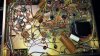
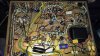
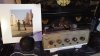
Here's a couple of pics - I hope you enjoy my story of failure and success....
Kevin
The plan was to replace all electolytics with new cans or other suitable replacements and every disc capacitor with high quality coupling caps
I chose CE Manufacturing for the major DC bias filter cap and Nichicon cans for the Phono Filament supply and off the amazon shelf for the other electrolytics. After some experimenting with positions, sizing and aesthetics, I was able to complete that part of the overhaul.
Next came power supply silicon, although the original diodes for both the phono and power supply were silicon I decided to replace them all with new silicon fast recovery diodes. This was the easiest part of the whole process as they went in all in an afternoon.
At this time i started to do power supply checks and noticed that the output from my efficient silicon and new caps plus 21st century ac is closer to 120 VAC as opposed to 110 or lower from the mid last century i had to add a series dropping resistor and increase the size of R60 to 820ohms. This gave me DC bias just about what Sams suggests in their schematics.
After an initial check and experimenting with resistor sizes i started on the coupling capacitors. I chose Vitamin Q Black Candy .022uF 630V Boutique Tone Capacitor for every coupler and Vintage NOS Sprague Vitamin Q .01 uf 600v PIO Caps Capacitiors and MOD Oil caps for the phono section. Every other capacitor was changed with Philips Polypropylene Film Foil Capacitors 100pF 630V. Some would say this is heresy, to remove and replace all those vintage caps but the sound has not disappointed for my personal office sound system.
At this point i started to check all resistance and voltages at every stage to verify with Sams correct biasing. Many of the 6BQ5 resistors had to be changed including some on the Phase Inv tubes which is where i made my first mistake. I accidentally put a 4.7K ohm resistor in the place of a 4.7M ohm resistor on one of the phase invertors and pushed my off and on troubleshooting into the summer. At the same time i modified the PHASE switch to be a head phone switch and place a head phone jack on the front panel. Upon testing i noticed two things: I had a weak channel and significant hum. All through the head phone jack.
This is where I spiraled out of control, I thought the old selector switch may be bad and removed it and all the wiring, I could not find a switch that shorted unused inputs like this one so after damaging it upon removal i had to rebuild it and replace all the input wiring. No significant change in hum (through the head phone jack). I then removed all the AC filament bias wiring which was not twisted and soldering in brand new filament wiring tightly spiraled and clean short connections. Still no improvement in hum (or the channel which i kinda gave up on to fix the hum issue), I experimented with DC, separate supply and using center tape of filament transformer all to no avail. By this time it was June in Oregon where i live and i shelved the amp until October to play and work outside.
Fast forward to this month. I brought the amp back out and started to experiment with it again. I noticed that the channel and stereo/mono switch changed output significantly, Instead of worrying about the hum i decided i would play the amp in the designed intention. I bought some ORB speakers to play in my office (I have Klipsch attached to my Scott LK72B and computer) and connected the amp through the normal output and this is what i noticed. The hum was significantly attenuated to a point where it did not bother me and i could get even output on MONO mode (through the phono stereo/mono switch) or Stereo output with the balance switch moved all the way to the right channel - so there was a signal but it was just weak!. I unplugged the unit and used a 7500 Hz sine wave on both inputs and did an analysis on input voltage to phase invertor tube (downstream from Volume but before balance) and found my 4.6Kohm resistor mistake! Upon replacement of the offending resistor i have a very dynamic and excellent playing amp on both channels, in stereo and with very little hum on the standard speaker output. My phone jack works but the hum is still pretty significant telling me that the underside of the amp and my routing (which is totally away from the power supply section) is getting induced hum from some undisclosed component/s. This is something I can live with for now.
Moral of this story is the designers of most amps probably new what they were doing with component and wire routing and make mods carefully in your tube amp.If i had not modified the output to go to a phone jack i may have had this working many months ago - but i am sure that most of you will agree that the fix and restoration is almost as fun as the listen.
Here's a couple of pics - I hope you enjoy my story of failure and success....
Kevin