• The move to the new server is done. There are some software and database maintenance updates in process. This has us passing the hat around to help out. We appreciate any donations. Seriously, even a dollar helps. The payment page may be found here - https://www.audiokarma.org/support.html

VPI HW-19 Mark IV identification and cart/stylus recommendations…

Damien A

New Member
Hey y’all, I picked up this beautiful VPI turntable and am currently having it serviced by my tech. I have a few questions as this is my first experience with a VPI turntable

1. What’s a good cartridge/styli recommendation for this table and AudioQuest tonearm? I had a spare Lafayette t6000 that I pulled a Pickering XSV with D3000 off and put on the VPI. My tech says they will work and I should listen before deciding to spend any money on a new cart/styli and that’s what I intend on doing. The Pickering sounded great on the Lafayette so I’m definitely going to give it a shot but would like some recommendations for others if and when I decide to upgrade. I listen to lots of Jazz and Folk rock with other genres mixed in frequently, if that matters for suggestions.

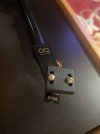
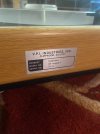
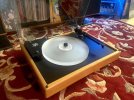
2. What is the correct model number of this VPI? I seem to be finding conflicting results that are making me second guess the marking on the company tag. By my understanding this seems to be a VPI HW19 Junior, not the Mark IV. But I’m younger than this turntable so I cannot say with any certainty that I know anything about what I have here, other than it’s a big upgrade(hopefully) from my dual 1229. So what model do I have here? Is this all stock platter, tonearm, etc? Any mods that anyone can spot? Let me know, thanks!
 

Attachments

  • IMG_0200.jpeg
    IMG_0200.jpeg
    141.3 KB · Views: 14
  • IMG_0202.jpeg
    IMG_0202.jpeg
    46 KB · Views: 13
  • IMG_0203.jpeg
    IMG_0203.jpeg
    97.1 KB · Views: 14
Register to hide this ad
The wood plinth is from the HW 19 MK4 but the subchassis and platter is from an HW 19 JR. There were two choices of arms offered for the HW 19 JR .one is the Audioquest toner, that's installed to your turntable .Mine had the Rega RB 250 .The VPI HW 19 JR was my first VPI turntable .The cartridge that I installed when I had it was a Benz Micro MC 20 E 2 and it was a good match .
 
Yes, that is the Junior Model. Junior Model has a 1-piece MDF Inner Plinth, the 6lb Frosted Acrylic Platter.

Just because it has an incorrect Label on back doesn't necessarily mean somebody cobbled this table together from Parts.

Usually came with simple Sorbothane Puck Suspension, which some thought were cheap but often later found out the Pucks often performed better than the Spring Suspension on the more expensive HW-19 Models.

The Tonearm is the AQ PT-6, which could also be called the PT-7 or PT-8 merely by the change of the Tonearm Cable was all. They were all the very same Arm.

This Tonearm is very receptive to the quality of Tonearm Cable being used, meaning a better Cable can equate to incrementally better sound as you go up the ladder in price and quality. A $500+ Tonearm Cable would not be out of place, or necessarily a waste of money.

The Bearings are very good with these Arms, and the Arm being Medium Mass can as I found work well with quite expensive MC Cartridges also.

The Spindle-Pivot Distance of the Arm should be 211mm. That can be fairly accurately confirmed with just a good steel Ruler.

There is a Damping Trough, that when the Cap is unscrewed a Damping Oil can be added-used. When new, the Arm did come with a small Vial of Damping Oil.
I had found the Damping Oil did little, and was really not necessary, even with quite expensive MC Cartridges on board.

Bearing Clean, check, and Lubrication should maybe be done once every 9-12 months or so with simple 30W or 5-30W Synth Motor Oil, Mobil 1 is what I always used, nor problem. The Bearing Shaft and Bearing Well only needs about 3 drops max of Oil total. Just a thin film coat on all surfaces. More offers no benefit, and in fact can create problems.

The Drive Motor itself can be lubed where the Drive Shaft enters the Motor Housing which will be underneath the Drive Pulley. One drop of either 30W or 40W once every year or so is all that is required.

The biggest issue and dislikes with these belt drive tables is no control of any possible speed errors. There was varying amounts of speed error dependent upon how well the Drive Pulley size matched the Platter and other issues inherit to AC Syncho Motors. Some had only a very slight error, some had greater error.

Mine did and felt the need for the VPI SDS.

This can be rectified and adjusted by use of an external Speed Controller as the VPI SDS, or the older VPI PLC Controllers.
 
Last edited:
I think all in all, there were actually 6 models of HW-19 produced.

That the very first model had no numeral identification, it was just called the "HW-19".

Then came the Numeric designations, Mk-I through Mk-IV, and somewhere in there they then produced the Junior Model.

Various Platters, inner Plinths, and suspensions came to be. As well as Stand Alone Motor Assemblies (SAMA, 2 versions)) Steel Sub-Chassis Sheet Detachable Arm Boards, and the thicker-taller Super Arm Board.

There were 4" and also optional 5" tall Dustcovers made.

Pretty much all came with crap rubber feet, and wimpy short lived felt pads for the Dustcover to rest upon.
These can be easily swapped for nicer Clear Silicone Pads-Bumpers. Same with Feet-Footers, I think the thread size was either 8/32" or 10/32".

Original Drive Belts for the HW-19 were Clear Seamed types and the BS of having to powder them. Today one can get IMO better Drive Belts made from one-piece Black Nitrile. Black Tranquility. Last longer, less tendency to stretch.
 
My AQ Arm on my HW-19 Table bought in the mid 90's was first fitted with a Benz Micro Glider HO MC Cartridge. Of course required a better Phono Stage. Went with something from MaCormack back then.

Then I also even had a Benz Ruby 3 LO, and ZYX Airy 3X on board that same Arm, and no issues.
Glorious sonics in any case. Then, it was paired with a Sutherland PHD Battery Powered Phono Stage.

I was using a AQ Phono Cable initially, was $375, today would likely be closer to $500 list. Never any hum, hiccups, RFI, EMI, problems, nada. That comes from good conductors and build, with proper shielding.

Have good tools to align and set up the Arm, you're good to go.

This product that I link to, and also fits the AQ Arm (Jelco) may still be available. I ordered 2 sets some months back. It improves on the weak link of this Arm.

 
Back
Top Bottom