• The move to the new server is done. There are some software and database maintenance updates in process. This has us passing the hat around to help out. We appreciate any donations. Seriously, even a dollar helps. The payment page may be found here - https://www.audiokarma.org/support.html

Warning about using "DEOXIT D5 RED" on Carbon Potentiometers

KENWOOD RULZ

Active Member
Hi Guys & Gals....

I hope this video is OK to Post here. Feel free to move to correct forum if needed.

It's just a warning about how the Deoxit D5 RED can harm Carbon potentiometers in particular.

This is a great video explaining the reasons from a very good Electronics repair guy.


Have a good day......Rich
 
Register to hide this ad
Well, I'm not going to sit through a 45 minute presentation. I have used Deoxit on hundreds of pots and not one was damaged. If damage occurs, I say the problem is an inferior pot, not the D5. A pot ought never contain any material affected by petroleum distillates.

Doug
 
Great video
I'm clearly guilty of using the red stuff to clean pots.
I haven't yet killed one ( that I'm aware of. ) I'd definitely modify my application technique now though.
 
Comparing an in circuit 500K ohm pot to an out of circuit 100 ohm pot.

I did have a pot on a MAC receiver disintegrate after using D5, but that's the only one.

Contacting Deoxit for tech support would be my suggestion.

Rob
 
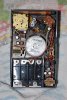
Certain potentiometers are more fragile than others. I had this experience with the volume control/switch in my Zenith Royal 500H transistor radio. I sprayed a bit of DeOxit into the control, worked it a bit, and was surprised to discover that the volume control was now 'all-or-nothing'. I took the control apart (surprisingly easy to do with the style of control they used, one of the few truly good things about it) and discovered that the volume control's carbon track had largely been obliterated.

Knowing that a NOS replacement would be virtually impossible to find (typical for old transistor radios, even ones by major manufacturers), I purchased a rough condition Royal 500H to 'borrow' its control from. Once it arrived, I brought it to a friend of mine for him to do the transplant; against my instructions, he applied some contact cleaner (not sure what kind) to the 'new' control, and sure enough, the replacement control suffered the exact same fate as its predecessor. :rant: Attempts to repair the carbon track using conductive paint failed, so I ended up buying a very pricy reproduction control on eBay. Lessons learned... :oops: The Royal 500H, with the repro control installed in the upper right, can be seen below:

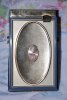
royal500h_1.jpg
royal500h_2.jpg royal500h_4.jpg
 
Good to see it not tossed out. Is the Zenith a particularly good performer?
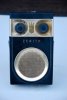
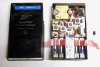
It's one of the best 'pocket' transistor radios I own, performance-wise. Zenith's "Royal 500" series of transistor radios weren't especially small, and were quite expensive for their time (the Royal 500H retailed for $59.95, the equivalent of over $526 today!), but were solid performers, and very rugged; the Royal 500H broke with the 'owls eye' look of its predecessors, but added an oval speaker for increased fidelity. I've owned a few examples of Royal 500 models, and apart from the earliest models (and the control in the 500H, through no real fault of its own), they're still working fine on original parts. Here are some pictures of my other Royal 500s, a rare hand-wired transitional '500AB' model and a 500E:
royal500_1.jpg
royal500_3.jpg
royal500e.jpg
 
Back
Top Bottom