Hi all, this is my first post so ai hope I‘m posting at the right place. I‘m also a Hifi Newbie so please be gentle.
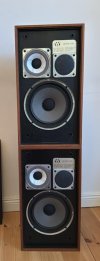
I recently bought a pair of Wharfedale Linton 3xp‘s on ebay. I just got to test them with a Sanyo DCX6000k and Pioneer PL12D.
I get no highs at all from them. The sound is super muffled and it doesn‘t bring any joy listening to them. I also tried AUX just to be sure my turntable didn‘t decide to malfunction suddenly, but same thing.
Now, the first thing I did was putting my ears next to all the drivers. The low and mid drivers sound just fine but there‘s next to nothing coming from the tweeters.
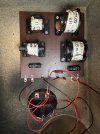
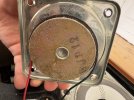
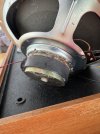
I decided to open the speakers up and found a lot of corrosion on the back of the drivers and the screws of the crossovers.
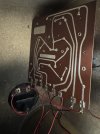
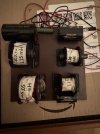
The solder joints of the crossover seem fine tho, I didn‘t see any corrosion. Also, the caps aren‘t blown or leaking and the resistor seems fine (at least visually).
I put some photos of everything in the thread.
I ordered a multimeter to measure the resistance of the tweeters to see if they‘re defective.
I‘m wondering what you guys think is the cause? Is it correct what I‘m doing so far?
Does it make sense to order replacement tweeters if they’re bad or do you think the low and mid drivers could also be impaired by the corrosion? In that case I‘d probably just sell the speakers again since getting replacements for all drivers wouldn‘t be economically viable.
If you think repairing makes sense; would you recap the crossovers eventhough they look fine visually? If so, what replacement caps/resistors (foil, electrolyte, etc.) should I use?
I‘d really appreciate any form of help. Thanks in advance!
I recently bought a pair of Wharfedale Linton 3xp‘s on ebay. I just got to test them with a Sanyo DCX6000k and Pioneer PL12D.
I get no highs at all from them. The sound is super muffled and it doesn‘t bring any joy listening to them. I also tried AUX just to be sure my turntable didn‘t decide to malfunction suddenly, but same thing.
Now, the first thing I did was putting my ears next to all the drivers. The low and mid drivers sound just fine but there‘s next to nothing coming from the tweeters.
I decided to open the speakers up and found a lot of corrosion on the back of the drivers and the screws of the crossovers.
The solder joints of the crossover seem fine tho, I didn‘t see any corrosion. Also, the caps aren‘t blown or leaking and the resistor seems fine (at least visually).
I put some photos of everything in the thread.
I ordered a multimeter to measure the resistance of the tweeters to see if they‘re defective.
I‘m wondering what you guys think is the cause? Is it correct what I‘m doing so far?
Does it make sense to order replacement tweeters if they’re bad or do you think the low and mid drivers could also be impaired by the corrosion? In that case I‘d probably just sell the speakers again since getting replacements for all drivers wouldn‘t be economically viable.
If you think repairing makes sense; would you recap the crossovers eventhough they look fine visually? If so, what replacement caps/resistors (foil, electrolyte, etc.) should I use?
I‘d really appreciate any form of help. Thanks in advance!