• The move to the new server is done. There are some software and database maintenance updates in process. This has us passing the hat around to help out. We appreciate any donations. Seriously, even a dollar helps. The payment page may be found here - https://www.audiokarma.org/support.html

Wharfedale W70D total restoration - need advice

This project is slowly coming to an end... Here's what I've done since my last post.

DSCF3441.JPG


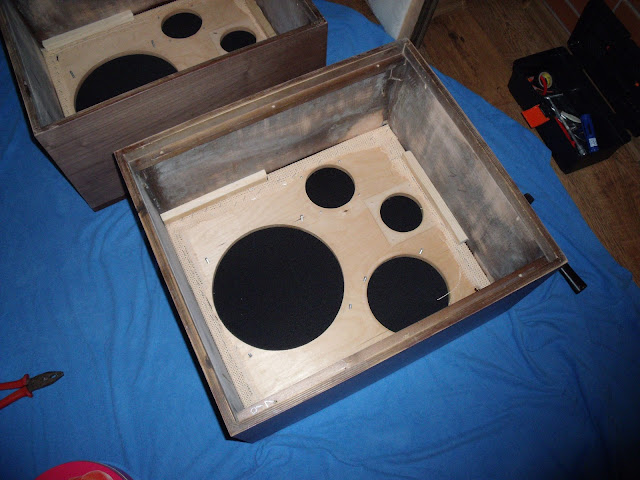
Cleaned the interior - removed the remnants of old insulation and glue with a powered sander.

DSCF3445.JPG


Sanded the front piece to remove old finish with a sanding sponge.

DSCF3446.JPG


Done.

Then I had a professional woodworker reveneer them (natural American walnut) and repair that ugly corner damage. Turned out cheap (~$50) and I'm very happy with the results:

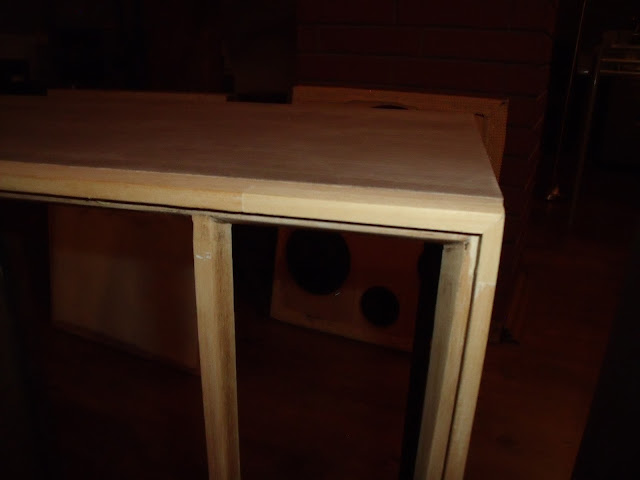
DSCF3527.JPG


DSCF3529.JPG


As you can see, the veneer is yet to be oiled and I have to stain the front piece. I think I'll go with a slightly darker tint than the veneer. Should look good, shouldn't it?

DSCF3531.JPG


Also, bought these two guys on ebay.co.uk. These drivers appear to be absolutely period correct as they have cast frames and green felt insulation on the business side.
 
Last edited:
This is the last part of my restoration project. As I'm writing this, my Wharfies are producing sound and boy, they are good!

Staining:
DSCF3532.JPG


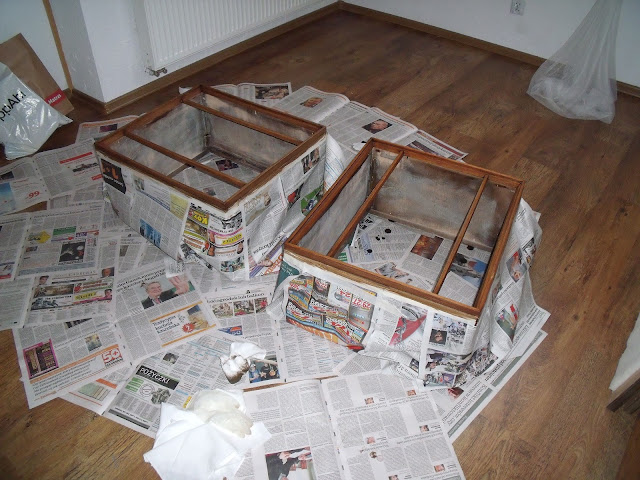
I secured the new veneer with newspapers and masking tape.

DSCF3533.JPG


First layer. I went with water based "rustic walnut" stain. I started with a brush that was definitely too big for the job and ended up with some uneven coloration. Fortunately, I managed to save the job in the second pass.

Oiling/waxing:

I used Starwax brand beeswax, applied it twice with a brush (three hours between layers) and then polished with #000 steel wool. The following photo was taken when the first layer was still wet:

DSCF3536.JPG


and this is just before polishing:

DSCF3538.JPG


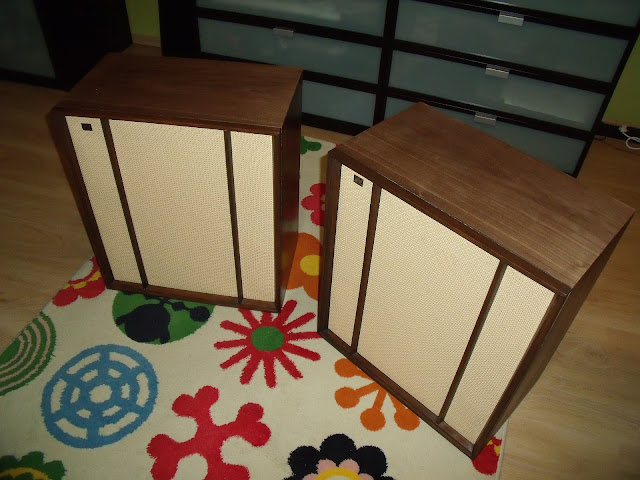
Then I inserted the front baffles. It took some brute force because the grill cloth I had chosen is a bit thicker than original. Hammer came in handy. I was afraid that the box was going to fall apart or something (heard creaking) but it didn't. A testament to English carpentry? I was relieved when the baffle reached its place. The cabinets were pretty much done at this point and they certainly look good.

DSCF3543.JPG


DSCF3545.JPG


Installing speakers and crossovers:

No commentary is needed, I think.

DSCF3546.JPG


DSCF3548.JPG


All the wires were replaced with new, thicker ones and it was a big PITA to solder 12 gauge wire to these tiny terminals.

I also replaced the old insulation (apart from the back as it was still in good condition) with thick wadding.

DSCF3549.JPG


Notice how thick is the back - I know that Gilbert Briggs experimented with cabinet construction but I don't think that he is the man responsible for W70.Ds. Also, it is filled with fine sand - observe the sandwich construction, the whole part in the middle is filled.

DSCF3552.JPG


All there was left was to screw the back in place and plug them in.

I have to say that at first I wasn't really impressed because these guys have a sound of their own. It is not colored, they are quite accurate but for the first hour or two of listening I had a very strange impression as if something was off with the midrange. It wasn't, however one of the tweeters was kaput. It wasn't dead but definitely way too quiet and distorting badly. Took a quick pit-stop as I have two extra spare tweeters and then...
OH BOY! I played my first UK mono pressing of Beatles for Sale, sat at quite distance and cranked my Fisher 500-B. Well, not really cranked because I would probably be deaf now but it was somewhere between 12 and 1 o'clock.
I was right there, at Abbey Road Studios in 1964. Acoustic guitars and George's twelve string electric, Paul's bass and Ringo's drumming became real. Next position was Donald Byrd's The Cat Walk and this is where they really shined. Double bass goes way down LOW and brass is alive.

But still, they sound different from all the other sets I've ever heard. Even pops and clicks on vinyl are not the same. Surprisingly, their strong point is undoubtedly the tweeter. They seem to be very accurate, even analytic. Woofers go low but are not very accurate, however their sustain is very good.

Alright, 'nuff said.

I feel proud :)

DSCF3570.JPG
 
WoW, I can't believe how hard you've worked and how nice those turned out.

I started following this thread a really long time ago and at times I didn't think you'd get there... WoW

good on ya Eh!

Shawn
 
looking for the cane fabric you used.

Hi Winters,
Great job on the restore!:yes:
Those turned out beautiful.:thmbsp:
I was wondering where you got the cane fabric for the grills?
I have a set of Cornwalls that I would like to freshen up.
Gotta source?
Thanks,
J.T.
 
Hi,

I bought the grill cloth at Tube-Town:
http://www.tube-town.net/ttstore/index.php/cat/c120_Grillcloth.html

It's from Germany so I don't know whether the shipping to the USA makes sense, but I'm sure you can find something on the other side of the pond.

I chose the "Cream Weave" one, it's a lighter shade than Marshall Cane Basket-Weave. However, this fabric is way thicker than the original. It doesn't block the sound because there is a lot of small holes.
 
I have to say that at first I wasn't really impressed because these guys have a sound of their own. It is not colored, they are quite accurate but for the first hour or two of listening I had a very strange impression as if something was off with the midrange. It wasn't, however one of the tweeters was kaput. It wasn't dead but definitely way too quiet and distorting badly. Took a quick pit-stop as I have two extra spare tweeters and then...
OH BOY! I played my first UK mono pressing of Beatles for Sale, sat at quite distance and cranked my Fisher 500-B. Well, not really cranked because I would probably be deaf now but it was somewhere between 12 and 1 o'clock.
I was right there, at Abbey Road Studios in 1964. Acoustic guitars and George's twelve string electric, Paul's bass and Ringo's drumming became real. Next position was Donald Byrd's The Cat Walk and this is where they really shined. Double bass goes way down LOW and brass is alive.

But still, they sound different from all the other sets I've ever heard. Even pops and clicks on vinyl are not the same. Surprisingly, their strong point is undoubtedly the tweeter. They seem to be very accurate, even analytic. Woofers go low but are not very accurate, however their sustain is very good.

Alright, 'nuff said.

I feel proud :)

You should feel proud. You did an exemplary job.

Give the caps some time to burn in.

You will find that the bass, though not extremely pronounced, actually is quite accurate.

The mids should also improve dramatically and provide a very natural sound.

The tweeters are just icing on the cake.

Art

EDIT: Merry Christmas
 
Back
Top Bottom