
• The move to the new server is done. There are some software and database maintenance updates in process. This has us passing the hat around to help out. We appreciate any donations. Seriously, even a dollar helps. The payment page may be found here - https://www.audiokarma.org/support.html

What CD Are You Hearing Now?

I know I generally prefer Uchida to most other classical pianists, but I can't tell you why, unlike jazz pianists, who strike me as highly individual. (i.e. - I can hear the difference between Mal Waldron and, say, Kenny Baron.) What do you listen for in a classical pianist? Can you (or anyone else who responds to this) reliably identify a classical pianist 'blind'? I know I can't.
Not reliably, no. Only to a limited extent, provided I have already listened to that particular piece played by that particular pianist before.
For instance, I was once listening to a Mozart concerto on the radio, and it seemed to me it resembled a recording of Christian Zacharias' that I had in my library, though it didn't sound exactly the same. I said to myself, "this sounds a bit like Zacharias, but not quite. It must be someone who is trying hard to imitate him". Well, it turns out it was indeed Zacharias, but a different recording from the one I had. But I couldn't put my finger on exactly what it was that seemed to me at the time to sound like Zacharias. It had a certain air of familiarity, because I happened to have listened to him play that concerto several times before. Could I recognize him if I heard him play something completely new? No, I don't think so.
If I heard Mitsuko Uchida's recording of the Mozart 9 with Jeffrey Tate, I would recognize it immediately, not necessarily because I'd recognize some personal feature of hers, but because that particular performance is so completely different from every other that I've ever heard. But would I recognize her if she played a piece that I haven't heard yet? Probably not.

It's often impossible to attach strict labels to them, to say "Zacharias is like this", or "Uchida is like that". Artists like to experiment, they develop over the course of their career, they try various approaches, they may approach a piece in a certain manner and another piece in a completely different one... That's why there's no musician that I could call my absolute favourite no matter what. No matter how much I love a certain performance of a certain musician, there are always other performances of theirs which aren't necessarily among my favourites.
Nevertheless, there are some broad character traits that can distinguish them, at least up to a point. For instance, Glenn Gould is renowned for his erratic tempi and the incredible way in which he makes those tempi work. And for his extreme warmth and musicality, for his perfect phrasing, which came from a deep understanding of the work and a deep feeling for it.

To me, Friedrich Gulda is defined by a certain air of passion which I can't describe in words. I can't say exactly what generates it, but whenever I listen to his recordings of the Mozart piano sonatas I feel that he has a deep, deep love for them, that he enjoys playing them more than anything in the world. It seems to me he isn't performing for us, but he's just playing for his own enjoyment, just having a great time in his own living room, and we just happen to witness it. I find that passion deeply contagious.

Mitsuko Uchida can be extremely technical when the score demands it, but she is never technical just for technique's sake, just to show off. She knows how to combine virtuosity with warmth and emotion. And she knows not only when to play a note, but also when not to play it. Pauses are sometimes as important as the notes, and not many pianists master the art of pausing. Uchida does. Gould also did. A well timed pause creates tension. It makes us eager to hear the continuation, and makes us breathe a sigh of relief when we finally do. A badly timed pause, conversely, breaks the flow of the music. A lack of pauses, which is typical of young pianists who tend to concentrate on showing off their technical prowess, can make the music feel like a machine gun.
 
Last edited:
I got around to listening to these Beethoven sonatas today. They're awesome. I can't tell how Mitsuko Uchida compares to other pianists in this case, because to my shame I must confess not having listened to these three sonatas before. So Uchida's version is the only one I know. But I love the way she alternates fast, virtuosic passages so naturally with lyrical ones, her light touch, the way her music feels so fluid, so alive... She achieves this effect by making subtle pauses and tempo changes, which are so well calculated that they fit perfectly into the music and make it feel like a beating heart. She knows how to use pauses and rubatos to bring the music to life, just like Gould did (though, of course, it was more extreme in his case).
 
Last edited:
I got around to listening to these Beethoven sonatas today. They're awesome. I can't tell how Mitsuko Uchida compares to other pianists in this case, because to my shame I must confess not having listened to these three sonatas before. So Uchida's version is the only one I know. But I love the way she alternates fast, virtuosic passages so naturally with lyrical ones, her light touch, the way her music feels so fluid, so alive... She achieves this effect by making subtle pauses and tempo changes, which are so well calculated that they fit perfectly into the music and make it feel like a beating heart. She knows how to use pauses and rubatos to bring the music to life, just like Gould did (though, of course, it was more extreme in his case)..
Thank you - you found the right words. "Like a beating heart"? In an age of artifice and AI, this music is something supremely human.
 
MC05NDY4LmpwZWc.jpeg
 
Other than the radio, I have listened to almost nothing at home but CDs for the past several months. I stream spoken word stuff, podcasts, audio books, but only when I'm out running errands or on a drive to Syracuse or Kingston, Ont. and I can't find radio to satisfy me. I haven't been able to spend nearly as much time as I want with my records and have a backlog of LPs. CDs are the sweet spot for me, with most of the advantages of physical media and most of the convenience of streaming. I've learned to enjoy the sound.
But not always, I guess. I streamed some early Ray Charles to my laptop and decided I wanted to hear more, in better sound. I didn't feel like digging out the big box set of his complete Atlantic recordings and grabbed the "five great albums" pack I bought a few years ago. This is a European issue, but is a legitimate Warner/Atlantic package. Unfortunately, Genius Sings The Blues, sounds, well, lousy. Like 10th generation mastering done in someone's bathroom lousy. Don't know what the original sounds like, but Atlantic usually did a good job of recording its artists and I have a hard time believing that they would release something this bad by what was one of their top money makers. I could buy the vinyl box set from a few years back, but it's spendy and I don't feel like shelling out the money when I'm not sure of an improvement.
Today was minimalist composer Steve Reich's 90th birthday, so I grabbed the big box of his "complete" Nonesuch recordings. This was replaced a little less than two years ago by an updated box which added some new material, but as far as I know, Nonesuch did not do a wholesale remastering of the music that was also included in the original.
I especially wanted to hear 'Tehillim,' because I thought it was beautiful when I caught a little of it while driving around Friday, on public radio's Fresh Air. But when I played it at home, the music was way too bright. As in, my dog left the room. I'm a fan of Reich's music, but thinking on it now, I've never liked this box. It's always seemed harsh. So I may spend some (less than Ray Charles vinyl but still expensive) money and buy the Reich/ECM collection just issued on vinyl, which is how I first heard and collected the music back in the 70s.
I'm not sure why I'm bothering to share my complaints, and I know this was more of a topic a few years back, but I guess I'm curious about how often other people still run across CDs with terrible sound.

Reich_Ray Charles.jpg
 
Last edited:
The problem is, as long as you're not sure how the original was actually supposed to sound, a vinyl set might not fix it. You risk spending a lot of money for nothing.
If a newly issued CD is badly compressed, then the vinyl version may be a slight improvement, because the extreme brickwalling they sometimes apply to CD masters is not practicable for vinyl. Buf if the CD sounds too harsh and bright, then the vinyl may not necessarily be any better if the harshness is in the original recording to begin with. That is, of course, unless your record playback gear is totally different from the CD one (say, you use a tube amp for vinyl but not for CDs).

I'm curious about how often other people still run across CDs with terrible sound.
I'm not in the best position to answer this question, because usually I buy only classical music on CD; I prefer LPs or streaming for other genres.
Classical music seems not to have been affected by the loudness wars. Besides, they usually strive to master it as well as they can, with a lot of care given to harmony and to the overall sound balance. Sure, they don't always succeed, but when they don't, the same recording on vinyl doesn't necessarily improve matters.
The worst-sounding CDs in my collection are old recordings, before 1957 or so, which suffer from the poor recording techniques and equipment of the time. Recordings of Furtwängler, for instance, or young Menuhin... things like that. Some are so bad that I just can't listen to them, I can't stand more than a few seconds. But that's unavoidable and doesn't say anything about the quality of the CD. I know this isn't what you mean.
 
Last edited:
The problem is, as long as you're not sure how the original was actually supposed to sound, a vinyl set might not fix it. You risk spending a lot of money for nothing.
If a newly issued CD is badly compressed, then the vinyl version may be a slight improvement, because the extreme brickwalling they sometimes apply to CD masters is not practicable for vinyl. Buf if the CD sounds too harsh and bright, then the vinyl may not necessarily be any better if the harshness is in the original recording to begin with. That is, of course, unless your record playback gear is totally different from the CD one (say, you use a tube amp for vinyl but not for CDs).


I'm not in the best position to answer this question, because usually I buy only classical music on CD; I prefer LPs or streaming for other genres.
Classical music seems not to have been affected by the loudness wars. Besides, they usually strive to master it as well as they can, with a lot of care given to harmony and to the overall sound balance. Sure, they don't always succeed, but when they don't, the same recording on vinyl doesn't necessarily improve matters.
The worst-sounding CDs in my collection are old recordings, before 1957 or so, which suffer from the poor recording techniques and equipment of the time. Recordings of Furtwängler, for instance, or young Menuhin... things like that. Some are so bad that I just can't listen to them, I can't stand more than a few seconds. But that's unavoidable and doesn't say anything about the quality of the CD. I know this isn't what you mean.
As you may remember, I have the Decca mono big box, and the early classical recordings range from unobjectionable to really good. I'm kind of surprised to hear your worst CDs are pre-'57. I would have guessed some digital DGs would be at the top of the unlistenable list.

Of course you're right about the potential to be disappointed bv the vinyl, brickwalling, etc. FWIW, in my experience, jazz escaped most of the loudness wars as well, though some of it - some of my beloved Mosaics, for example - sound curiously lifeless.

I just bought a tube amp. I'm not expecting miracles.
 
I'm kind of surprised to hear your worst CDs are pre-'57. I would have guessed some digital DGs would be at the top of the unlistenable list.
What I meant was that those early recordings sound literally bad, in a proper sense. I don't mean the dynamic range, layer separation, how wide the sound stage is, or stuff like that. I mean they sound thin, hissy, muffled, distorted, like an old AM radio. I just can't stand that. I can't listen to something like that for more than half a minute. Well, if I were driving and it were indeed an AM radio, then I could. But otherwise...
That's why I will never be able to appreciate Furtwängler, Toscanini, Bruno Walter and the like. I just can't get myself to appreciate a performance (or indeed, even listen to it to the end) if it sounds like a street organ.
I have a 10-CD box with various recordings of Furtwängler. I tried many times. I really did. Every now and then I decide to pick it up and give it another chance. It never works out.
My loss, I know. But I can't help it. :(
 
Last edited:
These historic recordings, made by Günter Wand with his NDR orchestra in the Lübeck cathedral in 1987 and 1988, are very hard to find. For some unknown reason they have only ever been released in Japan. I have no idea why. I find it extremely strange that music played by German artists, on German soil, recorded by German engineers, is not even available in Germany, let alone in the rest of the world.

It took me the best part of a year to finally get myself to buy it. I had to order it from Japan, which, though not necessarily a problem in itself, meant I had to pay more in shipping and import fees than I did for the CD itself. But it was totally worth it.

This is by far the absolute best rendition of the Eighth that I've ever heard (not that I've heard a lot, mind you, just a few). The sound of the cathedral is fantastic. I counted five seconds of reverberation! The sound engineering is really great, with crystal-clear sound, perfect transparency, perfect balance, and high dynamic range. I find it unbelievable that they were able to record so well in those improvised conditions, in a space with huge reverberation that wasn't designed for recordings. And Wand's performance is gorgeous. I used to think his 2001 recording with the BPO was perfect. Well, this one's even better.

Surprisingly, I'm not that enthusiastic about this instance of the Ninth. It seems a bit mushy in the first movement, especially in the beginning, and a tiny bit too fast in the scherzo. But the atmosphere is just as great, and the reverberation works mostly just as well (except perhaps in the scherzo, which I think would benefit from a slightly slower tempo).
But that doesn't matter, because it's the Eighth I bought this set for, and the Eighth is indeed worth its weight in gold.

IMG_2733.jpeg

IMG_2734.jpeg
 
@satkinsn, guess what I found yesterday in a local shop? I wasn't planning to buy anything. I was just there with my wife and one of the daughters, who were searching for a book. To kill the time, I thought I'd take a look at CDs and LPs, something I always do when I'm there. Not that I really expected to find something new, since I had done that two days before (yes, we visit that store quite often), and finding new products on a Sunday that weren't there on Friday evening is very unlikely.
Well, what do you know! Here's what I found:

IMG_2754.jpeg

Discogs didn't know about it. I entered it myself in the database.

To my utter disappointment, it comes in a lousy cardboard sleeve. Yuck! But the booklet is the regular size and fits a jewel case perfectly, so fortunately I was able to solve the problem fairly easily, as I had described in an older thread of mine.
It now looks like this:

IMG_2763.jpeg

IMG_2764.jpeg

IMG_2765.jpeg

IMG_2766.jpeg

I'm listening to it as we speak. Uchida is gorgeous.
It seems to me to sound even better than when I streamed it three weeks ago, though I'm sure it's all in my mind. It probably sounds exactly the same, but the fact that I'm listening to my own physical copy instead of someone else's servers makes my brain enjoy it more.
 
Last edited:
@Vlad Soare ! First, I love that feeling of walking into a record store and stumbling across something I want but did not expect to find. I don't have any record stores either going south towards Syracuse NY or north into Kingston, Ontario with decently tended classical sections. It appears you do, and that's a win. In another life, if I were opening a record store I'd specialize in classical and jazz (and probably go broke). Second, fully agree with you about streaming vs owning. I'm just starting the painful but necessary job of culling the herd (I have a couple thousand CDs and maybe 500 LPs, and need to drastically shrink the number. So I'm trying to get used to Qobuz as a main source, but...it"s not the same, y'know? Finally, as part of shrinking my library I've started going in the opposite direction from you, abandoning jewel cases where I can and putting my CDs, cover art, booklets, etc. into clear plastic sleeves. I kinda like it - saves a ton of space = more CDs I can hold onto, but it has the huge drawback of the spines being not as readable as jewel cases. So I tend to look more kindly on cardboard cases because they also take up less space. But I get why you're doing it, and envy you the room to do it in. And yeah, Uchida is a miracle of a pianist.
 
But I get why you're doing it, and envy you the room to do it in.
Don't. My storage space for CDs is shrinking really fast. :biggrin:
My secret is not the room, but the very small number of CDs I own. I'm ashamed to even mention it. Everybody has them in the thousands, while I only have 177 at this moment, though it's going to be 179 in a couple of hours, as I have ordered two more, which will be delivered today. This is according to Discogs, which counts releases, not physical discs, so in reality I have a bit more than that (e.g. 10 or 12-box sets, or double/triple CDs, etc.), but it's still an insignificant number by AudioKarma standards. And still I'm running out of space at a fast pace.
But I will never give up jewel cases no matter what. I may move something else to make room for them, or move the ones I listen to more rarely into storage boxes in a different room, or even in the attic if needs be, I don't know exactly what I will do, but I know for sure that with very few exceptions all the CDs I keep will always be in jewel cases.

The cardboard sleeve the Uchida CD came in is exactly as wide as the CD itself. It's a maddengly tight fit. Getting it out without scratching, bending and covering it in fingerprints was a massive struggle. I knew that instant that I will not even think of inserting it back. There must be a special place in hell for those who came up with this stupid idea.

One exception I'm willing to accept (and actually, to be fair, I quite like) is a cardboard case which has a normal plastic receptable for the CD. I believe it's called a digipack, but I'm not sure. Like this one:

IMG_2775.jpg IMG_2774.jpg IMG_2773.jpg

These look nice and keep the CD secure in place without scratching it, and without making me scratch it when I retrieve it. And the spine is full-width and can be easily seen and read on the rack.
The only problem is, you need to handle it more carefully, as the cardboard is more easily damaged than a jewel case. And if the center tabs that hold the CD in place break, they aren't as easy to replace as a jewel case would be, because the plastic receptacle is integral to the cardboard case. And even if you somehow manage to separate it from the back, you still won't find one to buy separately. But when that happens, I guess you can just move the CD and booklet to a jewel case and call it a day, like I did with Uchida.

I like these, perhaps even a bit more than jewel cases.
But cardboard sleeves... ugh!

putting my CDs, cover art, booklets, etc. into clear plastic sleeves.
Be careful with those plastic sleeves. They can leak chemicals and leave marks on the surface of the CDs, making them unreadable over time. Those made of PVC are particularly nasty and must be avoided at all costs.
You need to make sure you buy them from a reliable manufacturer, and read the reviews first.
 
Last edited:
Don't. My storage space for CDs is shrinking really fast. :biggrin:
My secret is not the room, but the very small number of CDs I own. I'm ashamed to even mention it. Everybody has them in the thousands, while I only have 177 at this moment, though it's going to be 179 in a couple of hours, as I have ordered two more, which will be delivered today. This is according to Discogs, which counts releases, not physical discs, so in reality I have a bit more than that (e.g. 10 or 12-box sets, or double/triple CDs, etc.), but it's still an insignificant number by AudioKarma standards. And still I'm running out of space at a fast pace.
But I will never give up jewel cases no matter what. I may move something else to make room for them, or move the ones I listen to more rarely into storage boxes in a different room, or even in the attic if needs be, I don't know exactly what I will do, but I know for sure that with very few exceptions all the CDs I keep will always be in jewel cases.

The cardboard sleeve the Uchida CD came in is exactly as wide as the CD itself. It's a maddengly tight fit. Getting it out without scratching, bending and covering it in fingerprints was a massive struggle. I knew that instant that I will not even think of inserting it back. There must be a special place in hell for those who came up with this stupid idea.

One exception I'm willing to accept (and actually, to be fair, I quite like) is a cardboard box which has a normal plastic receptable for the CD. I believe it's called a digipack, but I'm not sure. Like this one:

View attachment 3860287 View attachment 3860286 View attachment 3860285

These look nice and keep the CD secure in place without scratching it, and without making me scratch it when I retrieve it. And the spine is full-width and can be easily seen and read on the rack.
I like these, perhaps even a bit more than jewel cases.
But cardboard sleeves... ugh!


Be careful with those plastic sleeves. They can leak chemicals and leave marks on the surface of the CDs, making them unreadable over time. Those made of PVC are particularly nasty and must be avoided at all costs.
You need to make sure you buy them from a reliable manufacturer, and read the reviews first.
One of my frustrations is cardboard sleeves which are so tight it's hard/impossible to get discs in or out. I have the Columbia complete Thelonious Monk live box and I've ripped one of the jackets trying to wrestle out a CD.

Agreed on the digipacks. My favorite compromise.

Is the plastic sleeves thing real? I've heard a little about it, but have not seen anything definitive.

Also, I envy you your small collection of CDs. Were that I had stopped at > 200.
 
Last edited:
Is the plastic sleeves thing real? I've heard a little about it, but have not seen anything definitive.
I understand it is real with PVC sleeves, though polyethylene ones should generally be fine.
But it's hard to know which kind you have, unless you buy them from a reputable brand that discloses this information and that can be trusted to tell the truth. Cheap ones bought in bulk from Amazon are anyone's guess.
 
Last edited:
One of my frustrations is cardboard sleeves which are so tight it's hard/impossible to get discs in or out. I have the Columbia complete Thelonious Monk live box and I've ripped one of the jackets trying to wrestle out a CD.

Agreed on the digipacks. My favorite compromise.

Is the plastic sleeves thing real? I've heard a little about it, but have not seen anything definitive.

Also, I envy you your small collection of CDs. Were that I had stopped at > 200.
I HATE those cardboard sleeves, With my sausage fingers it is very very difficult to get the CD out. Once I do get the CD out of it, they go into a jewel cases (I bought a box of 50 of them). I hand write a label for them and the cardboard sleeve gets put in a box in the closet.
109_5166.jpg
 
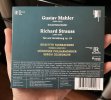
In late 1978 the Munich Philharmonic was searching for a new musical director, and one of the options they considered was Celibidache. He wasn't too interested at first, but was then persuaded to at least attend one of its concerts. He liked what he saw and heard. He found the conductor lousy (no surprises there, he always did), but liked the orchestra and thought it had some potential. So he agreed to give it a try. He was 66 years old and about to begin his most mature and prolific and successful period of his career - though he didn't know it yet.

The first concert took place on February 16, 1979 and was a huge success. 'Huge' doesn't even begin to describe it. The story goes that the applause lasted the best part of half an hour, Celibidache being repeatedly called back on stage long after the orchestra had left. Critics ran out of superlatives. The philharmonic had never experienced such a massive success in its entire history.
What's even more impressive is that Celibidache had achieved that in just three weeks, during which he had been granted ten rehearsals.

The concert was repeated the next day, when it was also recorded. I'm listening to that recording today(*). And boy, is it gorgeous! I've never been a fan of Richard Strauss, but after hearing Celibidache I'm about to become one.

(*) I mean Death and Transfiguration by Richard Strauss. The Kindertotenlieder is a later recording, from 1983.

IMG_2777.jpg

IMG_2778.jpg

IMG_2779.jpg
 
Last edited:
Mal Waldron.jpg

My favorite jazz reissue/historical issue so far this year.

I'm a huge Mal Waldron fan. He made my all-time favorite jazz album, Update. Some people say he doesn't swing, or doesn't swing enough, but I don't hear it that way. There's a "breaking through storm clouds" quality to his playing that is magical. This trio date is mostly classic Waldron, and then for two tracks at the end, he plays bop with Sonny Stitt guesting. Waldron can play bop.

Not everything Zev Feldman has tracked down and put out is great, but he has a very high batting average. This is a solid double.
 
Last edited:
Back
Top Bottom