No, porting in itself does not raise efficiency of a given woofer in a given box. That is a myth, a misinterpretation of a statement by Theile about certain alignments.
To explain, for a given size box a woofer that would have the characteristics that allowed it to perform with the best bass extension would be about 6 db more efficient than a DIFFERENT woofer that would have characteristcs that would allow maximum bass extension in the same size sealed box. So, this was a comparison of two different woofers. The woofer has the same SPL regardless. The box it is put in, and the whether sealed or ported, affect the low end response, not overall SPL.
The port only increases output in the region of the tuning frequency of the port. It raises the region where the output is rolling off and merely extends the bass a little further.
First, we already know that this woofer (Dayton 295-320) and tweeter work well together, from Macaltec's experience, in boxes in this size range.
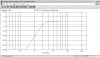
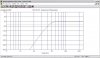
The Dayton woofer gives much more extended bass in the same cabinet than the Pioneer, down to a very respectable 31 hz vs 44 hz for the Pioneer. And I think the Dayton's rubber surround and treated cone make for a longer lasting woofer. Both woofers are about the same price.
Pioneer 12"
vs
Dayton 12"
You can't look just at the fs (woofer resonance) alone to compare the low end. You have to consider how each woofer will react in that particular cabinet. There are OTHER woofer characteristics that cause the woofer to roll off before speaker resonance.
You will notice that they have different tuning frequencies. What would happen, you might ask, if you used the same 31 hz tuning freqency with the Pioneer? Good question. But what I did was manipulate tuning frequency to give the flattest response.
I would add some damping to the back, 2 layers (about 2") of Poly fiberfill batting and on the undamped side panel as well. Don't worry about putting anything under the top panel. You can just buy a bag of poly fiberfill batting and staple it in place.







 ????? Kinda strapped right now.
 .
.