• The move to the new server is done. There are some software and database maintenance updates in process. This has us passing the hat around to help out. We appreciate any donations. Seriously, even a dollar helps. The payment page may be found here - https://www.audiokarma.org/support.html

What is the Weakest Link in my Vintage System

Which component will bring the biggest gains

  • Cartridge

    Votes: 7 21.2%
  • Turntable

    Votes: 1 3.0%
  • Amplifier

    Votes: 4 12.1%
  • Speakers

    Votes: 21 63.6%

  • Total voters
    33

TunerLanding

Active Member
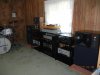
Hey guys I have a bit of a mix of vintage from late 70s/early 80s mid fi and I love the sound but I can’t help wondering if there’s something holding the others back here. Cartridge is a standard Grado red, turntable is a Luxman/Micro Seiki PD264, receiver is a Luxman R-1050, speakers are Acoustic Research AR-90. Wires are decent room dynamics are standard. Look forward to your thoughts!
 

Attachments

  • 1BB53E81-D9A1-425B-AA51-9894325046EF.jpeg
    1BB53E81-D9A1-425B-AA51-9894325046EF.jpeg
    103.1 KB · Views: 139
Register to hide this ad
It's pretty typical in the hobby for people to get myopic about gear when trying to figure out how to improve their system (and this isn't just a rookie problem, believe it or not), but perhaps even more important is how the speakers are positioned and the room acoustics (which you sort of alluded to). If you have one speaker shoved in a corner and the other speaker away from the opposing corner, that's gonna create some issues...issues that stem from bloated bass from one channel (because of corner "loading") which creates several other detrimental spin-off issues. Ideally, you want the speakers set up so they're pretty much the same distance from the front and side walls. Failing to do so will be a permanent handicap to system performance no matter what you do gear wise. Once you get that situation rectified, assess the acoustics of the room and deal with harmful reflections appropriately.

Michael
 
Agree. It will be quite difficult to achieve a realistic sized image when the speakers are 3 feet apart and set behind the cabinet such that it will cause diffraction. I would have voted had there been a “placement” option.

Long ago, a mentor of mine introduced me to the “Rule of Thirds” for speaker placement. Ideally, they would be placed at thirds of room dimensions both laterally and longitudinally. While that isn’t always practical, that is the ideal for optimum soundstage and minimizing room modes.

Lucky lad I am, I am able to do that with the main system.
 
Cables, placement, and set-up ..

If it hasn't been tweaked (right down to vibration control) it's only sounding half as good as it could...
So why would you replace a piece and how could you know which piece ??

That combination of pieces doesn't have some glaringly obvious mismatched piece ..but I'll bet it's capable of sounding a whole lot better.
If you're asking which piece would change the colorations that you're listening to, then the answer is always cartridge and speakers ..

Those are very very capable speakers .. If they were mine there would be a serious high quality power amp(s) and preamp hung on them ...
(and they require far more than 55wpc to realize their bass potential )
 
Last edited:
Nice gear.definitely move the speakers apart and look at a better cart. More power might help if you like it loud but there is nothing wrong with that receiver.
 
And I would +3 @E-Stat and @tomlinmgt about speaker placement... in general, but especially with those particular speakers ..
Side-firing woofers are tricky to set up and difficult to load into the room correctly ..

Unlike most speakers it's way easy to have them in the wrong place .. if those woofers are facing each other, a wall, or any furniture they're canceling out ..
 
Last edited:
No matter the quality of all your electronic components the loud speaker is always the weakest link followed by the phono cartridge and then the DAC be it stand alone or built in.
 
No matter the quality of all your electronic components the loud speaker is always the weakest link followed by the phono cartridge and then the DAC be it stand alone or built in.

Not ..
It's a system ... the weakest link could be anything,,.. including and especially where something is sitting ..
Set a $10,000 turntable on your subwoofer ..

And "No matter the quality of all your electronics" .. ???
Are you saying that any old phone amplifier can run my speakers ??
..
 
Last edited:
No matter the quality of all your electronic components the loud speaker is always the weakest link followed by the phono cartridge and then the DAC be it stand alone or built in.
Always? Not when you begin with your dream speaker! The only place I would potentially go is with a taller version of the SL U series stats for higher output.

If I *were* to invest more money in mine, it would be with electronics and/or cabling.
 
The weakest link is always the listener

Or the strongest ..
Sometimes I wish I could cheerfully listen to a bluetooth speaker like my wife does ... (and that's with two systems in the house that she could stream to from her phone)
She seems to be immune to sound quality ..
 
I'd agree to trying to "centrate" a system in a listening room.
You say you're happy with the sound. But can the sound be improved with sticking with the same basic components? Perhaps.

Cabling is important, especially the phono cable in a system.

The Grado Red is essentially bottom of the barrel , and nothing to jump for joy over, correct?

A different and better Cartridge would likely breathe some new life into your system. And could be present in the system for a good length of time if other components are later changed out.

There's usually something in a system that is a weak link, a cable, a totally crap antenna for FM.
Things that good systems should do well is a low noise floor, and clarity and precise sound. The sound originates from a jet black background, Hum, raspiness, grainy, cloudy, muddy are things one should not be hearing in a good healthy system.

I also would say that rack is quite far from being the bees knees. A decent small rack doesn't have to cost a lot to be better suited and more adequate.

Here's one of dozens of examples.

https://www.amazon.com/Pangea-Audio...1_5?keywords=audio+rack&qid=1637966184&sr=8-5
 
Last edited:
Set the speakers up for side-firing woofers .. 3 feet out from any wall near the corners of the room facing the long dimension of the room .. angled inward 15 degrees ..
The closer you get them to that position the better they will sound.
Take the turntable out of that closed box .. put the receiver in on the shelf where the turntable is, and put the turntable on top of the rack outside of the box.....
Put the rack in the middle as far from each speaker as possible .. in the middle about a foot out from the wall .. keep that tonearm away from the wall.
Listen to it like that so that you know how they should sound, and then compromise speaker placement if you must ..

It will sound like a whole new system ..
Then maybe a better cartridge and at least twice as much power ,,,

But any improvement is wasted set up as it is currently ..
The big side-firing woofers of the AR's are bouncing back off the furniture and the walls and canceling out the bass.. and you're resonating the cartridge with what bass is left...
 
Last edited:
DSCN0532.JPG View attachment 2405253 View attachment 2405253
Set the speakers up for side-firing woofers .. 3 feet out from any wall near the corners of the room facing the long dimension of the room .. angled inward 15 degrees ..
The closer you get them to that position the better they will sound.
Take the turntable out of that closed box .. put the receiver in on the shelf where the turntable is, and put the turntable on top of the rack outside of the box.....
Put the rack in the middle as far from each speaker as possible .. in the middle about a foot out from the wall .. keep that tonearm away from the wall.

It will sound like a whole new system ..
Then maybe a better cartridge and at least twice as much power ,,,

But any improvement is wasted set up as it is currently .. the woofers of the AR's are canceling out the bass and you're resonating the cartridge with what bass is left...

I could be wrong, but from my guesstimates, that present rack is a problem, where the Receiver doesn't look like it will fit on anything but the very top shelf. I don't know, maybe it "might" slip in if the glass doors were removed, or slid in from the back? Glass doors to me would be a major PITA, they'd have to go.

We could chat about all components involved till the cows come home. I have no idea whether Receiver, Turntable, Cartridge, Speakers, etc are lacking, as I never heard, seen, and no nothing about any of this gear, so there's that.

Here's one pic of my system with all racks and shelves incorporated. Yes, wide, lots of gear, and not optimal unless the back wall would be another 20' back. But adequate, strong, the center shelves can hold 165 lbs each.
 
Last edited:
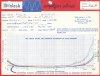
Come on we are talking high fidelity stuff. Even my old Scott and Fisher stuff from the early 60's has lower distortion than 2% of modern loudspeakers. Loud speakers in a room can have a 20 db range of frequency response. Early High FI electronics weren't that bad. Its just been recently speakers that are very costly have less than 1 % harmonic distortion below 90 db at 1 meter. Who listens that close back off to 3 or more meters and turn the volume up to 90 db levels and measure the distortion. Much higher. Mac charts 3.jpg

Plus note he checked the amplifier at 16 ohms where the distortion is the lowest because less current is required. Scott like Fisher and others all suffered from compromised output transformer design and usage causing increased distortions.

Read the specs on a Mac 3500 MK I and the recently introduced 3500 MK II. Show me a speaker with that low of distortion. Then show me a phono cartridge with the same signal to noise and that low of distortion.

Then if Dacs have such low distortion consistently and you pull any random pair off the shelf then you will discover that they sound differently. If they do there is distortion there some where. But it's not as bad as loud speakers for sure. Now I will admit that electrostatics and Ribbon speakers have very low distortion, but their frequency response is horrid.
 
Last edited:
Come on we are talking high fidelity stuff. Even my old Scott and Fisher stuff from the early 60's has lower distortion than 2% of modern loudspeakers. Loud speakers in a room can have a 20 db range of frequency response. Early High FI electronics weren't that bad. Its just been recently speakers that are very costly have less than 1 % harmonic distortion below 90 db at 1 meter. Who listens that close back off to 3 or more meters and turn the volume up to 90 db levels and measure the distortion. Much higher. View attachment 2405264

Don't mistake my post to assume I'm dissing, and saying vintage gear is not acceptable, adequate, or not enjoyable. But, all gear can fall out of tune-adjustment, don't matter if it's a $30,000 Power Amp.

With that said, we commonly make assumptions, and there's only one way to evaluate, and that would be in house, not on the web to assess any system, no matter if that particular system cost $100K.

It's a great thing to have other local audio friends.
 
1. Speaker position
2. Room acoustics
3. Stand, you are on a suspended floor, a good stand is your friend
4. If you are calling the cabling wires, then you need an upgrade
5. Power conditioning

Optimize the system as it sits then start changing pieces and parts.

Get the room and positioning setup before anything else, all the reflective surfaces I see in the small view of your room's snapshot only contribute to bad sound...you need a balance between absorption, diffraction, and reflections to optimize sound quality.

Get rid of the flimsy stand, those things are horrible for sound quality.

Do those things first and once that is sounding good you can move on.

I am not a fan of the Grado Red, I've had a couple along with the Golds, the new Opus3, though, is better than my Sonata, and costs less.
 
1. Speaker position
2. Room acoustics
3. Stand, you are on a suspended floor, a good stand is your friend
4. If you are calling the cabling wires, then you need an upgrade
5. Power conditioning

Optimize the system as it sits then start changing pieces and parts.

Get the room and positioning setup before anything else, all the reflective surfaces I see in the small view of your room's snapshot only contribute to bad sound...you need a balance between absorption, diffraction, and reflections to optimize sound quality.

Get rid of the flimsy stand, those things are horrible for sound quality.

Do those things first and once that is sounding good you can move on.

I am not a fan of the Grado Red, I've had a couple along with the Golds, the new Opus3, though, is better than my Sonata, and costs less.
This^^^. Can’t really add to this as it is 100% correct, most people skip the speaker positioning and room when that is the first and foremost to getting your gear sounding right. If those steps are skipped then the person is going backwards and will always be chasing their tales to try and get good sound.


Audiofreak71
 
Back
Top Bottom