• The move to the new server is done. There are some software and database maintenance updates in process. This has us passing the hat around to help out. We appreciate any donations. Seriously, even a dollar helps. The payment page may be found here - https://www.audiokarma.org/support.html

What makes you pick a particular Music format?

Primarily the absence of hissing and popping. While I loved (and still do for the most part) love my vinyl the variance in the quality of pressings always annoyed me.
I found the answer to that challenge about thirty five years ago - consistently using a VPI HW-16 record cleaner. I have some vinyl from that era that remains quiet and tick-free.

Conversely, I have some newer CDs that got lightly scratched and have tracks that have noise and will not rip.
 
I grew up with 78's and 45's, but it was until I got my first hi fi in the early 60's and heard the potential of the LP that I really fell in love with recorded sound. The LP was the first format that could really bring true fidelity in the home. Tape was on the fringe for me. Later on in life I recorded tapes for clients that Century records pressed to LP. Most were quite faithful to the recording. But I was never happy until low noise tape from Scotch came along. Then Maxell and TDK developed some great hi- output tapes that made the combination of R2R recordings issued on LP almost like being there for me. 8 track, 1/4 trk tapes, cassette though the possibilities were there never really brought to the life like experience. Quad was a gimmick in my book in either format. El cassette was a failed attempt as were other failed analog attempts. When I first heard about digital and deciding on sampling rates I was concerned. People I knew and respected wanted much higher sampling for CD and thats turned out to have come true for best reproduction today. Digital like analog has had a long gestation period, but I think we rare finally getting where we want to be. But as always its the initial recording that impacts the final results no matter which version of which format is chosen. Sometimes I get very frustrated with the manipulation by engineers and producers of the master recording. Pop music is what it is, but classical recordings are becoming examples of recording dexterity rather than trying to capture faithful reproduction. On some systems the manipulation works, button others the trickery is fully exposed. Today this over manipulation of the process is becoming one reason I have returned to the LP and to times when faithfulness was more apparent goal sometimes by accidental luck.
 
Yes, preference for digital sound usually refers to preference for the ideal of the least possible degradation -- including noise like ticks and pops for vinyl, hiss for tape, etc., but also distortion, and (most importantly) re-play degradation -- in the audio reproduction chain. Digital audio offers the possibility to bring the listener closest to hearing what was actually recorded, and it never degrades due to repeated playing. A reproduced digital signal sounds exactly the same whether you're playing it the first time or the millionth time.

Analog audio can't do that, because sound degradation not only occurs at every point where the recording medium or the signal level changes, it occurs every time the recording media is played, because playback inevitably involves physical processes that alter the recording medium. The tape head scrapes the tape; the needle scrapes the vinyl. Therefore, analog audio is destructive audio. Every analog recording is slightly damaged (the damage may be very slight, but it always happens) every time it's played. No accurate and truly permanent archive of analog audio can be kept unless it's never heard!

Insistence on analog technology is insistence that degradation is inevitable, and insistence on listening to it happen.


I can understand your point of "degradation" and the wear factors and really don't want to start a heated discussion (as what usually happens) but is not the very digital replication of the analogue wave close to the original but only takes pieces of it. The higher the sampling, the closer to the original sound, but the source can never be copied as it was in the beginning.

I was shown this by in a diagram by a tech/engineer type who has been into electronics for many years, and asked him about digital formats. Quote, "They can come close, but the exact analogue wave can not be duplicated. This is why digital seems so bright and sharp in contrast to the start out sound".


Q2
 
I can understand your point of "degradation" and the wear factors and really don't want to start a heated discussion (as what usually happens) but is not the very digital replication of the analogue wave close to the original but only takes pieces of it. The higher the sampling, the closer to the original sound, but the source can never be copied as it was in the beginning.

I was shown this by in a diagram by a tech/engineer type who has been into electronics for many years, and asked him about digital formats. Quote, "They can come close, but the exact analogue wave can not be duplicated. This is why digital seems so bright and sharp in contrast to the start out sound".
This is a common misconception, particularly amongst tech/engineer types who know electronics. Digital signal processing uses electronics, but it isn't electronics per se, so there are often misunderstandings.

Up to half the sampling frequency, the analog reproduction of a digitised waveform is exactly the same as the original for any practical purpose. The reproduction -- assuming reasonable quality encoding (ADC) and decoding (DAC) -- is certainly more precise than any analog reproduction process and generally more precise than the low-level noise that naturally occurs in any electronic circuit. Any differences between the original signal and the reproduced signal are either higher frequency than half the sampling frequency, or are very low-level noise. Digital audio is designed so that half the sampling frequency is (typically) at least 22khz -- well above the range of human hearing -- and the noise is too low to be audible.

See http://xiph.org/video/
 
I have some newer CDs that got lightly scratched and have tracks that have noise and will not rip.
If the scratches are on the surface of the substrate and haven't damaged the media itself, they can often be hand-polished out with a mild car polish like T-Cut. I've even repaired gouged DVDs this way.
 
If the scratches are on the surface of the substrate and haven't damaged the media itself, they can often be hand-polished out with a mild car polish like T-Cut. I've even repaired gouged DVDs this way.
Of that I am aware. First of all, I use L'Art du Son on all new disks and have used a light swirl of Mother's Carnauba wax followed with a mild buff to address scratches. Usually works, but not always.

"Perfect Sound Forever" - CDs are neither. :)
 
Meanwhile, 80 GB costs about $25 for a USB flash drive or $70 will buy you twenty-five times that amount for a hard drive.

It's time for a really cheap upgrade to your sound quality!
»»Ain't it great!

Me? Upgrade? Huh? Haha! Sorry. If my reply gave you the impression that my kit & kaboodle wasn't keeping tempo with the times, I can assure you that the sound quality of my library is as good as it gets today and the foreseeable future. Has been so for a good while now. ;)

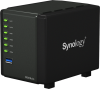
syn416slim.png

But thanks anyway for your counsel & current state of $torage presently. My "fun facts" reply was simply/solely addressing your rather impractical question/statement to @KDAC as to why anyone would opt for the "lowly" mp3 format in 2001. Per my history lesson, his choice was most certainly justifiable and well...unquestionable. :)
 
Last edited:
I like both digital and analog, but prefer vinyl because I can get it for 25 cents apiece at Goodwill, and there are more records than CDs at thrift stores (at least around here).
 
Sorry. If my reply gave you the impression that my kit & kaboodle wasn't keeping tempo with the times, I can assure you that the sound quality of my library is as good as it gets today and the foreseeable future.
Glad to hear you went back and ripped content in a lossless format. Computer technology changed significantly in that space of time. The Redbook standard itself was limited to optical storage technology available in 1980.

But thanks anyway for your counsel & current state of $torage presently. My "fun facts" reply was simply/solely addressing your rather impractical question/statement to @KDAC as to why anyone would opt for the "lowly" mp3 format in 2001. Per my history lesson, his choice was most certainly justifiable and unquestionable. :)
Agreed, Lossy MP3 sux - where you've thrown half the resolution out the window, 88/24 and better is where it's at!
 
Last edited:
I found the answer to that challenge about thirty five years ago - consistently using a VPI HW-16 record cleaner. I have some vinyl from that era that remains quiet and tick-free.

Conversely, I have some newer CDs that got lightly scratched and have tracks that have noise and will not rip.

Oh. My records are clean. I have always been (and still am) meticulous about that. However, all of the cleaning in the world won't fix a low quality recording.
 
Glad to hear you went back and ripped content in a lossless format.
Yeah, I went "back" alright... back when.

Circa ’97-99 I ripped a gob of mp3 @128k with Winamp. It was great! C'mon man, who wasn't a ripping pig in **** back then & there!?

Around ‘03-‘04, when I upgraded my main PC and HDD prices were in a relative freefall, I re-ripped what I had done+ @320k…it was a nice upgrade. 2007 I began, again, and got on trac with flac. So yeah, I went back and did flac on the keepers. I kept my 320k mp3 rips.
What's your story?
Agreed, Lossy MP3 sux - where you've thrown half the resolution out the window, 88/24 and better is where it's at!
Nah. Not all in all. HQ lossy still has it’s place and continues to have tremendous value today. I greatly appreciate lossy formats in many instances and environments; it still garners a good share of my listening time on the road and about the ranch.

Personally, I find it hard to understand why anyone who’s really into music would summarily dismiss HQ lossy altogether given today’s prevalent delivery means & convenience. In that respect, On-Demand streaming services are actually… where it’s at!

88/24 and better? Not me not yet. That commerce realm is too chock full of smarmy circus peanuts presently. Until there is a bona-fide standard regarding original masters and Hi-Res provenance, I will happily sit the bench this quarter.
 
Last edited:
Cd & Google play.
Damn convenient. It's on my phone, computer and everywhere else I decide to take it. Streaming @320kb is OK. The lowest I'll go.

My choice really boils down to ease of use, convenience and portability. Can I sling it from here to a hotel room or friends home the next day 1200 miles away and still have the same fidelity? Yes?! That's the format I want.
 
Oh. My records are clean. I have always been (and still am) meticulous about that. However, all of the cleaning in the world won't fix a low quality recording.
Well sure. A poor recording will remain so.

I was referring to your comment about "hissing and popping." I would return any new releases that exhibit such.
 
What's your story?
Initially, my rips were simply to duplicate CDs for car or portable use. When I had one computer with 120 GB of storage, i decided to start keeping the initial copy rather than deleting it. Once prices fell even further about six years ago, I decided to rip my entire library. I did it over the course of about two weeks for ripping and correcting tag information.

Not all in all. HQ lossy still has it’s place and continues to have tremendous value today. I greatly appreciate lossy formats in many instances and environments; it still garners a good share of my listening time on the road and about the ranch.
Don't share that sentiment. Music I store everywhere, including my phone is lossless.

Personally, I find it hard to understand why anyone who’s really into music would summarily dismiss HQ lossy altogether given today’s prevalent delivery means & convenience.
Because there's virtually no added expense required for better? I own a few MP3s because that is the only format available for the content.
 
For me it's been a chase for fidelity.
Choices, choices... I value excellent sound in my listening room. I can hear excellence in reel-to-reel at 15ips. I can hear excellence in high resolution digital (in the past few years). My question has always been: do I try to add really good quality sound by adding more sources or by staying with a single source media and trying to build a system that plays that media at the highest level my budget will allow? I used reel-to-reel in college, but it was 7 1/2 ips and my source material was largely dubs off of others' systems so I'd have some music in my dorm room. Some of the commercially available tapes were pretty good, most were pretty bad. FM radio was mainly my source in those days.

As I was able to invest in a decent turntable, I started buying more and more vinyl in the 70s and 80s. When CD came out, it just didn't sound right to me, and I feasted on buying vinyl as people dumped LP collections and distributors unloaded stock. SACD finally arrived in better sound than CD, but in limited availability; it still didn't sound as good to me as vinyl. Plus, by that time I had several thousand LPs. And, vinyl reproduction technology was continuing to get better and better - the turntables, arms, cartridges, electronics. So, choices, choices...

I stayed with vinyl and upgraded my record playing equipment and bought more LPs.

Now high resolution digital is getting much better than digital was once upon a time. For example, really good DSD playback finally equals good vinyl reproduction, in my estimation. And we also have reel-to-reel making a resurgence in 15 ips one-to-one dubs from master tapes that are outstanding; but at very high cost per piece of music.

At this stage, I think I won't switch from LPs until I'm forced to downsize to other living quarters. With over 6,000 LPs and pretty high quality playback, I've been gratified to have stayed the course optimizing for a single source media with the funds I can devote to in-home music listening. For me, it's been better to play just a single media (LPs) at the highest quality I can achieve within my resources, than to have a record player, CD player, SACD player, tape deck, high quality D-A gear for streamed media, etc.

I do wonder about the next stage when I downsize accommodations. My spouse, fortunately, also values high quality sound reproduction. But she's already given notice that downsizing means eliminating the LPs. So, I can see streaming digital somewhere on the horizon. Just hope its still 20 years down the road! ;)

Good listening to all.
 
Last edited:
what makes me choose a format is the final sound, the cost, and the availability. vinyl comes first, then i have lots of CDs but they don't sound nearly as food as vinyl or sacd. sacd is another format that yields sound that is close to the original source. dvda kind of went away but if you have a player that can decode them, they are very good too.

i have heard some wonderful sounding hi-res downloads but haven't bothered to assemble the necessary parts to do that job.
 
Initially, my rips were simply to duplicate CDs for car or portable use.
Just curious. Care to share what year and the format/bitrate?

Music I store everywhere, including my phone is lossless.
Same here. All rips to the server are lossless since '08. I'm not much of a storage guy with pocket media players or my phone these days. My iPod was retired a long time ago. As for my phone, HQ lossy streaming fills that role most practically and quite nicely. My meager mobile means and outdoor listening venues would never appreciate lossless anyway. So I never did fret that space being un-lossless.

Because there's virtually no added expense required for better?
You say, "why not?" I say, "why bother?"

For me, it's mostly about not being pound foolish. My home cave is acoustically treated and the speaker placement is dialed in just right. It has a large couch and a couple of very comfy chairs. It’s an awesome environment for losslessly ripped hi-fidelity listening. That Synology rig really pulls it's weight in flac when it's on stage. Problem is, I can’t take it with me in order to take advantage that room and the system what reveals such said digital magnificence. The good news is…the big bit-perfect boat is available there… when I’m there.

But when I'm in the car, my garage, on my deck, the lawnmower, or at the firepit...HQ lossy on-demand streaming amplified is a no-nonsense no-brainer. So yeah, for me, lossy fills a practical place and is a big win/win. Utility aside, the catalog alone makes it worth keeping the bathwater along with the baby.
 
Back
Top Bottom