
pauloalexand
Active Member
I have a PHILIPS GA-222 turntable that I intend to take to another house I own. What precautions should I take when transporting the turntable? Should I simply remove the platter?



What are those screws and where can I find them? I honestly don't know where they could be. How do I make the chassis press against the top without it moving?There were originally screws included to lock the suspended sub-chassis for transport. Those get removed and are likely long gone. The point being you don't want the sub-chassis bouncing around. If removing the platter causes the chassis to push up against the top so that it doesn't move anymore, that's your solution. Otherwise you need to maybe find some screws that for and lock it in place.
It is always a good practice to to search the web for the owner's manual and service manual of the gear one owns and keep them handy. I don't own a GA222, but found both the documents in two minutes. Here are the relevant instructions from the owner's manual.I have a PHILIPS GA-222 turntable that I intend to take to another house I own. What precautions should I take when transporting the turntable? Should I simply remove the platter?
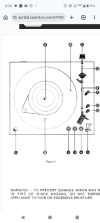

I have the service manual and the owner's manual for the Philips GA 222, but nothing about this subject appears. The photo in the manual you posted is from another Philips model, since I can't find this information in the GA 222 manual.It is always a good practice to to search the web for the owner's manual and service manual of the gear one owns and keep them handy. I don't own a GA222, but found both the documents in two minutes. Here are the relevant instructions from the owner's manual.
View attachment 3861884View attachment 3861885
I posted the pic from another manual as a line drawing is not given in the GA222 owner's manual. However, printed instruction are there and am now attaching them. The screws in the GA222 could be in a different position, but the general idea is that they are under the platter.I have the service manual and the owner's manual for the Philips GA 222, but nothing about this subject appears. The photo in the manual you posted is from another Philips model, since I can't find this information in the GA 222 manual.



attach the stylus guard, secure the tonearm with a twist tie to the tonearm rest
remove platter, then put cardboard or wads of paper or cloth between the sub platter and a bit of tape to keep it from bouncing around.
Well, I am an overcomplicated person.you guys are overcomplicating things...if you are not living on mountain roads, just secure your tonearm, maybe remove the platter, and put tt on the back seat...if someone is traveling with you put them there just in case...what distance we are talking about? if you are traveling across america just do with more precautions, but if it's inside the same city, or nearby, i wouldn't bother much, just drive slower than usual and everything will be fine...


hey, if it's good for linn, it will be good for philips tooDon't play a record while the turntable is in the car.
Seriously though. Remove the platter. Tie the tonearm to the rest with a twist tie. I'm not familiar with your turntable, but if there is enough of a sub-platter left after removing the platter, wedge some sponge or other soft packing material between it and the plinth. I transported my Linn this way.


Tape the tonearm to the rest with painter's tapeI have a PHILIPS GA-222 turntable that I intend to take to another house I own. What precautions should I take when transporting the turntable? Should I simply remove the platter?
Thanks!Postei a foto de outro manual, pois o manual do proprietário do GA222 não inclui um desenho esquemático. No entanto, as instruções impressas estão disponíveis e estou anexando-as agora. Os parafusos do GA222 podem estar em uma posição diferente, mas a ideia geral é que fiquem embaixo do prato.
O manual do proprietário na biblioteca da VE, onde você fez essa mesma pergunta, contém as seguintes informações.
View attachment 3861903View attachment 3861904
Espero que ajude.


