• The move to the new server is done. There are some software and database maintenance updates in process. This has us passing the hat around to help out. We appreciate any donations. Seriously, even a dollar helps. The payment page may be found here - https://www.audiokarma.org/support.html

What Years Did Digital Recording/Mixing Take Over?

Digital recording is very good when it is high res. I think a DDA produced that way can be the best of both worlds as the bottleneck is the CD - mode (44100 / 16). Recordings that are made in that very old standard take a lot away from the possible quality. I have experienced that myself when I recorded live with my A77 and very good microphones and burned that to CD.

I have listened to the "Bob till you drop" album just some days ago. Sounds good, just a bit harsh and sterile. And very similar on CD and vinyl disk.
 
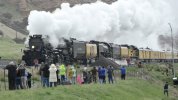
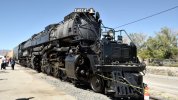
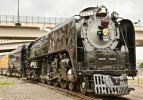
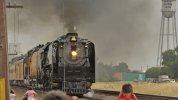
I still have some of Sound Streams recordings on LP of famous Stream Engines from the 70's by Mobile Fidelity. UP 8444, Southern PAcific 4449 , 614 T and of course the very famous Norfolk and Western's 611. I have my own personnal recordings of 611's sister 1218, in addition to my own videos and analog audio recordings of the other engines too. It was a great time to chase big steam and to ride behind them in passenger cars pulled by the big ladies. 3985 was added to the mix. It cost me $149,00 to ride behind 3985 in 86 as I remember. THe freedom train from the 70's was great fun. As was 8444 excursion over the Rio Grands trackage from Pueblo via Salida to Provo and Salt Lake. I love chasing engines to the 3 different California Rail fairs, too. I have chased 4014 three different times now, SHe is the Big Boy the UP restored for the 150 anniversary of driving the Golden spike in DSN_1040.JPGDSN_1087.JPGDSN_1209.JPGDSN_1209.JPGDNT_7974.JPG, UTah. . I never thought I would live to see that happen. But a $1000.00 a ticket is just to steep for me now. The ride is still on my bucket list if she is ever in my area again.

You have never heard sound systems challenged until you have heard 3985 or 8444 pounding the rails as they roar by you with the microphones only 20 feet from the track. All that sound will surely clean the dust from your woofer cones. MY NEw to me line arrays that I just purchased recently get a real work out as my Amps flash the Power Guard lights while the VU meters swing past 600 watts. Thats almost 120 db at 1 meter and almost 110 db of pounding bass at my listening position with both speakers combined. I can't tolerate anything much over 98 db in the important midrange, but bass I can still accept. Peak reading Z weighted. That might measure anywhere from 10 to 16 db less A weighted with slow response. But no matter how you measure it you feel it in your bones and the push on your chest. THe throaty deep roar of the UP steam whistle is like no others who whistles seem to be a scream instead. Especially some of the N&S engine whistles. I wish this site would accept larger files. I would post my latest video of 4014 going by at over 60 miles per hour blowing whistle with me standing less that 15ft from the west wrong near track instead of the further east bound track. You can see the camera vibrate as she powers past with those drivers pounding as those 69" drivers go buy in a blur! A million pounds plus and over 7000 HP. of pure muscle.

Though the SP 4449 and the N&S J 611 maybe smoother and even just bit more powerful my favorite will always be the UP's 8444, now back to just 844. I ridden her more times than all the others comboned. Yes she kinls and clanks a bit but with those 80 inch drivers she is easily equipted to pull passenger trains over 100 mph consistently.DST_2216.jpgDST_2280.JPGDST_2335_edited-1.jpg
 
Last edited:
I am of the opinion that late 70's very early 80's were still pretty much all analog, the height of analog development. I suppose there will be a span in there in the 80's where there was a mixture of both analog/digital until digital finally took over completely. I have a habit of searching out vinyl from those all analog years. I could be wrong on my timeline though. To my ear it just seems those 70's records from Atco, RCA, AM, sounded better than anything after.
Excellent question and I see that you've only just joined AK.
 
Excellent question and I see that you've only just joined AK.
Yep, trying to nail down what speakers to build over in the speaker forum. The analog/digital changeover always interested me because it has a lot of significance in the history of music. Probably THE most important, everything considered.
 
Don't have my exemplar at hand at the moment, but iirc on Pete Townshend's "White City" it was explicitely mentioned, that it was an analogue recording. Should have been released ca. 1985/86, so at that time a non-digital recording had apparently already become somewhat unusual.

Greetings from Munich!

Manfred / lini
 
My father would play our stereo Railroad Sounds record for company on occasion. It may have impressed most people, except perhaps for my uncle, who had worked on the railroads. I wonder what response it would get at an audio show.
 
Yep, trying to nail down what speakers to build over in the speaker forum. The analog/digital changeover always interested me because it has a lot of significance in the history of music. Probably THE most important, everything considered.
I was remiss earlier in not saying “Welcome to AK”!

Do you think that the “analog/digital changeover” is more significant in the history of recorded music, vs. the emergence of modern performances/recordings that feature hi-res multi-channel audio (e.g., Blu-ray and SACD)?

IME/O, modern hi-res multi-channel recordings are capable of MUCH better audio quality compared with vintage recordings, and vintage formats for consumer deliverables - including Redbook CD that was introduced to the marketplace more than 40 years ago, and LPs that were introduced to the marketplace 75 years ago.

I respectfully suggest that there is a wealth of existing content on AK that I believe is relevant to your comment in your post #24. FWIW/IMO, following are a few relevant posts:


I was remiss earlier in not saying “Welcome to AK”!

Do you think that the “analog/digital changeover” is more significant in the history of recorded music, vs. the emergence of modern performances/recordings that feature hi-res multi-channel audio (e.g., Blu-ray and SACD)?

IME/O, modern hi-res multi-channel recordings are capable of MUCH better audio quality compared with vintage recordings, and vintage formats for consumer deliverables - including Redbook CD that was introduced to the marketplace more than 40 years ago, and LPs that were introduced to the marketplace 75 years ago.

I respectfully suggest that there is a wealth of existing content on AK that I believe is relevant to your comment in your post #24. FWIW/IMO, following are a few relevant posts:


I have never experimented with multi channel beyond my cheap home theater set up. Perhaps after I have achieved my goals with two channel I might change interests.

I believe the move from analog to digital was the most historically important development in music only because it is capable of storing the information forever, barring a total apocalypse. However only last week I had a hankering for some Doobie Brothers so I got into the CD case and as I removed the disc, I caught a glimpse of sunlight filtering through 100's of various size holes that miraculously appeared. Last time I got that particular CD out was maybe 5 years ago and it played fine, The disc itself is at least 20 years old, I believe I got it from Columbia House back in the day. Must have been made out of biodegradable material :) . I wont dispute the purity of digital, Ill just say I like the sound of a Ford flat head and while I own quite a few MoFi records, the recent fiasco didnt bother me at all because whatever method of capture they used, their vinyl still sounds great.
 
I believe the Ricky Martin hit of 2000 is referenced as the first totally 'in the box' piece, meaning the entire process never left a computer. Of course, there were digital hardware recorders quite a while previous, with subsequent mixing, if any, was on an analogue console. Not wagering on this.............................
 
Absolutely, the analog era's magic, especially in the late '70s to early '80s, brought a unique fusion of analog and digital, creating timeless sonic charm in vinyl, particularly from labels like Atco, RCA, and AM.
 
I have never experimented with multi channel beyond my cheap home theater set up. Perhaps after I have achieved my goals with two channel I might change interests.

I believe the move from analog to digital was the most historically important development in music only because it is capable of storing the information forever, barring a total apocalypse. However only last week I had a hankering for some Doobie Brothers so I got into the CD case and as I removed the disc, I caught a glimpse of sunlight filtering through 100's of various size holes that miraculously appeared. Last time I got that particular CD out was maybe 5 years ago and it played fine, The disc itself is at least 20 years old, I believe I got it from Columbia House back in the day. Must have been made out of biodegradable material :) . I wont dispute the purity of digital, Ill just say I like the sound of a Ford flat head and while I own quite a few MoFi records, the recent fiasco didnt bother me at all because whatever method of capture they used, their vinyl still sounds great.
Digital multi-track recording began being heavily used in high end studios in the early 1990's with Sony DASH and Mitsubishi Pro-Digi 24 track tape formats first in use (incompatible with each other at first). Nashville, TN's Audio Engineering Society members chose Mitsubishi Pro-Digi as early as 1987-1988. Then when computer DAW tools became more than toys with increased computing power, and higher capacity, faster storage, ProTools took over as the DAW platform of choice in the industry.
 
I am of the opinion that late 70's very early 80's were still pretty much all analog, the height of analog development. I suppose there will be a span in there in the 80's where there was a mixture of both analog/digital until digital finally took over completely. I have a habit of searching out vinyl from those all analog years. I could be wrong on my timeline though. To my ear it just seems those 70's records from Atco, RCA, AM, sounded better than anything after.
in the early years of cd's, the DDD was a thing to be sought after, as opposed to AAD, or ADD so digital mixing started, at least in the mid eighties,if not earlier.


Here's a interesting retrospective, from my union.

that last link, union, is probably the one you want, pcm mixers were introduced in 1981. 1996 was a watershed moment in digital mixers.
 
Soundstream was started in 1975 and first commercial release was in 1978. They did a lot of early TELARC recordings which were released on vinyl and were of vey high quality, which aided the acceptance if digital in the recording world.

Back then most audiophiles had the Telarc 1812 LP for it's outstanding clarity and dynamics. My ADC-XLM wouldn't play it; the thing jumped right out of the grooves during the cannon shots and I bought the Shure V-15, which would track the record.

At the time I had Klipsch LaScalas driven by a Dynaco ST 400 and the cannon shots bottomed out the woofers with a huge cracking sound. That had to be over 120db.
 
I don't have any years that I can say with confidence. The changes were slow. Some of the first all digital recordings were orchestral stereo recordings recorded live to digital master and then pressed to vinyl. Next I remember seeing a lot of digital remixes from originally analog recorded 24 track masters (Japanese remix). At the same time synths were getting better and more sounds in the music were actually created in the digital realm. I can remember mixing to a VHS machine straight from stereo mics to try to get clean digital sounds- then dropping it to a cassette so we could hear it in the car. LOL
It's all a bit fuzzy - those years in my mind.
 
Back
Top Bottom