• The move to the new server is done. There are some software and database maintenance updates in process. This has us passing the hat around to help out. We appreciate any donations. Seriously, even a dollar helps. The payment page may be found here - https://www.audiokarma.org/support.html

Which connectors for speaker wire jacks on an older amp?

RodantKapoor

Active Member
I recently bought some 14 gauge speaker wire and attached banana plugs on one end that attach to the speakers, but the speaker jacks in the back of my Sansui AU-7700 are the old-style where you insert the bare wire into the spring clamp, and the gauge of wire is slightly too thick to insert, but it works with what I can push in there.

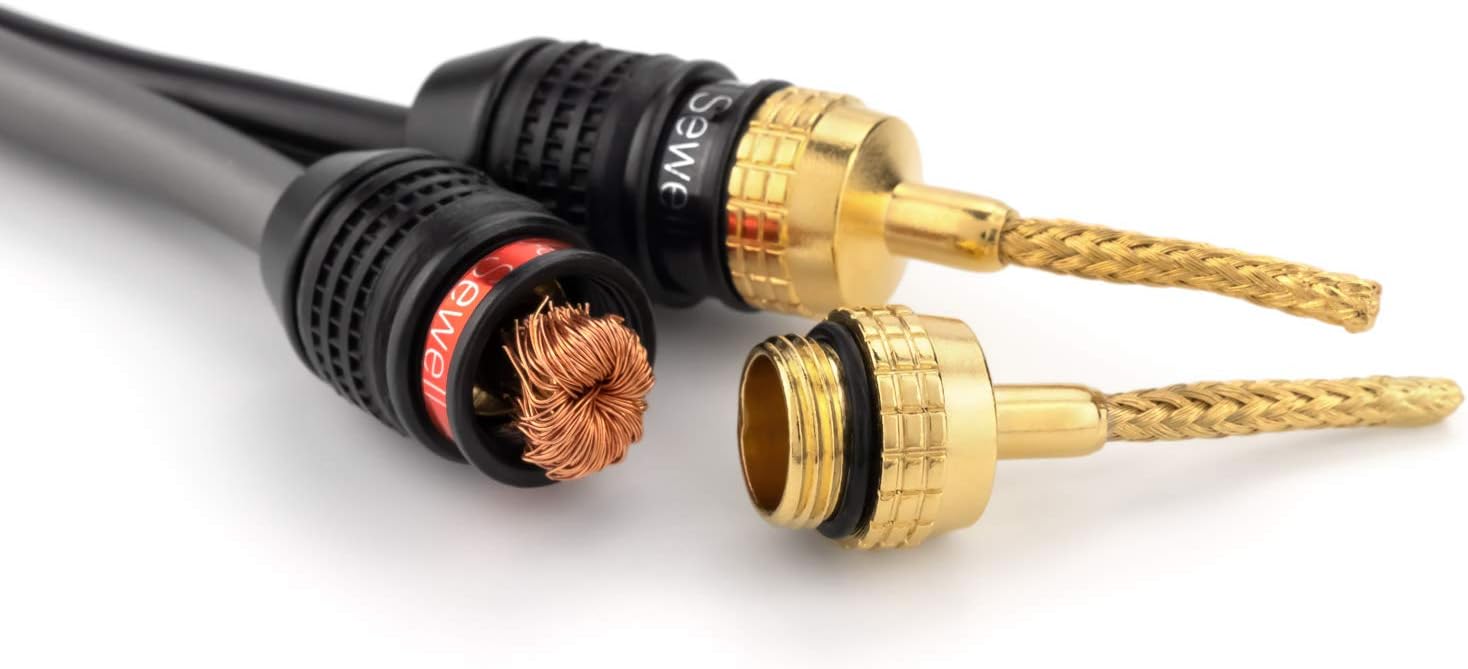
My question is would those bent pin or braided banana plugs work?
 
Register to hide this ad
The braided plug should work. I don't like the pins because there are only two points of contact between the plug and the spring clamp. The braided plugs should spread out when the clamp is released.
 
I recently bought some 14 gauge speaker wire and attached banana plugs on one end that attach to the speakers, but the speaker jacks in the back of my Sansui AU-7700 are the old-style where you insert the bare wire into the spring clamp, and the gauge of wire is slightly too thick to insert, but it works with what I can push in there.

My question is would those bent pin or braided banana plugs work?

You can also just use a wire stripper to thin the exposed end to 16ga. which is usually what the terminal is sized for ...
 
Depending on the connector you could file a slightly larger opening and use bigger speaker wires. I know it is a Sansui and some consider that blasphemy but on gear I want to use that has a connector that will accommodate the adjustment I have had good luck using miniature files for this major upgrade.
 
The braided plug should work. I don't like the pins because there are only two points of contact between the plug and the spring clamp. The braided plugs should spread out when the clamp is released.
51vHIlfF8fL._AC_SL1000_.jpg


these are pretty much a bad design. the way they flop out of the speaker terminals, they can touch each other or the chassis. they need heat shrink covering the gold at the base of the braid.

i've got a full set that i wish i would not have bought.
 
51vHIlfF8fL._AC_SL1000_.jpg


these are pretty much a bad design. the way they flop out of the speaker terminals, they can touch each other or the chassis. they need heat shrink covering the gold at the base of the braid.

i've got a full set that i wish i would not have bought.
Yes, they do look like an accident waiting to happen.
 
51vHIlfF8fL._AC_SL1000_.jpg


these are pretty much a bad design. the way they flop out of the speaker terminals, they can touch each other or the chassis. they need heat shrink covering the gold at the base of the braid.

i've got a full set that i wish i would not have bought.

In addition, while they might work well with stranded wire, I don't think they would work as well (or at all?) with solid core speaker wire.
I do use pins and have had no issues with them over the years. I wish there was a good inexpensive crimp on pin option but those seem to have gone the way off the dodo bird. I did try some AQ pins but was not pleased with those.
I use these that I get at Menards, but that little set screw isn't the best with solid core wire. I wish this style was available in a crimp on version.
3015089-AH11R-components-2-R.jpg


So many terminations have wide, conductive barrels which could short out. It's wise to pick terminations with non conductive barrels, OR use tape or shrink wrap on them to prevent shorts.
 
In addition, while they might work well with stranded wire, I don't think they would work as well (or at all?) with solid core speaker wire.
I do use pins and have had no issues with them over the years. I wish there was a good inexpensive crimp on pin option but those seem to have gone the way off the dodo bird. I did try some AQ pins but was not pleased with those.

So many terminations have wide, conductive barrels which could short out. It's wise to pick terminations with non conductive barrels, OR use tape or shrink wrap on them to prevent shorts.
no, they are only for use with stranded wire

61gRnxSQuQL._AC_SL1500_.jpg
 
whats the advantage of this over just stripping the wire and inserting it into the amp directly? If the wire is too fat, get wire that fits. JMO but the more connection points involved, the more places there are for problems.
 
Sometimes the answer is right in front of you, thank you Akustic!

Clean, simple, and no added connections .. those wires are usually all in contact with each other inside the cable anyway.
Comes from using 11 or 12ga, which doesn't fit many terminals ..
 
whats the advantage of this over just stripping the wire and inserting it into the amp directly? If the wire is too fat, get wire that fits. JMO but the more connection points involved, the more places there are for problems.
the wires don't untwist and flay i guess. like i said, bad design and i wish i didn't buy them so i don't use them.

if wire doesn't fit, i trim off a couple strands until it does then heatshrink it so there are no stray wires.
 
Re: The stray wires, would it be advisable to solder the ends?

I'm fairly new to all this, I really appreciate the advice. Up until now I was just using basic speaker wire (really thin) and got it into my head to buy some OFC wire.
 
Re: The stray wires, would it be advisable to solder the ends?

I'm fairly new to all this, I really appreciate the advice. Up until now I was just using basic speaker wire (really thin) and got it into my head to buy some OFC wire.
i have done that but i do not advise it. with the push type speaker connectors, the clip inside will only slightly grab the soldered wire but if it's bare wire, the spring clip mashes the wire and makes contact in a much larger area.
 
My amp is on one side of the San Francisco Golden Gate bridge, and my speakers are on the other side.

And I just realized I only have enough cables for MONO!

:mad:
 
Back
Top Bottom