• The move to the new server is done. There are some software and database maintenance updates in process. This has us passing the hat around to help out. We appreciate any donations. Seriously, even a dollar helps. The payment page may be found here - https://www.audiokarma.org/support.html

Which Contact Cleaner and Lubricant today? (Is De-Oxit D5 and Faderlube F5 still good?)

that slot is there to keep the pot from spinning 360degrees. its not meant to be an access port and if it is used, you are relying purely on luck to get any cleaner on the center wiper contact and if it has 2 sections, it will not get to the front section.

some pots actually do have little access holes in the side but 9 out of 10 times, i have the pots removed and actually aim the fluid where i want it. but thats just me.
again, gonna have to learn how to do these things efficiently so I can do this myself and not have it take a month. I like the idea of doing it more precisely. I have had pretty good success most of the time, and some of the 80's HK's have had those side holes which has helped. but sometimes, I feel like I am making a mess, and in one case, I think I have made things worse, when spraying a selector switch on a HK 450
 
I think I may have just done that to myself on a receiver. Based on the results, which were worse than when I started. That is what I get for going all in before reading up a bit. At least "not all that easy to clean off" makes it sound like it CAN be done. It is not an irreplaceable unit, but a decent one. a 1981 or so HK 450.

Hopefully I did not goof that up also on my new Three Thirty. I am waiting on some speaker wire connectors to make connecting the speakers to the old screw in types easier before I get to hook it up and find out.
A decent bit of flushing with something like CRC QD will usually do it, its just messy.
 
They 100% did change the formula. It used to be red and had a sweet smell.

I still have a tiny old can of it.

Rob
 
that slot is there to keep the pot from spinning 360degrees. its not meant to be an access port and if it is used, you are relying purely on luck to get any cleaner on the center wiper contact and if it has 2 sections, it will not get to the front section.

some pots actually do have little access holes in the side but 9 out of 10 times, i have the pots removed and actually aim the fluid where i want it. but thats just me.
Works for me, with the vintage Switchcraft, CTS, and Stackpole pots. I spray a good amount and dry off the excess.

:thumbsup:
 
All I have on hand is compressed air and F5, so that's what I've been using. Seems to work just fine on my 70's gear, but nothing has been really filthy to begin with.

The straw should be longer though. I hate having to disassemble things just to clean up some pots.
 
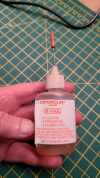
I use Deoxit and F5 almost everyday while working on Electronics. Both still do an excellent job. I mostly use the DeoxIT D100L precision applicator instead of the Spray can.

Interesting, I've never noticed or used the precision applicator. I use the brush applicator versions 9 out of 10 times. The brushing motion can help clean up really dirty contacts. I can think of situations where the precision applicator would be better though (added the D100L to my Amazon cart, the G100L is a little too painfully priced :().


81gx9I3VHwL._AC_SL1500_.jpg
I have pondered trying the brush applicator bottle. But the Needle applicator can be brushed around as well. I use a long Q tip when I feel the need to brush it.
 
The D100L is still red. Which I think is just an industrial dye, to tell you the truth.

:idea:
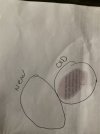
Interesting. So I did a little test. I sprayed a small amount of the new formula on a white piece of paper. Then sprayed the same amount, roughly, of the old formula on the same paper.

The new formula does have a very slight red tinge to it. The old formula is straight up red.

The new formula seemed to dry faster than the old, and the old seemed to leave a residue, or perhaps lubricant behind.

After 15 minutes, the new formula completely dried and disappeared from the paper. The old formula in still present, but feels dry. I will recheck this later to see if the old completely dries.

Here are the ingredients of both, right from the can.

New formula:
D series D100L
Odorless mineral spirits
Difluoroethane

Old formula:
D series D100L
1,1,1,3,3-Pentafluoropropane
Isopropyl alcohol
Hydrocarbon propellant

I’m sure the D100L is a secret ingredient and perhaps contained the red.

Here is a pic now 20 minutes after spraying them.

image.jpg
 
I have no idea, never experienced that. :dunno:
Just in case a vintage amp comes onto your bench with this issue. ;)

The old-school Cramolin residue would sometimes become this green, gooey mess. I'm not sure if this residue harmed the electronics, but after every application, I would clean any remaining Cramolin with isopropanol and a cloth. This was using the red Cramolin, not the blue one.

I have not had that problem with any of the modern CAIG products.

cramolin residue - old school cleaner.jpg
 
Last edited:
I have pondered trying the brush applicator bottle. But the Needle applicator can be brushed around as well. I use a long Q tip when I feel the need to brush it.

The brush version also comes with some specialized standalone brushes that I think fit popular connectors, although I rarely use them.

The brush version set is 7.5ml per bottle (at around $35 for the set of D100L and G100L), and the precision applicator version is 25ml at around $28 for the D100L and $47 for G100L :(.

It's kind of hard to do the per-ml math in brush bottle pair because gold is more expensive than the cleaner -- but it looks like the D100L 25ml bottle is a much better deal per ml -- I suppose it could be used to refill the brush bottle to save a little money in addition to using it as a precision applicator.

 
The brush version also comes with some specialized standalone brushes that I think fit popular connectors, although I rarely use them.

The brush version set is 7.5ml per bottle (at around $35 for the set of D100L and G100L), and the precision applicator version is 25ml at around $28 for the D100L and $47 for G100L :(.

It's kind of hard to do the per-ml math in brush bottle pair because gold is more expensive than the cleaner -- but it looks like the D100L 25ml bottle is a much better deal per ml -- I suppose it could be used to refill the brush bottle to save a little money in addition to using it as a precision applicator.

I use the larger bottles of D100L and S100L that have the needle applicators where they will fit the application (pardon the pun..) but mostly I use small artist brushes to apply the stuff. Much easier to get into tight or recessed areas.

Mind, I use one of my small Panavises to hold the bottle in place while the cap is off. Wouldn't want any tip-overs at the price they go for :oops:

1788632732581.png
 
Here is the test a week later. The old deoxit is still visible. It has soaked into the paper more so than drying.

Whatever this is that is hanging around, must have helped protect or lube contacts.

Perhaps I should add fader lube to the paper.

IMG_4097.jpeg
IMG_4098.jpeg
 
Whatever this is that is hanging around, must have helped protect or lube contacts.
I believe this is it. There is a light lubricant (even in the D5) left behind.

I know that inserting and removing tubes is easier after D5 is sprayed into sockets and other connectors. Even months or years after the original application of D5.

This is not true with pure contact cleaner sprays. Like CRC QD Cleaner.
 
Back
Top Bottom