• The move to the new server is done. There are some software and database maintenance updates in process. This has us passing the hat around to help out. We appreciate any donations. Seriously, even a dollar helps. The payment page may be found here - https://www.audiokarma.org/support.html

Which GE cartridge is this?

Panamafred

AK Subscriber
Subscriber
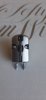
Picked this up on a very ancient, very beautiful Capehart console.

I've been going over google image searches for "GE Mono Cartridge" and I've seen several that look similar but all have different names. Thanks in advance!2020-06-15 11.06.00.jpg 2020-06-15 11.07.01.jpg
 
Register to hide this ad
The OP should be a proud owner of an RPX-050, dated the 51st week of 1950 ! These RPX Triple Play carts arrived in 1949.

A little history of GE Variable Reluctance carts is in order. The first consumer appearance of the GE VR family is to be found in the late 1946 Capehart deluxe console; the one with the clear (lucite ?) knobs on the preamp/tuner, a Brook made PPP 2A3 amp and a Western Electric 728B speaker ! Quite the HiFi camaraderie for their amazing auto changer turntable. Broadcasting and sound studios were welcome to purchase the "longhorn" cartridge with sapphire or diamond tips, the IRM-6C or IRM-8C respectively. These first GE VR carts did not have replaceable styli. They also required crazy high tracking force and had dismal high freq response. They do surely sound sweet with 78s, though.

In mid 1947, GE floored the sound studio, broadcasting and home HiFi markets, with their RPX-040, with a single play stylus. The stylus assembly has the stubby insert "below or atop" (depending on your viewpoint) the cantilever/stylus. Full range frequency response and sensible, for the era, tracking force was specified as 6 to 8 grams. With later arms, 6 grams is all that is needed. These sound every bit as good as any RPX-050 Triple Play I have heard in speed, dynamic impact and freq range. This is the cartridge that truly ushered in the home HiFi market, as well as becoming a favorite in Radio/TV broadcasting, as well as many sound studio endeavors. Compared with the RCA, Western Electric, Radio-Music Corp, Fairchild, Audax and Clarkstan pickup cartridges of the era, the GE was now very worthy of the highest fi grade.

1949 is the year the Triple Play RPX-047 and 050 arrives, with its' baton stylus change, enabling playback of the three speeds of discs available. The OP has one of these, the most popular phono cartridge through the 1950s and even very widely used well into the sixties, by both HiFi fans and studio personell. The only shortcoming is the 6 gram tracking force, plus these mono carts should not be used with any stereo discs. Sound quality is delightful, very sweet and detailed, this gets my highest recommendation for mono discs.

December 1957, brings us the last GE pickup cart, the VR-II. With only 4 grams needed for tracking, these would surely be winners. Their frequency response was flatter and more extended in the highs, with proper input loading. Their flat response sounds a bit analytical and even bright to many listeners, with a known "up front" or "in your face" character. The brightness can be tamed with a slightly lower input resistance. When I was a serious record buyer in the 1970s and 1980s, some more serious collectors recommended the VR-II for our mono disc infatuation. While I was happy using my Stanton 500 or 681A stereo cart, switched to mono in my preamp, I could understand their recommendation of the VR-II. Like the RPX series, the VR-II was popular well into the swinging sixties.

The first thing recognizable with the RPX-050 or VR-II is the small hole needed in your headshell, with the noticeable red knob atop. The OP has a pic showing the spring loaded post, which passes through the small hole. Note the top of the post, which has one thick and one thin side. This would be the easiest way to identify the size of the stylus you choose to use for which discs you will be playing. It also aligns the red knob, if present, properly. Without the red knob, a small screwdriver or pinched fingers can be used for the "baton stylus" change.
There were friction fit, small post, "stylus T-bars" available if you don't want to drill the needed hole into the headshell in order to accommodate the long post T-bars. I have also seen some hackers literally cutting the long post down and wrapping the post with a thin wrap of tape, like masking or electrical tape, to provide a friction fit which also enables your expensive headshells to stay stock. Like the RPX-040, in order to change styli, either jeweler's pliers or a very small hole would be needed atop the headshell; or the cart must be unmounted for stylus change...

I encourage any mono record collectors to try these exceptional pickup carts. With the stylus tip close to and directly centered between the magnetic poles, their sound character is most pleasing...Enjoy !

 
Last edited:
The OP should be a proud owner of an RPX-050, dated the 51st week of 1950 ! These RPX Triple Play carts arrived in 1949.

A little history of GE Variable Reluctance carts is in order. The first consumer appearance of the GE VR family is to be found in the late 1946 Capehart deluxe console; the one with the clear (lucite ?) knobs on the preamp/tuner, a Brook made PPP 2A3 amp and a Western Electric 728B speaker ! Quite the HiFi camaraderie for their amazing auto changer turntable. Broadcasting and sound studios were welcome to purchase the "longhorn" cartridge with sapphire or diamond tips, the IRM-6C or IRM-8C respectively. These first GE VR carts did not have replaceable styli. They also required crazy high tracking force and had dismal high freq response. They do surely sound sweet with 78s, though.

In mid 1947, GE floored the sound studio, broadcasting and home HiFi markets, with their RPX-040, with a single play stylus. The stylus assembly has the stubby insert "below or atop" (depending on your viewpoint) the cantilever/stylus. Full range frequency response and sensible, for the era, tracking force was specified as 6 to 8 grams. With later arms, 6 grams is all that is needed. These sound every bit as good as any RPX-050 Triple Play I have heard in speed, dynamic impact and freq range. This is the cartridge that truly ushered in the home HiFi market, as well as becoming a favorite in Radio/TV broadcasting, as well as many sound studio endeavors. Compared with the RCA, Western Electric, Radio-Music Corp, Fairchild, Audax and Clarkstan pickup cartridges of the era, the GE was now very worthy of the highest fi grade.

1949 is the year the Triple Play RPX-047 and 050 arrives, with its' baton stylus change, enabling playback of the three speeds of discs available. The OP has one of these, the most popular phono cartridge through the 1950s and even very widely used well into the sixties, by both HiFi fans and studio personell. The only shortcoming is the 6 gram tracking force, plus these mono carts should not be used with any stereo discs. Sound quality is delightful, very sweet and detailed, this gets my highest recommendation for mono discs.

December 1957, brings us the last GE pickup cart, the VR-II. With only 4 grams needed for tracking, these would surely be winners. Their frequency response was flatter and more extended in the highs, with proper input loading. Their flat response sounds a bit analytical and even bright to many listeners, with a known "up front" or "in your face" character. The brightness can be tamed with a slightly lower input resistance. When I was a serious record buyer in the 1970s and 1980s, some more serious collectors recommended the VR-II for our mono disc infatuation. While I was happy using my Stanton 500 or 681A stereo cart, switched to mono in my preamp, I could understand their recommendation of the VR-II. Like the RPX series, the VR-II was popular well into the swinging sixties.

The first thing recognizable with the RPX-050 or VR-II is the small hole needed in your headshell, with the noticeable red knob atop. The OP has a pic showing the spring loaded post, which passes through the small hole. Note the top of the post, which has one thick and one thin side. This would be the easiest way to identify the size of the stylus you choose to use for which discs you will be playing. It also aligns the red knob, if present, properly. Without the red knob, a small screwdriver or pinched fingers can be used for the "baton stylus" change.
There were friction fit, small post, "stylus T-bars" available if you don't want to drill the needed hole into the headshell in order to accommodate the long post T-bars. I have also seen some hackers literally cutting the long post down and wrapping the post with a thin wrap of tape, like masking or electrical tape, to provide a friction fit which also enables your expensive headshells to stay stock. Like the RPX-040, in order to change styli, either jeweler's pliers or a very small hole would be needed atop the headshell; or the cart must be unmounted for stylus change...

I encourage any mono record collectors to try these exceptional pickup carts. With the stylus tip close to and directly centered between the magnetic poles, their sound character is most pleasing...Enjoy !

Caveat with the GE VR II. Excellent for the pre 1964-1965 mono discs. This was the era when loudly cut rock and roll was taking over, and when GE was beginning to get behind in the tracking department. If loudly cut Pop and Rock mono LP discs are your preference, I do not recommend the GE VR II for you.
 
I run one of these on my 78 changer. Works excellent. I've never run it on an LP, don't have any early monos that I know of. Its got a nice fresh 1 mil diamond stylus on the LP side though.
 
I have had no problems with some hot cut, '50s and mid '60s 45s using my RPX with a 1 mil stylus. Why do the more compliant VR-IIs mistrack ? My guess is if you are warning with the VR-II, you have the same warning for RPX types ? I remember some lingo on lenco heaven which I do not fully agree with: "RPX is a great 78rpm shellac cart which can play (1 mil) microgrooves, while the VR-II is a great microgroove cart which can play 78s." IMHO, they can all sound very fine...just not with stereo discs.

When the aftermarket replacement styli were already refined, there were not just "stereo compliant" .7 mil tips, but soft suspension versions, which, unfortunately are now quite scarce. The rare styli I mention, available for RPX-050 or VR-II actually compress vertically easily, but I am fully aware that true mono carts have no vertical compliance and should not be tried with any desireable stereo disc. Maybe, these rare styli could help the mid-'60s mono tracking issues ?
 
I've always wondered what 'reluctance' was and how it actually varies in this type of cartridge. Having spent a few minutes reading about the various types of cartridges, I am no smarter about the term itself because no one defined 'reluctance.' It sounds similar to impedance. :idea:
 
its a fancy way of saying variable magnetic coupling. These are a moving iron cartridge, which is to say inside the cartridge there is a fixed magnet and a fixed coil. The stylus wiggles a piece of metal between them and that changes the magnetic field and induces a voltage in the coil.
 
I was writing as Gadget beat me to it...

Variable Reluctance is a magnetic term, used here for a magnetic cartridge, which is a moving iron type. In the '40s and '50s, there were numerous Variable Reluctance carts stateside, in the UK and Europe. Magnetic cartridge pickups are transducers, converting mechanical energy to electrical energy...

Magnetic carts are two types, moving iron or moving magnet. Both have a cantilever wiggling while the stylus tip is riding the grooves. The cantilever, placed near a focused magnetic circuit, either moves a slug of iron or an actual magnet. The coils, wound close are thus producing electrical signal, with a variable reluctance. Confusing, right ? Much of electronics requires memorizing before the technology is actually understood...
 
Last edited:
I have had no problems with some hot cut, '50s and mid '60s 45s using my RPX with a 1 mil stylus. Why do the more compliant VR-IIs mistrack ? My guess is if you are warning with the VR-II, you have the same warning for RPX types ? I remember some lingo on lenco heaven which I do not fully agree with: "RPX is a great 78rpm shellac cart which can play (1 mil) microgrooves, while the VR-II is a great microgroove cart which can play 78s." IMHO, they can all sound very fine...just not with stereo discs.

When the aftermarket replacement styli were already refined, there were not just "stereo compliant" .7 mil tips, but soft suspension versions, which, unfortunately are now quite scarce. The rare styli I mention, available for RPX-050 or VR-II actually compress vertically easily, but I am fully aware that true mono carts have no vertical compliance and should not be tried with any desireable stereo disc. Maybe, these rare styli could help the mid-'60s mono tracking issues ?

They mistrack because the records got cut at louder, and louder levels. And were too low compliance, and too high tip mass. GE got left behind. GE is not designed for hot cut records. Hot cut records and Stereo records taking over, is why radio stations yanked their older tonearms and their GE cartridges, as the GE couldn't track those records without mistracking. In some cases, older worn out or excessively vertical rumble prone turntables also had to be replaced too. Stanton 500 A and AL cartridges, and the Shure M 44-7 replaced the GE RPX and VR II in broadcasting work due to this. Usually the Micro-Trak 303, or the Rek-O-Kut Micropoise Stereo arms, or SME 3009 or 3012 tonearms replaced older arms.
 
Thanks for clarifying, Kent. I know you agree the RPX-040 and RPX-050 carts are excellent sounding mono era carts from the shellac era through the early mid '60s mono discs...
 
It seems extra complicated to introduce a piece of iron to wiggle in between magnet and coils, but 1) what do I know, and 2) it's beyond the scope of this hijacked thread. :D
 
exactly, the bit of iron or steel was significantly less mass than the magnet required to produce a comparable voltage output.
 
Hahahah-- WOW! I usually step aside and wait for comments before re-chiming in. Lots of info here.

Tubeactive, thanks so much for the detailed history of the GE cartridges. I find these old items are so much more satisfying to use when I understand the context that they were created in... it's amazing to me that an item from the late 40's still holds up today.

In a bit of a pickle however....
I already have a Fairchild 225a that I use for monos ... I lucked in to this one and probably wouldn't have forked over the cash for one but I enjoy it enough to justify keeping it... I do have plenty of monos and appreciate having a true mono cartridge.
I wonder if it would be worth getting the RPX set up to compare with the 225a?
I'm glad to hear that this is a decent 78 cartridge though as I am currently using a Shure m44 and have always thought 78s do better with period correct gear. Maybe that's what I'll do.

At least until I get I get a handle on a table that has 78 and 33 to justify being able to "triple play".

There were friction fit, small post, "stylus T-bars" available if you don't want to drill the needed hole into the headshell in order to accommodate the long post T-bars

Any chance that you could point me towards where to find one of these? I've done some googling around but to no avail ... and I really don't want to hack up any headshells or cartridge hardware.

This has been abundantly interesting to read. Thanks!
 
Last edited:
Thank You for your appreciation. Fairchild 225 will be tough to beat, but the GE RPX is sweeter sounding, while the 225A is a bit more analytical and wider range; but delightful.

Also tough to find will be the original friction fit, short T bar. However, how about the DIY hack as described above ?
Do you have an extra T bar ? How about the styli for the RPX ? I ask re: investment needed....Another standard spring loaded T bar and C-clip might be less money these days...

If you can mark the T bar at the top of the cart, while in place, then remove and cut straight across, but slightly below the mark. Then, wrap the bar with one wrap of blue masking tape, insert the post and realize if u need more or less tape. Oh yeah...insert the stylus before plugging it in....

I actually have a 225 with a 1 mil diamond which has the tubular cantilever. I retipped it and am now thinking of possibly retipping it with a 3 mil sapphire or diamond. Believe it or not, I also actually plan on re-cantilevering a busted SPU-GT with a 78 tip ! 78s are more addictive than you can believe, until you start spinning them on ur tables....

Which preamp and amp accompanies ur 225A ?
 
Back
Top Bottom