

You are using an out of date browser. It may not display this or other websites correctly.
You should upgrade or use an alternative browser.
You should upgrade or use an alternative browser.
Why are vintage speaker prices so high right now?
- Thread starter Franconian
- Start date

quiet
Addicted Member
I finally got a pair of Nova 8Bs for $50. The cabs were perfect but two tweets and one mid were dead. But with new caps and working drivers all in for about $125, they are a freaking steal! First set I have recapped that made a big difference. Hands-down the best sounding RS speaker I have ever heard.
View attachment 2452926 View attachment 2452927 View attachment 2452928 View attachment 2452929 View attachment 2452932 View attachment 2452933 View attachment 2452934
I have the 5B. And like it them enough that I bought some spare drivers when they passed under my nose.
The base extension is much better than many are aware. Down to a usable 34. That's a lot better than the usual box acoustic suspension speaker from the 70's.
Do get the Nova 9 when you can.

I have the 5B. And like it them enough that I bought some spare drivers when they passed under my nose.
The base extension is much better than many are aware. Down to a usable 34. That's a lot better than the usual box acoustic suspension speaker from the 70's.
Do get the Nova 9 when you can.
They do go lower than I thought they did at first. I can not believe how truly good they sound. They were worth the wait.
I have the 5B. And like it them enough that I bought some spare drivers when they passed under my nose.
The base extension is much better than many are aware. Down to a usable 34. That's a lot better than the usual box acoustic suspension speaker from the 70's.
Do get the Nova 9 when you can.
I do notice that they need some power put to them before the bass really shows itself. Low volume bass is a lot better in my Imperial 6s, but as the volume goes up, the Novas catch up real quick.
My Polk Monitor 10s have better bass all the way around, no doubt about it and their dome tweets image better......but their detail is about the same up high and the mids are not nearly as good as the 8s. I do think the mids are pretty hot on the 8s, so I have the mids set to "Low".
What I am realizing after about 60 hours on the recap is that the 8Bs do so freaking much right. Some of my other speakers (Imperial 6s, OLAs, KLH6s, Nova 7Bs) in that size class do a few things better but none do as many things well.
And I still am amazed at the difference the recap made. Night and day.

Zaemon
Active Member
I had a mind blowing moment when hearing an old Onkyo SC 660 speaker against a Klipsch RP 600M. Everything was better, every point, so ive gone vintage and now own a restored pair of Yamaha NS ( NS1000 cabinets with NS500MA drivers ). Those berylium domes are a blessing, cymbal and high hat never sounded so real.
I like good vintage gear after it got restored, because you never get that quality for the same price buying new stuff in my experience so far.
I like good vintage gear after it got restored, because you never get that quality for the same price buying new stuff in my experience so far.
Last edited:

Djcoolray
Addicted Member
Not really. Running a distorted signal or amp into any speaker can destroy a tweeter very easily. That's usually caused by insufficient power. With the extra headroom that comes from a powerful amp, if you can sit in the room and listen to what you've created, it's likely not over-driving the speakers. As always: If it sounds bad, turn it down!
I’m sorry, but that’s a presumption that so many people believe. It really depends on the signal over distortion rating of the amp when considering an amp with an ultra low amount of distortion being THD: 0.005%. I’m not talking 1970’s mid-fi here. Then the speakers are 105db 400 watt monsters with an in-line fuse.
Headroom and sound stage with the kind of depth in frequency definition that most people hope to experience.
There is no sounds bad happening, just have to make sure not to push the amp more than 75% of its capacity to avoid clipping. I rattled the heavy oak door to the room the equipment sat in for years.
If a person has to turn it down cause it starts to sound bad, the system is mismatched with too much distortion coming from the amp. A set of speakers that are less sensitive would cure for that problem.
Then I have a powerful amp, an Yamaha MX-1000 that has more headroom, but not the detailed sound stage.
God did not create all stereo equipment equal…..depending on the distortion of the amp and the sensitivity of the speakers will a person know how long their speakers last. The lower the THD, the higher amount of signal can be pushed into ultra sensitive speakers.

BMWCCA
Addicted Member
Whatever. I'm not an EE. These guys probably are:
https://adn.harmanpro.com/site_elem...6813/JBL_TechNote_DangerLowPower_original.pdf
https://adn.harmanpro.com/site_elem...6813/JBL_TechNote_DangerLowPower_original.pdf
quiet
Addicted Member
I do notice that they need some power put to them before the bass really shows itself. Low volume bass is a lot better in my Imperial 6s, but as the volume goes up, the Novas catch up real quick.
My Polk Monitor 10s have better bass all the way around, no doubt about it and their dome tweets image better......but their detail is about the same up high and the mids are not nearly as good as the 8s. I do think the mids are pretty hot on the 8s, so I have the mids set to "Low".
What I am realizing after about 60 hours on the recap is that the 8Bs do so freaking much right. Some of my other speakers (Imperial 6s, OLAs, KLH6s, Nova 7Bs) in that size class do a few things better but none do as many things well.
And I still am amazed at the difference the recap made. Night and day.
I have not come to the conclusion that the 5,8 are fantastic speakers. But they are exceptional. Totally adequate for most of the music I play. Not many inadequacies. Much like my KLH 5, Fisher XP7b. The Criterion 5XB, not so much. The much-condemned Fisher is by far the best of the class.
My OLA good or bad isn't as good as these.
The Imperial 6 remains elusive in this region. Maybe even extinct.
I have not come to the conclusion that the 5,8 are fantastic speakers. But they are exceptional. Totally adequate for most of the music I play. Not many inadequacies. Much like my KLH 5, Fisher XP7b. The Criterion 5XB, not so much. The much-condemned Fisher is by far the best of the class.
My OLA good or bad isn't as good as these.
The Imperial 6 remains elusive in this region. Maybe even extinct.
Have you recapped the 8Bs? I thought they were fine before fresh caps but now? What a huge difference.
All of mine have have least fresh caps and the OLA and KLH6s have rebuilt woofers.
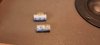
The original caps were so small and cheap compared to the Daytons.

Superampman
AK Member
Remember Ken Kantor, founder of NHT? He's disappeared from here but there's a thread devoted to this very topic where he effectively debunks this whole concept by JBL. The fact according to Ken is that tweeters are typically blown not from distortion but from being overdriven. That harshness you hear at the top when the amp is clipping is the tweeter being overdriven. The bottom end is where it's run out of steam because people are trying to get more volume/spl. And they do, just not in the lower registers where the signal is clipping. The top end is now getting way more power than it's rated for, so the unsuspecting listener is getting more volume alright but only in the upper registers. When they finally hear the tweeter complain, those frequencies may still not be clipping. Yes the waveform is clipped off but only the outside of it. The embedded upper frequencies are not (typically). If they are, you've stopped hearing the tweeter for a while by then because it's blown. The raspy distortion in the tweeter is because it's being overdriven until of course damage ensues and it's permanent.Whatever. I'm not an EE. These guys probably are:
https://adn.harmanpro.com/site_elem...6813/JBL_TechNote_DangerLowPower_original.pdf

infullview
Super Member
I'm glad you're trying to explain this. A square wave consists of a fundamental sine wave (of the same frequency as the square wave) and odd harmonics of the fundamental. This additional energy is what overloads the tweeter as you said. Clipping does not always equate to killing a tweeter. If your amp doesn't produce a lot of power, the additional power contained in the clipped wave may not burn the tweeter out if the total power going to it does not exceed its power handling capacity.Remember Ken Kantor, founder of NHT? He's disappeared from here but there's a thread devoted to this very topic where he effectively debunks this whole concept
Superampman
AK Member
sureI'm glad you're trying to explain this. A square wave consists of a fundamental sine wave (of the same frequency as the square wave) and odd harmonics of the fundamental. This additional energy is what overloads the tweeter as you said. Clipping does not always equate to killing a tweeter. If your amp doesn't produce a lot of power, the additional power contained in the clipped wave may not burn the tweeter out if the total power going to it does not exceed its power handling capacity.
Superampman
AK Member
Yes, it is, to the tweeters. A typical tweeter rated at 20watts receiving 60 or more cleanly, is going to blow at least eventually. It doesn't have to sound bad for this eventuality to take place, however.I repeat, if it sounds bad, turn it down.
Regardless, your (Ken's) theory requires an amp running out of power and into clipping. Doesn't really sound like an issue of too much power.
But, of course, opinions are like . . . you know what. Everyone has one.


MaxP
Super Member
I repeat, if it sounds bad, turn it down.
Regardless, your (Ken's) theory requires an amp running out of power and into clipping. Doesn't really sound like an issue of too much power.
But, of course, opinions are like . . . you know what. Everyone has one.
You beat me to it…