
• The move to the new server is done. There are some software and database maintenance updates in process. This has us passing the hat around to help out. We appreciate any donations. Seriously, even a dollar helps. The payment page may be found here - https://www.audiokarma.org/support.html

Why do some speakers sound good at loud volumes, while some others the opposite?

Kreshna

...but I have to know.
Loudness-wise, it seems JBL 120Tis are quite balanced speakers. They sound great at loud volumes, but they never lose details when played quietly. My Sansui AU-7900 has loudness switch, but with the 120Tis, I never need it.

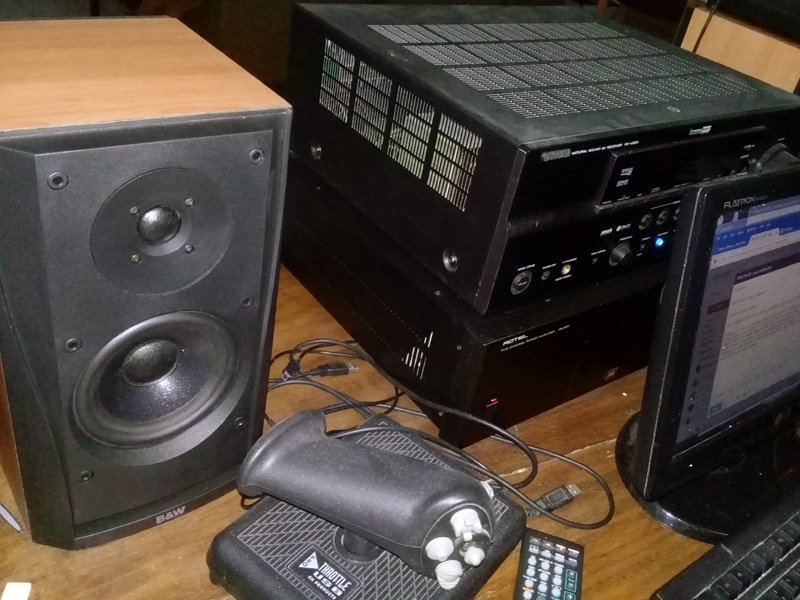
When I bought the B&W DM302s, I liked how they sound at low to moderate volumes, especially their soundstage depth and tonal organicness. Yet the sound very strained, hard, edgy, and sometimes shouty, when played loud. Using more powerful amplifier helps the case, but does not eliminate the problem completely.
songs_that_sound_best_on_your_system.jpg

Bowers & Wilkins DM302.

NHT SuperZeros are quite the opposite. Corey Greenberg wrote that the speakers can play impressively loud for their size, and boy, was he right! He mentioned the SuperZeros can become hard and edgy when played sufficiently loud, but I have never experienced the aforementioned hardness and edginess. Well either that, or perhaps I just haven't pumped the SuperZeros loud enough. Suffice to say the SuperZeros always tempt me to turn the volume louder.
Kreshna-Aryaguna-Nurzaman-NHT-Super-Zero-pic-01.jpg

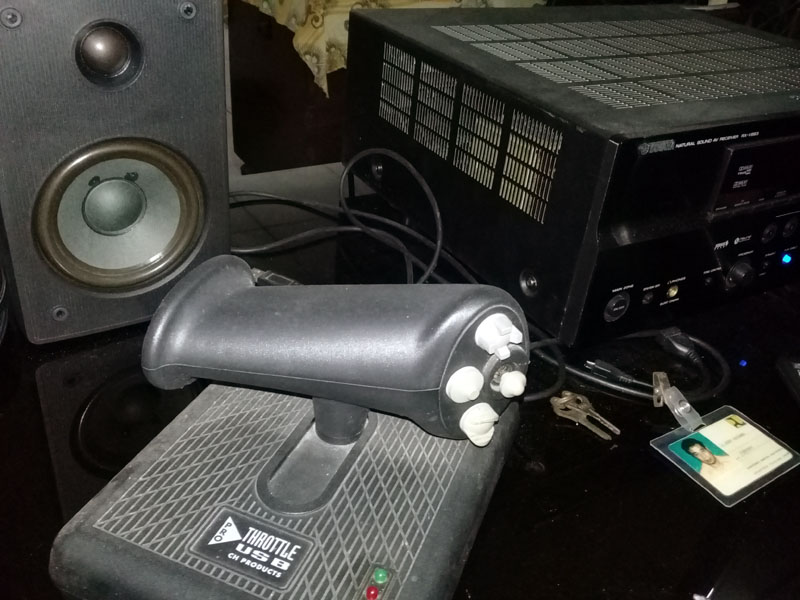
NHT SuperZero.

Problem is --and unlike JBL 120Tis, the SuperZeros tend to lose details at low to moderate volumes. And I listen to low and moderate volumes quite often, since I mostly listen to music while working (it's pretty hard to concentrate when the music is loud). At low and moderate volumes, the SuperZeros tend to sound "midrangey" and lacking details. On the positive side, it makes the sound warmer and sweeter, but imagine you're only allowed to drink hot chocolate for the rest of your life (blargh). With certain songs, the midrangey sound get worse. For example, the song I Try by Macy Gray sounds like it is played on cheap transistor radio. Only by turning up the volume, the song becomes bearable. But like I said, I cannot always listen at loud volumes.

TL/DR:
JBL 120Ti: 89 dB / watt / meter. Sound very dynamic at loud volumes, less dynamic at low and moderate volumes, but still tonally detailed.
B&W DM302: 91 dB / watt / meter. Sound dynamic at moderate and low volumes, better soundstage depth at moderate and low volumes. Yet they sound strained, edgy, and shouty when played out loud.
NHT SuperZero: 86 dB / watt / meter. Sound dynamic and detailed at loud volumes. Tend to tempt the listener to turn up the volume. Yet they sound midrangey and lacking details at low to moderate volumes.

I understand it depends on many tihings, but in general, why do some speakers sound bad at low volumes? What makes some speakers sound bad at loud volumes? Is it sensitivity? Impedance curve? Amplifier brand and model? Amplifier class?

I'm using the SuperZeros with Yamaha RX-V663 AV receiver (Pure Direct stereo mode). Would switching to more powerful amplifier, perhaps Crown or QSC, make the SuperZeros sound more detailed at low volumes? What should I do, save using loudness button, to make the SuperZeros sound better when played quietly?
 
Register to hide this ad
I find this to be true with my LS50’s and current amplification. Even high passed at 79hz, if you try and push them too much they get hard and a little uncontrolled.

However at moderately high levels (and below) they are sublime. So I listen like that. It’s also deceptive because the sound is so lovely it tends to instigate “volume increase” as you get lost in the music.
 
I find this to be true with my LS50’s and current amplification. Even high passed at 79hz, if you try and push them too much they get hard and a little uncontrolled.

However at moderately high levels (and below) they are sublime. So I listen like that. It’s also deceptive because the sound is so lovely it tends to instigate “volume increase” as you get lost in the music.
So it is not sensitivity (or the lack thereof) that makes certain speakers sound hard at loud volumes, since KEF LS50 is 84 dB / watt / meter while B&W DM302 91 dB / watt / meter. Vastly different sensitivity, yet similar behavior: great at low and moderate volumes, hard at loud volumes. I don't know then, perhaps impedance curve? The DM302's impedance drops to as low as 3 ohms from 200 Hz to 300 Hz, I wonder if the KEF LS50 suffered similar impedance dip.

The NHT SuperZero is exactly the opposite; they sound great when played loudly. Frankly I have never turned them up as loud as my JBL 120Tis, but the SuperZeros indeed sound great at high volumes. Too bad they lose details at low to moderate volumes. Well at least with my current amplifier (Yamaha RX-V663 AVR), you need to turn up the volume to bring up the details. :(

I wonder if using more powerful amps (probably class D?) would bring up the details better at low volumes. The RX-V663 sounds good, but its power amp section isn't really powerful.
 
LS50’s do drop down to 3.7ohms I think so maybe you’re on to something there. I also think it’s an amplifier thing as I moved from 65 wpc to 90 wpc and noticed a significant improvement in control. The bass also improved significantly with less woofer deflection.

So I wonder what a solid 100-150 wpc would do with a high damping factor amp.

But I find this is a high volume issue as it sounds like things are running out of steam (like an engine power limit controlling speed). I’m not sure why it should materialise at low volumes where you’d expect the system to perform without any issues.
 
LS50’s do drop down to 3.7ohms I think so maybe you’re on to something there. I also think it’s an amplifier thing as I moved from 65 wpc to 90 wpc and noticed a significant improvement in control. The bass also improved significantly with less woofer deflection.

So I wonder what a solid 100-150 wpc would do with a high damping factor amp.

But I find this is a high volume issue as it sounds like things are running out of steam (like an engine power limit controlling speed). I’m not sure why it should materialise at low volumes where you’d expect the system to perform without any issues.
For speakers high volume issue like you described above, it seems high current and low output impedance is the answer. The amplifier should be able to deal with the speakers' impedance dip.

As for speakers with low volume issue, like the NHT SuperZeros I described above, the problem is not strained sound. Instead, it is too-midrangey sound with severe lack of details, which happens in low and moderate volumes. I really need to turn up the volume to bring up all the musical details.

I wonder what should I do to get more detailed sound in low volumes. Suggestions?
 
I have probably heard fewer than 1/10,000 of the speakers out there, and this probably isn't a practical suggestion for you, but I would be pretty amazed to hear of a speaker that is better at low-volume listening than a pair of Quad ESLs. They sound vivid to me right down to hold-your-breath levels.

I am not making this up. :)
 
I understand it depends on many tihings, but in general, why do some speakers sound bad at low volumes? What makes some speakers sound bad at loud volumes? Is it sensitivity? Impedance curve?

Good question and it needs a little defining like what bad is. Understanding there are many things ,which is not a "general" scenario, but generally, it is balance.

Speaker dynamics which are affected by volume, ie power. Voice coil, electro magnetic forces against the magnets lines of flux. As well as the cone and surrounds which includes air pressure physics changing. Less in mids/tweeters of course but still there. Another is the frame this is all mounted on. If it flexes, and was not designed as part of the engineering, which many do. Magnetic, mass, power, engineered with voice coil size, number of coils?? Better balance here can give both low and high power performance. Out of balance may make performance suffer. I removed a nice looking set of factory speakers from a vehicle which looked great and were easily manufactured as the frame was plastic, like the cones, and sounded horrible. i suspected the frames flexed a lot.

just a general look at it.
 
Last edited:
How about the room?

Sounds detailed at low to medium levels but harsh at high levels? Could be the amp, could be the room itself. I don't think all speakers work optimally in all rooms.
 
I'm a guy who could probably slide by with a stepped attenuator featuring 4 or 5 stop on the wide open side of a preamp with 3 or 4dB of gain. That's to say a speaker only needs to sound good fairly loud to me.

My experience with speakers getting hard and flat with volume is that they're not being sufficiently powered. The difference between my F5 with it's 31 watts and my old Marantz with it's 52 is nuanced at low volume. But ask them to drive my Focals up into the mid 90's dB and the Marantz just falls apart. The F5 simply destroys it.

The Focals pretty much sound great at any volume, but I crave the slam and physicality of a good bit of volume with a lot of music. But the music that lacks slam and physicality isn't conveyed with any less dimensionality and detail. I find that mostly to be the case with my old ESS too.

I've got some speculation on why some speakers sound meh at low volume, but since I tend to avoid them I don't know much about them.
 
I always thought the louder a speaker play clean, the "better" they are. (disregarding other factors in "better" here)
There are just not a lot of home audio amps and speakers (okok maybe not here) that just cannot play even 96dB(A) cleanly. They struggle above 85dB(A) even, partially.

Power up a pro active setup and suddenly you understand.


How about the room?

Sounds detailed at low to medium levels but harsh at high levels? Could be the amp, could be the room itself. I don't think all speakers work optimally in all rooms.

Very much this. If you have too many reflections - each volume increase will add layers of bouncing sound that has no time to "disappear". At a certain amplitude it's just terrible.
 
It really depends on how far away you're listening. Listening 10 feet away requires 1/4 the power required for listening 20 feet away.
 
How about the room?

Sounds detailed at low to medium levels but harsh at high levels? Could be the amp, could be the room itself. I don't think all speakers work optimally in all rooms.
It really depends on how far away you're listening. Listening 10 feet away requires 1/4 the power required for listening 20 feet away.
In this case, I don't think distance and position really matters, because both the B&W DM302 (nice at low volumes, brittle at high volumes) and the NHT SuperZero (great at high volumes, midrangey and boring at low volumes) occupies the same spot. I just replaced the desk before changing the speakers from the DM302 to the SuperZero, but the new desk has about the same size as the old one, and occupies the same spot in the room.

In other words, it must be the speakers, because the SuperZeros occupy the same spot as the DM302s they have replaced. The the SuperZeros stay clean at high volumes, while the DM302s sound brittle at high volumes. At low volumes, however, the DM302s win hands down.

Good question and it needs a little defining like what bad is.
It's a different kind of bad. The DM302s sound bad at high volumes, where "bad" here means brittle, hard, edgy, and shouty.

The SuperZeros, on the other hand, sound bad at low volumes, where "bad" here means boring, midrangey, and severely lacking details.


Understanding there are many things ,which is not a "general" scenario, but generally, it is balance.

Speaker dynamics which are affected by volume, ie power. Voice coil, electro magnetic forces against the magnets lines of flux. As well as the cone and surrounds which includes air pressure physics changing. Less in mids/tweeters of course but still there. Another is the frame this is all mounted on. If it flexes, and was not designed as part of the engineering, which many do. Magnetic, mass, power, engineered with voice coil size, number of coils?? Better balance here can give both low and high power performance. Out of balance may make performance suffer. I removed a nice looking set of factory speakers from a vehicle which looked great and were easily manufactured as the frame was plastic, like the cones, and sounded horrible. i suspected the frames flexed a lot.

just a general look at it.
How about amplifier? Can high-powered class D amp bring up more details on less sensitive speakers like the SuperZero?
 
I think this is largely because of the way we perceive sound.

"Colored" speakers sound better at low volumes whereas "flat" speakers sound better at higher volumes.

Many manufactures accenuate the lows and highs in their speakers and this is akin to an undefeatable loudness contour control. It is also like walking into the TV showroom where all the sets are set to max/max (manufacture's showroom default) making them look better. When you listen at a low volume, your Fletcher-Munson curve makes speakers with accenuated bass and treble sound better.

But when you bring up the volume, these accenuations can over-drive the speaker.

A flat speaker sounds dull at low volume because it doesn't have an artificial bass and treble boost, and we know to an extent, louder sounds better. But when you bring up the volume to a realistic level where the ear doesn't need/crave this boost, the speaker with the flat response is not over-taxing the drivers or overpowering that/those portions of the frequency band making them sound better.
 
In my opinion, class D isn't a solution to any hifi problem that currently exists. If you're 6 feet away from any of those speakers you're only using a few watts. Having another 50, 100, or 1000 isn't going make and difference and will probably produce worse sound, especially with class D since the vast majority of the distortion in those amps is down around 1 or 2 watts.
 
My guess would be that you are experiencing the effects of the Fletcher-Munson Curve on your hearing. See this explanation of the effect: https://homerecordingpro.com/fletcher-munson-curve/

Since no two speakers have the same response curve, your perception of their sound will change quite dramatically at different SPLs. To give an example, say you have a speaker with a pronounced bass resonance - i.e. "boomy bass." That speaker might sound just right at very low listening levels because we have trouble hearing bass at low SPLs.

In my experience, every speaker I've owned had a kind of "ideal" volume for a given room. This can be frustrating.
 
In my experience, every speaker I've owned had a kind of "ideal" volume for a given room. This can be frustrating.
This is something which if honored can relieve much frustration. It also explains why, after being impressed, I mean truly impressed by something heard on a system, why it never seems to be reproduced later on another system. It does not need to be high volume at all to be unforgettable. Just clean.
 
I consider a speaker that can't play satisfactory at a variety of volume levels to be a major failing. How is it not? It isn't like there aren't speakers that sound good at low and high volume. I own a pair. A lot of horns sound great regardless of the volume summoned. How are you hearing the finer low level details if the speaker doesn't do details at low volume?
 
Maybe the different drivers have a different responses at different volumes. Then they sound "best" at the volume where they are about equal...
 
In my experience a lot of cheap speakers can actually sound really good at low power levels whereas other, better made, but less than optimal speakers require more amperage to perform at all. An excellent driver on the other hand is both efficient and yet can handle increased wattage without distortion.
 
Last edited:
We should also take into account that every selection sounds best at a specific volume. That volume is different from one selection to the next and even more different from one recording to the next. This is why I don't use normalizing when ripping CD's.

Everything is not supposed to have the same volume level.
 
Back
Top Bottom