

You are using an out of date browser. It may not display this or other websites correctly.
You should upgrade or use an alternative browser.
You should upgrade or use an alternative browser.
Why is the AR 3A so desirable?
- Thread starter Onebean
- Start date


GD70
Lunatic Member
Yeah, but I knew what I wanted to drive!I suspect that a lot of the people lusting after AR-3a's today weren't old enough to drive anything when they were new.

RTally
Speaker addict
I suspect that a lot of the people lusting after AR-3a's today weren't old enough to drive anything when they were new.
OK, JAG XKE
I lusted after a E-Type Jag in those days. But all I could afford was a Triumph Spitfire.

Which is probably why I bought a cheap consumer all-in-one unit back in the day.

Well, I just refurbished my original-owner AR-3a's (after practicing on my original owner AR-4x's.) Very, very happy with the results. The AR-3a's I have heard in recent years have lacked some bass punch because of air leaks in the foam or (on mine from 1969 vintage) the cloth surrounds. I doped the surrounds with the butyl rubber available online (good stuff) which sealed the porous surrounds properly, re-capped them and substituted L-pads with 8-ohm resistors for the original pots. The pots didn't look all that bad, but I did not want to think about taking them down again in a few years and having to unsolder those connections down in the hole to clean them and then solder them back in. Very, very pleased with them. Walnut veneer cabinet on one needs refinishing from water spots (wife put a planter on it.)

CoastinHome
Well-Known Member
AR-3a "Cutaway" Loudspeaker Display Speaker
Currently advertised on that auction site. The seller ("acoustic-research-inc" in High Point North Carolina) also posted a cutaway of an AR-11.
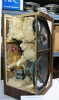
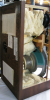
(more pictures below)
Earlier in the month I came across a very nice pair of AR-3's from an online estate sale auction. They are obviously sought after -- I got caught up in the "soft auction" and they were not cheap. If you've never heard the term "soft auction" before (I hadn't) it means that you do that last minute bidding frenzy like other auction sites -- and then they keep the auction open until no more bids are coming in.
At least they appear to be worth what I paid for them -- and I don't expect to be so lucky to find a pair of these sitting at a thrift shop around here. These appear to only have been moved from their original "on their side" bookshelf installation perhaps a couple of times in their lifetimes. I haven't tested them yet as the only amplifier I have that is a known quantity is a pair of 1961 Ampex EL34 monoblocks -- which do not have 4ohm taps on their output transformers -- and apparently are a bit underpowered for what is required to really make these sing.
Anyway, I'm just starting the process of trying to find all of the information I can about the AR-3's (circa 1964) and thought that the Acoustic Research fans here would find this interesting:
--------------------
AR-3a "Cutaway" Loudspeaker Display Speaker
This one-of-a-kind AR-3a "Cutaway" from Acoustic Research was a show-demonstration version of the AR-3a, hand-made by AR craftsmen in the late winter of 1967 for trade shows and the AR Music Room. Three "Cutaways" were originally fabricated by hand, and the other two were dismantled by AR and destroyed. This last speaker, and original AR-3a prototype, belonged to Delrama International of 1140 Broadway, New York, New York, and was actually one of the AR-3a Prototypes, as noted by the non-painted midrange and tweeter front plates.
This last "Cutaway," no serial number assigned, was to be displayed in Italy, Germany, France, United Kingdom, Asia and other parts of the world. It was shipped to the UK and used for a show and returned, apparently, hardly ever taken from the twin-box (box-within-a-box) special shipping carton, which remains with the speaker.
This "Cutaway" has functioning drivers, but the midrange and tweeter were disconnected with only the woofer in operation, and an audio oscillator, Hewlett-Packard Model 200CD, was used with a power amplifier to allow the Alnico 12-inch AR woofer to pump back and forth at around 5 Hz so audiophiles could observe the operation of an Acoustic Research acoustic-suspension woofer system, considered by many experts through the years to be the finest ever designed for low-distortion bass response.
This AR-3a "Cutaway" is in perfect, original condition, and it has been packed in its original carton for nearly thirty years and displayed only once during that time for the October, 1994 "AR 40th Birthday Party" on the east balcony of Grand Central Terminal in New York City.
This is a very special Acoustic Research loudspeaker and would make a unique and very special "center piece" to a large AR speaker collection.
_______________________________________________
The Acoustic Research AR-3a Loudspeaker:
The AR-3a is a 3-way, full-range, 4-ohm acoustic-suspension loudspeaker—technically a bookshelf speaker for very sturdy bookshelves—which includes the well-known AR 12-inch acoustic-suspension woofer and dome midrange and tweeter drivers, based on the original AR-3.
The AR-3a was designed by Chuck McShane and Roy Allison of Acoustic Research, Inc., and the speaker was introduced at the New York High Fidelity Music Show in October, 1967. The basic design goals of the AR-3a were originally established in 1965-1966 by AR cofounder Edgar Villchur, with the objective of improving the already excellent off-axis dispersion of the renowned AR-3. The result was a speaker containing one of the widest and most uniform midrange and treble dispersion of any forward-facing loudspeaker ever designed for home sound reproduction.
The acoustically sealed, heavily braced (nine internal braces screwed and glued to the inside of the cabinet) and critically damped (the "Q" of the AR-3a is 0.9 - 1.0) AR-3a enclosure volume is 1.7 cu. ft., which is optimal for the 41-43 Hz resonance frequency, and the woofer's suspension restoring force ratio is approximately 85% acoustic and 15% mechanical, far greater than nearly all current consumer loudspeakers using the a/s design. For this reason—and the basic design of the motor system in the AR woofer—the AR-3a has much lower harmonic distortion than any conventional, current-design loudspeaker of a comparable size. Julian Hirsch measured the woofer's harmonic distortion at a power level ten-times higher than usual test input voltages, and the distortion in the AR-3a's woofer was under 9% at 20 Hz, setting a new standard of low distortion, especially at this high-power testing.
The woofer used in this pair of AR-3a speakers has a large 9.6 lb Alnico-5 magnet assembly, cast-aluminum frame and a long-throw, 2-inch heavy copper voice coil with a linear excursion of 5/8-inch and a maximum physical excursion of 1.2 inches. The midrange driver has a 1½-inch treated-cloth dome (hemispherical) diaphragm with 1½-inch copper voice coil on an aluminum former assembly. The midrange driver is critically damped with fiberglass pads under and above the dome assembly itself. The magnet assembly is a large ferrite unit. The AR-3a tweeter uses a ¾-inch treated-paper dome diaphragm—similar to the original AR-3 phenolic-dome tweeter—suspended by urethane-polymer foam pieces in the outside portion of the voice coil with a layer of clear butyl-rubber sealing the outside of the magnetic gap. The magnet assembly is ferrite. The drivers have LCR crossover frequencies of 575 Hz and 5,000 Hz.
The speaker's impedance ranges from 2.7 – 4.9 ohms, and the speaker is approximately 0.5% efficient, meaning that an amplifier capable of at least 30-50 watts-per-channel into 4 ohms is the minimum suitable power. The AR-3a physical dimensions are 14” x 25” x 11-3/8.” The AR-3a’s net weight, each, unboxed, is 54 lbs., and in the double shipping carton 64 lbs gross.

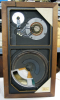
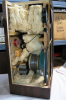
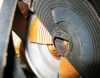
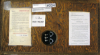


Currently advertised on that auction site. The seller ("acoustic-research-inc" in High Point North Carolina) also posted a cutaway of an AR-11.
(more pictures below)
Earlier in the month I came across a very nice pair of AR-3's from an online estate sale auction. They are obviously sought after -- I got caught up in the "soft auction" and they were not cheap. If you've never heard the term "soft auction" before (I hadn't) it means that you do that last minute bidding frenzy like other auction sites -- and then they keep the auction open until no more bids are coming in.
At least they appear to be worth what I paid for them -- and I don't expect to be so lucky to find a pair of these sitting at a thrift shop around here. These appear to only have been moved from their original "on their side" bookshelf installation perhaps a couple of times in their lifetimes. I haven't tested them yet as the only amplifier I have that is a known quantity is a pair of 1961 Ampex EL34 monoblocks -- which do not have 4ohm taps on their output transformers -- and apparently are a bit underpowered for what is required to really make these sing.
Anyway, I'm just starting the process of trying to find all of the information I can about the AR-3's (circa 1964) and thought that the Acoustic Research fans here would find this interesting:
--------------------
AR-3a "Cutaway" Loudspeaker Display Speaker
This one-of-a-kind AR-3a "Cutaway" from Acoustic Research was a show-demonstration version of the AR-3a, hand-made by AR craftsmen in the late winter of 1967 for trade shows and the AR Music Room. Three "Cutaways" were originally fabricated by hand, and the other two were dismantled by AR and destroyed. This last speaker, and original AR-3a prototype, belonged to Delrama International of 1140 Broadway, New York, New York, and was actually one of the AR-3a Prototypes, as noted by the non-painted midrange and tweeter front plates.
This last "Cutaway," no serial number assigned, was to be displayed in Italy, Germany, France, United Kingdom, Asia and other parts of the world. It was shipped to the UK and used for a show and returned, apparently, hardly ever taken from the twin-box (box-within-a-box) special shipping carton, which remains with the speaker.
This "Cutaway" has functioning drivers, but the midrange and tweeter were disconnected with only the woofer in operation, and an audio oscillator, Hewlett-Packard Model 200CD, was used with a power amplifier to allow the Alnico 12-inch AR woofer to pump back and forth at around 5 Hz so audiophiles could observe the operation of an Acoustic Research acoustic-suspension woofer system, considered by many experts through the years to be the finest ever designed for low-distortion bass response.
This AR-3a "Cutaway" is in perfect, original condition, and it has been packed in its original carton for nearly thirty years and displayed only once during that time for the October, 1994 "AR 40th Birthday Party" on the east balcony of Grand Central Terminal in New York City.
This is a very special Acoustic Research loudspeaker and would make a unique and very special "center piece" to a large AR speaker collection.
_______________________________________________
The Acoustic Research AR-3a Loudspeaker:
The AR-3a is a 3-way, full-range, 4-ohm acoustic-suspension loudspeaker—technically a bookshelf speaker for very sturdy bookshelves—which includes the well-known AR 12-inch acoustic-suspension woofer and dome midrange and tweeter drivers, based on the original AR-3.
The AR-3a was designed by Chuck McShane and Roy Allison of Acoustic Research, Inc., and the speaker was introduced at the New York High Fidelity Music Show in October, 1967. The basic design goals of the AR-3a were originally established in 1965-1966 by AR cofounder Edgar Villchur, with the objective of improving the already excellent off-axis dispersion of the renowned AR-3. The result was a speaker containing one of the widest and most uniform midrange and treble dispersion of any forward-facing loudspeaker ever designed for home sound reproduction.
The acoustically sealed, heavily braced (nine internal braces screwed and glued to the inside of the cabinet) and critically damped (the "Q" of the AR-3a is 0.9 - 1.0) AR-3a enclosure volume is 1.7 cu. ft., which is optimal for the 41-43 Hz resonance frequency, and the woofer's suspension restoring force ratio is approximately 85% acoustic and 15% mechanical, far greater than nearly all current consumer loudspeakers using the a/s design. For this reason—and the basic design of the motor system in the AR woofer—the AR-3a has much lower harmonic distortion than any conventional, current-design loudspeaker of a comparable size. Julian Hirsch measured the woofer's harmonic distortion at a power level ten-times higher than usual test input voltages, and the distortion in the AR-3a's woofer was under 9% at 20 Hz, setting a new standard of low distortion, especially at this high-power testing.
The woofer used in this pair of AR-3a speakers has a large 9.6 lb Alnico-5 magnet assembly, cast-aluminum frame and a long-throw, 2-inch heavy copper voice coil with a linear excursion of 5/8-inch and a maximum physical excursion of 1.2 inches. The midrange driver has a 1½-inch treated-cloth dome (hemispherical) diaphragm with 1½-inch copper voice coil on an aluminum former assembly. The midrange driver is critically damped with fiberglass pads under and above the dome assembly itself. The magnet assembly is a large ferrite unit. The AR-3a tweeter uses a ¾-inch treated-paper dome diaphragm—similar to the original AR-3 phenolic-dome tweeter—suspended by urethane-polymer foam pieces in the outside portion of the voice coil with a layer of clear butyl-rubber sealing the outside of the magnetic gap. The magnet assembly is ferrite. The drivers have LCR crossover frequencies of 575 Hz and 5,000 Hz.
The speaker's impedance ranges from 2.7 – 4.9 ohms, and the speaker is approximately 0.5% efficient, meaning that an amplifier capable of at least 30-50 watts-per-channel into 4 ohms is the minimum suitable power. The AR-3a physical dimensions are 14” x 25” x 11-3/8.” The AR-3a’s net weight, each, unboxed, is 54 lbs., and in the double shipping carton 64 lbs gross.
Last edited:

CoastinHome
Well-Known Member
My pleasure. That's a lot of very interesting background on the AR-3a, isn't it?
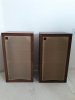
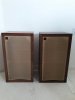
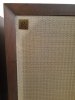
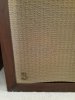
Here's what I picked up. These are serial numbers C-26610 and C-26644. They are both dated 4-18-64 -- likely by the owner but in the same color pen as the "Tested" and "Final Inspection" initials. I'm surprised with serial numbers that close together that the cabinet finishes are as different as they are -- including one having the rear panel stained and the other not.

I don't know what the rest of the system consisted of -- other than a Dual 1009 turntable and a Sony solid-state reel to reel. The Dual came home with me as well -- though inadvertently. I was just testing their bidding system after signing up by adding $1 to the current bid on the turntable almost a week before the auction closed. I certainly didn't expect to win. It's an absolutely mint condition - though missing the automatic spindle and dust cover. I haven't identified the cartridge yet.
Looking for any and all information on these AR-3's -- though I've scoured the web pretty well so far. If there is a highly recommended AR-3 /3a backgrounder thread or other "must-read", grateful for the link.
Here's what I picked up. These are serial numbers C-26610 and C-26644. They are both dated 4-18-64 -- likely by the owner but in the same color pen as the "Tested" and "Final Inspection" initials. I'm surprised with serial numbers that close together that the cabinet finishes are as different as they are -- including one having the rear panel stained and the other not.
I don't know what the rest of the system consisted of -- other than a Dual 1009 turntable and a Sony solid-state reel to reel. The Dual came home with me as well -- though inadvertently. I was just testing their bidding system after signing up by adding $1 to the current bid on the turntable almost a week before the auction closed. I certainly didn't expect to win. It's an absolutely mint condition - though missing the automatic spindle and dust cover. I haven't identified the cartridge yet.
Looking for any and all information on these AR-3's -- though I've scoured the web pretty well so far. If there is a highly recommended AR-3 /3a backgrounder thread or other "must-read", grateful for the link.
Attachments


RxDx
Speaker collector
If you haven't seen the restoration guide...
http://www.classicspeakerpages.net/...ginal_models_schematicss/restoring_the_ar-3a/
http://www.classicspeakerpages.net/...ginal_models_schematicss/restoring_the_ar-3a/
GD70
Lunatic Member
These are excellent speakers, when restored properly.My pleasure. That's a lot of very interesting background on the AR-3a, isn't it?
Here's what I picked up. These are serial numbers C-26610 and C-26644. They are both dated 4-18-64 -- likely by the owner but in the same color pen as the "Tested" and "Final Inspection" initials. I'm surprised with serial numbers that close together that the cabinet finishes are as different as they are -- including one having the rear panel stained and the other not.
View attachment 1676157 View attachment 1676160
I don't know what the rest of the system consisted of -- other than a Dual 1009 turntable and a Sony solid-state reel to reel. The Dual came home with me as well -- though inadvertently. I was just testing their bidding system after signing up by adding $1 to the current bid on the turntable almost a week before the auction closed. I certainly didn't expect to win. It's an absolutely mint condition - though missing the automatic spindle and dust cover. I haven't identified the cartridge yet.
Looking for any and all information on these AR-3's -- though I've scoured the web pretty well so far. If there is a highly recommended AR-3 /3a backgrounder thread or other "must-read", grateful for the link.
The biggest and most common issue with the 3 is diminished mid output. The original white flexible sealer around the base of the mid dome by now has petrified, not allowing the dome to move as it should. They can be restored by Roy C. He removes the original brittle sealer, and resuspends the domes, and adds copper leads for easier soldering. Roy restored a pair of mine, and told me they're output is just about as good as when new.
Another common problem is corroded pots. If you have no sound from the mids and tweeters, it's most likely the pots. By spinning them back and forth, a lot, you may find a spot where the drivers produce sound. You'll need to bet into the cabs, remove the pots and clean and inspect the contact disks condition, and pot wiper tips. Often the disks are pitted, or have material missing making them useless. The pot wiper tips can also be worn with small holes in the tips, to completely corroded with missing tips.
Inspect the tweeter domes. They are sometimes popping out from the VC gaps. They can be carefully glued back down.
Yours may have the oil caps, which if so, leave them. If you have the wax block, then I'd recap them.
Usually the woofers are fine.
Be very careful removing the grills. The plastic frames are very brittle and crack easily.
These great, iconic speakers are well worth restoring.
Cheers, Glenn
CoastinHome
Well-Known Member
If you haven't seen the restoration guide...
http://www.classicspeakerpages.net/...ginal_models_schematicss/restoring_the_ar-3a/
..
VINTAGE KLH SPECS: http://www.aphenos.net/electronics/speakers/klh/all_klh.htm
VINTAGE AR SPECS: http://www.aphenos.net/electronics/speakers/klh/all_ar.htm
Ken,
These resources are fantastic labors of love. Kudos.
FYI, I notice that both your "Restoring that AR-3a" guide and the AR-3a background information provided by AR (above) state the use of a midrange crossover of 575Hz. In your spec table it's indicated as 525Hz for the AR-3a (as well as for the AR-LST).
Your "Restoring that AR-3a" guide states a 1.48 ft³ internal cabinet volume whereas AR presents the internal cabinet volume at 1.7 ft³ -- perhaps not taking into account the volume of the 9 internal braces.
Thought I'd share (from another detail oriented person).
Again, great work!
CoastinHome
Well-Known Member
These are excellent speakers, when restored properly.
The biggest and most common issue...
Another common problem is...
Inspect the...
Be very careful...
Great summary of restoration considerations, Glenn !
The grilles are the obvious starting place.
Do I understand correctly that the AR-3 has plastic grille frames? The restoration guide that Ken linked to refers to the AR-3a's Masonite grille frames.

CoastinHome
Well-Known Member
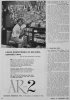
I once saw an old add with a Jazz artist, if I remember right, talking up AR 3B's. Am I remembering this right? Did AR make a 3B?
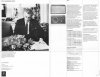
I'm new to the AR-3 / 3a investigation but have not encountered anything on a 3b. If you poke around you find information on the "AR-3a Improved" -- which from my reading seems to be a European model which replaces the potentiometers with switches, updates the crossover and revises the cabinets.
Below are some are some old AR promotional ads...maybe you saw Miles Davis?

Attachments

RxDx
Speaker collector
Ken,
These resources are fantastic labors of love. Kudos.
FYI, I notice that both your "Restoring that AR-3a" guide and the AR-3a background information provided by AR (above) state the use of a midrange crossover of 575Hz. In your spec table it's indicated as 525Hz for the AR-3a (as well as for the AR-LST).
Your "Restoring that AR-3a" guide states a 1.48 ft³ internal cabinet volume whereas AR presents the internal cabinet volume at 1.7 ft³ -- perhaps not taking into account the volume of the 9 internal braces.
Thought I'd share (from another detail oriented person).
Again, great work!
Thank you! Something I did for me, primarily, when I was trying to decide which
speakers I wanted (and could afford). AR-3a won out.
No idea where I got crossover numbers. I'd say go with the official stat on that
one. Cabinet volume? The restoration guide was done by several folks who
absolutely should know, one of whom worked for AR (Tom Tyson, who also
is offering the cut-away 3a on ebay). So I don't know. But I'll dig around and
find out.
Great summary of restoration considerations, Glenn !
The grilles are the obvious starting place.
Do I understand correctly that the AR-3 has plastic grille frames? The restoration guide that Ken linked to refers to the AR-3a's Masonite grille frames.
Yes and yes. The plastic frames don't age gracefully.

Silentnet
Super Member
Had a pair of AR 3as for a while, they're good speakers and do deep, fairly controlled bass well, but are far from the end all be all they're sometimes made out to be. If you find some in an attic somewhere for $100 and refurb them? Great! But there are far better options out there at the constantly inflating prices now being asked. Impressive for their time, but nothing that competes with modern designs. I realize that opinion may put me in the minority around here, though.

Lavane
Lunatic Member
Thanks! I was sometime back when I saw that.I'm new to the AR-3 / 3a investigation but have not encountered anything on a 3b. If you poke around you find information on the "AR-3a Improved" -- which from my reading seems to be a European model which replaces the potentiometers with switches, updates the crossover and revises the cabinets.
Below are some are some old AR promotional ads...maybe you saw Miles Davis?
View attachment 1676750
GD70
Lunatic Member
You bet!Great summary of restoration considerations, Glenn !
The grilles are the obvious starting place.
Do I understand correctly that the AR-3 has plastic grille frames? The restoration guide that Ken linked to refers to the AR-3a's Masonite grille frames.
View attachment 1676742
Yes, plastic frames. The Grill fabric, really a plastic weave called Saran. is only glued at the top & bottom of the frames.
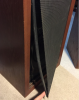
This pic is my pair that I found in a Goodwill. Someone in the past attempted to modernize them and spray painted them black! I made new grills.
Glenn

Had a pair of AR 3as for a while, they're good speakers and do deep, fairly controlled bass well, but are far from the end all be all they're sometimes made out to be. If you find some in an attic somewhere for $100 and refurb them? Great! But there are far better options out there at the constantly inflating prices now being asked. Impressive for their time, but nothing that competes with modern designs. I realize that opinion may put me in the minority around here, though.
I've had lots of different speakers in the 40+ years I've had audio gear. Lots of modern era speakers. But for my listening preferences, and the type of gear that I like, my AR3a's are better then any modern speaker I've heard or owned. I like a more warm, more lush presentation with deep(but not bloaty) bass. Most modern speakers that I've heard tend to be too bright for my tastes, even with tube gear.
Like anything in this hobby, it just depends on what your preferences are. Modern designs don't meet my needs as well as the AR3a(or 3, which I'd love to, and hope to, own again someday).

Chris does them, but won't give and tell all his techniques, and the exact materials he uses.
I bought a pair of rebuilt original tweeters for my 3As from Roy C, as well as new level controls. They made a huge difference in my speakers, which I had restored a few years ago (including replacing the crossover caps and cleaning the original controls). I can now leave the tweeter controls at the dot, rather than having them at max as before, and I get more extended response. Highly recommended.