

You are using an out of date browser. It may not display this or other websites correctly.
You should upgrade or use an alternative browser.
You should upgrade or use an alternative browser.
Why Recap Speakers and When?
- Thread starter Scorpion8
- Start date

spkrdtr
spkrfixer
Seems the consensus is.....20+ years old...if you have to open them up...may as well re-cap while you are in there??
In most cases - YES. That is because 20+ yr old stuff most likely has all or most caps that are non-polar electrolytics which, in most cases, have degraded over time - an inherent fault of NPE's.
The key ones to replace are the ones in series with the tweeter and mid (if there is one).

Jon S
Super Member
Spent $200 on six Sonicaps for my Polk Model 10Bs and they were lifted to another level of performance. Soundstage and imaging is fantastic. I was so impressed I recapped a Polk Model RTA-12Cs. These speakers have a extremely complex crossover and had nine caps each!! Two caps were redundant (the bypass caps) so i only replaced a total of 14. Still, the bill came to a whopping $500 for all the caps. I also had to replace the HF drivers, adding another $140 to the tab. Ouch!!!
You can see it here on posts 27 & 28....
You can see it here on posts 27 & 28....

lorne
Sonic Lizard
My own personal guideline is seven years. Many people will balk at this, but the operating principle in this issue is YMMV — a lot! I base this opinion on the fact that electrolytic paste is best formed up in a polarized environment. My sources of information over the years have pointed to drift and degradation within the span of a decade. And I mean polarized electrolytic capacitors. It therefor stands to reason that NPE's are more suspect even in this limited time. On the other hand, repairers and hobbyists report that older caps have tested out to be satisfactory.Seems the consensus is.....20+ years old...if you have to open them up...may as well re-cap while you are in there??
As in all things, there may be the tendency to grind and obsess over this issue. But in the end, I gotta say that 20 years is a long time to rely on dependable service. Seven may appear to be obsessively concerned about what sonic performance might be missing. The whole question can be settled for a very reasonable sum if fresh Mylar caps are installed. And while this usually will please the owner, there have been and there will be cases where the new sound is judged to be less pleasing than before the change-out — as has been mentioned and discussed before.

Sleep
Well-Known Member
Dang, leave it to me to have this happen. I've got an old pair of Optimus 5s that I'm about to recap, but they aren't quite a pair...I'm guessing they were from different production years.
The drivers are the same in each speaker, but there are a couple of differences in how well sealed the cabinet is, AND there are different capacitors on the crossovers, same layout, just different values.
In the one speaker, I have: 25v 6.8 uF, 25v 3.3 uF, and 25v 33 uF hooked up to the woofer.
In the other speaker the 2 smaller caps have the same uF, but these are fatter looking 50v units. The fun part is that there is a bigger cap on the woofer side, with no markings on it at all! None!
So I'm wondering if I can safely assume that a 33 uF cap would work here, like it does on the other speaker? I've read in this thread that you can go up in volts on a capacitor for this application without causing issues, yes?
I like these speakers, but the tweeters just don't seem to be working at all. I'm guessing that it's the caps, but realize it could be a dirty high frequency pot/knob (the midrange knobs are dirty but work fine, I'd assume they would get dirty or fail similarly).
I haven't desoldered any connections yet, or I'd test the tweeters with a 1.5v battery, I just figure these 35 year old speakers need new caps either way....I'll test the tweeters when I have everything fully apart.
The drivers are the same in each speaker, but there are a couple of differences in how well sealed the cabinet is, AND there are different capacitors on the crossovers, same layout, just different values.
In the one speaker, I have: 25v 6.8 uF, 25v 3.3 uF, and 25v 33 uF hooked up to the woofer.
In the other speaker the 2 smaller caps have the same uF, but these are fatter looking 50v units. The fun part is that there is a bigger cap on the woofer side, with no markings on it at all! None!
So I'm wondering if I can safely assume that a 33 uF cap would work here, like it does on the other speaker? I've read in this thread that you can go up in volts on a capacitor for this application without causing issues, yes?
I like these speakers, but the tweeters just don't seem to be working at all. I'm guessing that it's the caps, but realize it could be a dirty high frequency pot/knob (the midrange knobs are dirty but work fine, I'd assume they would get dirty or fail similarly).
I haven't desoldered any connections yet, or I'd test the tweeters with a 1.5v battery, I just figure these 35 year old speakers need new caps either way....I'll test the tweeters when I have everything fully apart.
spkrdtr
spkrfixer
Sleep, I'd say the speaker with the 25V caps is the original and the other one was recapped with larger value caps.
I recommend you recap both the higher value caps (voltage your choice) of the same uF value as the original.
Then you'll have a matched, recapped pair.
Try cleaning the pots with De-Oxit
I recommend you recap both the higher value caps (voltage your choice) of the same uF value as the original.
Then you'll have a matched, recapped pair.
Try cleaning the pots with De-Oxit
Sleep
Well-Known Member
Cool, thanks for the advice! There are a couple of subtle differences between the two speakers (drivers the same, cabinet dimensions the same) - so I'm not sure if they were ever recapped, or if it was just another subtle difference in the design from one year to the next.
I noticed the tweeter on one speaker was attached without solder, just crimps, so I was able to take it off easily to test it. It seems dead as a door nail, so I'm off to start a thread about finding appropriate tweeters.
Thx again!
I noticed the tweeter on one speaker was attached without solder, just crimps, so I was able to take it off easily to test it. It seems dead as a door nail, so I'm off to start a thread about finding appropriate tweeters.
Thx again!
lorne
Sonic Lizard
Like spkerdtr said. And, if you can figure out what position each of your switches relates to a flat setting, you could wire out the switches altogether. Sometimes this makes a significant improvement. Sometimes there is no significant change. The upside of this is that you simplify the circuit. But the downside is that you can lose some versatility provided by the adjustability for the acoustical differences of rooms and the general listening environment. Of course, you can replace the switches if they have become too cheesy. Or you can clean them. In the case of my Tannoy's, no amount of cleaning helped and I wired the X-over flat. Problems solved. In the case of my Pioneer CS-655's, there were pots instead of switches. Wiring for flat response produced very little if any improvement.
... somewhat off topic, but still relevant in terms of how it may be convenient and even necessary it may be to solve switching or variable R issues at the same time we are recapping.
... somewhat off topic, but still relevant in terms of how it may be convenient and even necessary it may be to solve switching or variable R issues at the same time we are recapping.
Recaping CS99a's
Were you able to recap these yet?
I'm very interested in hearing how they
came out, as I have a pair as well,
and am considering whether to recap.
Thanks
Thanks for your very well articulated response, I simply cannot wait to get my CS-99As recapped.
Now for matching a hard cap, do you mean for example a 220uF 50 V cap run 2 110uF 50V caps in parallel? Or maybe 2 110 uF 25V in parallel?
Thanks.
Were you able to recap these yet?
I'm very interested in hearing how they
came out, as I have a pair as well,
and am considering whether to recap.
Thanks


rdp91356
Member
I am considering re-capping my Infinity RS 2.5s.
I would have to use Bennic electrolytic caps for the big 1100uf (1000+100) and 700uf (500+200).
Considering they're 30 years old, they still sound great. Wondering how much improvement I would hear.
I would have to use Bennic electrolytic caps for the big 1100uf (1000+100) and 700uf (500+200).
Considering they're 30 years old, they still sound great. Wondering how much improvement I would hear.
Attachments


lorne
Sonic Lizard
I was surprised to read some years ago an article by an "expert" who cautioned of the same thing. Apparently the drift just takes years longer ... and I suspect has a lot to do with the original quality of the cap. Note: I am not an engineer but just reporting something I read.... Surprisingly, it's not the NPEs that have drifted but the ELCAP polycarbonates.
I am considering re-capping my Infinity RS 2.5s.
I would have to use Bennic electrolytic caps for the big 1100uf (1000+100) and 700uf (500+200).
Considering they're 30 years old, they still sound great. Wondering how much improvement I would hear.
Wow look at the size of those caps!!!
All electrolytic except the mylar on the tweeter. Lots of bundling required:yes:
I recapped pairs of QLS-1s and the Quantum 2.
I believe the combination of replacing the huge electrolytic rolloff capacitors and all the old mylars improved the sound quality in each case. Much better low midrange definition and articuation/separation of the mids and highs.
Last edited:
rdp91356
Member
Wow look at the size of those caps!!!
All electrolytic except the mylar on the tweeter. Lots of bundling required:yes:
I recapped pairs of QLS-1s and the Quantum 2.
I believe the combination of replacing the huge electrolytic rolloff capacitors and all the old mylars improved the sound quality in each case. Much better low midrange definition and articuation/separation of the mids and highs.
I thought the current tweeter cap was an electrolytic because it's labeled "electrocap". For the smaller value caps (3.83uF, 50uF and 125uF) I was planning on using metallized polypropylene.
What did you use for the large electrolytics? I was thinking of using Parts Express / Daytons (500+500+100 for the 1100uF, and 500+200 for the 700uF). I don't know much about this, but the size of these new electrolytics seems small compared to the old big cans. Are they up to the task?
Attachments


Last edited:
I thought the current tweeter cap was an electrolytic because it's labeled "electrocap". For the smaller value caps (3.83uF, 50uF and 125uF) I was planning on using metallized polypropylene.
What did you use for the large electrolytics? I was thinking of using Parts Express / Daytons (500+500+100 for the 1100uF, and 500+200 for the 700uF). I don't know much about this, but the size of these new electrolytics seems small compared to the old big cans. Are they up to the task?
I was recommended Bennic electrolytics and would bundle up all the woofer caps with these.
Then I'd opt for using Dayton metalized polypropylene capacitors for the mids and perhaps a nice ClarityCap SA for the tweet.
Madisound has the Bennics and Claritys, Part Express the Daytons.
Have fun!
rdp91356
Member
I was recommended Bennic electrolytics and would bundle up all the woofer caps with these.
Then I'd opt for using Dayton metalized polypropylene capacitors for the mids and perhaps a nice ClarityCap SA for the tweet.
Madisound has the Bennics and Claritys, Part Express the Daytons.
Have fun!
Thanks. I read somewhere that Bennic is the manufacturer of the PE/Dayton electrolytics, but don't know if that's true.

Harvey/ Ga
Super Member
Thanks. I read somewhere that Bennic is the manufacturer of the PE/Dayton electrolytics, but don't know if that's true.
same here. All my recaps, so far, have been with Dayton's from PE, altho I hear that partsconnexion.com has cheaper prices on Solens, and 20% off right now.

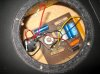
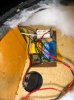
I just picked up a pair of Boston Acoustic A400... can't wait to get them up and running. Woofers are on the bench for a re-foam and while I'm at that, I'm considering a re-cap. Date tag on woofers is "Jan 3 1985". So given that date, do you think a re-cap is in order? :scratch2: I will definitely have a listen after the woofers are done before doing anything drastic, but the opinions and advice from you fine people here at AK is always welcomed. :thmbsp:
Attachments
Last edited: