• The move to the new server is done. There are some software and database maintenance updates in process. This has us passing the hat around to help out. We appreciate any donations. Seriously, even a dollar helps. The payment page may be found here - https://www.audiokarma.org/support.html

Will a Cooling Fan Ruin/Blow a Yamaha M-80 or M-65

jscott_99

New Member
Hi, I have no reason to NOT believe an audio technician, but he told me that running a cooling fan on top of a Yamaha M-80 power amplifier could short out the transistors because of the sensitivity of the bias transistors to air currents. Is this true?

I'm asking because I like the thought of running it in Class A -- even though people say there's not really a big or even noticeable difference.

I actually did have a transistor short out in one of these after it was repaired, when using a cooling fan. Could this have been the cause? Because it happened in a matter of a minute or two, and I had just used the amp for about an hour before.

I could really use everyone's advice here because I don't want to ruin a great amp (that has been rebuilt already). But ... heat is the enemy of electronics, right?

And I have a M-65 with a similar cooling fan. Hasn't blown yet. Am I pushing my luck?

Help!
 
Register to hide this ad
If an amp blew up it's highly unlikely to be because of running a cooling fan.
If it's been restored properly, then it should be safe to run in Class A without any additional cooling.
However, for the Class A amps, I consider a proper restoration to include redoing every solder joint on the power amp board with fresh solder - in the case of the M-80, both the main power amp board and the two APS boards that run along the top of the heatsinks. There's also the moisture-absorbing factory glue that needs to be removed (and any resultant corrosion cleaned up) if this hasn't already been done. This is labour intensive work so unless you did the restoration yourself (or explicitly requested that a tech perform this job and check it afterwards) then it likely won't be done. If doing it yourself then it's imperative to be careful and use a current limiting device (eg. dim bulb tester) when powering on for the first time, as it's possible to make mistakes.

Yes using a fan can definitely change the bias and have a negative impact. The amp uses separate transistors to detect the temperature of the heatsink and regulate the bias current - so if you remove heat, or worse yet, blow air directly on the bias transistors, it will cause the current to increase above factory spec. In my experience you can run a cooling fan (slow or at low voltage) which will increase the lifespan of other heat-sensitive components in the amp (eg. capacitors) but it's good to check the bias current after full warm up both with and without to ensure things aren't straying too far from spec. It's not going to "short them out" but too much airflow in the wrong place could certainly cause problems.

In summary - a fan isn't going to compensate for an amp that hasn't been restored correctly, and the latter will have a far bigger bearing on the amp's lifespan than whether you run a fan or not.
 
Might be worth checking out the silent USB fans you can find all over eBay. Some of them produce very little air flow, but possibly enough to suit your purpose. Plus they're cheap.
 
A cooling fan will not blow an amp.

Heat is the enemy of electronics. If you provide good ventilation with lots of room around your equipment, you don't normally need extra cooling.

But if you are like me and have limited space, extra cooling is nice. I repurpose computer fans and cell phone wall worts. The fans turn at a slower than rated speed because of the low voltage wall warts, and that means they are quieter. I plug them into an accessory socket so they come on when the amp is on. I set them on top or beside my equipment in cramped spaces and don't worry about overheating anything from a lack of ventilation.
 
A cooling fan will not blow an amp.

Heat is the enemy of electronics. If you provide good ventilation with lots of room around your equipment, you don't normally need extra cooling.

But if you are like me and have limited space, extra cooling is nice. I repurpose computer fans and cell phone wall worts. The fans turn at a slower than rated speed because of the low voltage wall warts, and that means they are quieter. I plug them into an accessory socket so they come on when the amp is on. I set them on top or beside my equipment in cramped spaces and don't worry about overheating anything from a lack of ventilation.
I would like to see how you wire these up..

?

Great idea !
 
Just use a PC fan controller to run the fans. You will usually need a 5v and a 12v wall wart to power it.

Cheers,
James
 
I would like to see how you wire these up..

?

Great idea !

I cut off the connector end from an old cell phone wall wart (typically 5Vdc) and strip the two wires. I then touch the wires to the connector attached to the wires sticking out from the fan to see which ones make the fan run. Typically, computer fans have 3 wires: + and - power and a sense line. Some have 4 wires because they use PWM speed control. Those are usually larger fans and I don't use them. I generally use 3 inch fans. I use rubber feet to keep vibration at a minimum. I solder the wires and then tape them.

I have all these parts in my junk box, so they don't cost me anything. If you want to spend a few bucks ($8 to $10), you can buy USB powered fans.
 
Thank you for all of your experienced/expert responses. I'm getting a bit of a mixed answer, I think. zaibatsu, I don't doubt you. Perhaps your answer is specific to this amp? run in Class A?

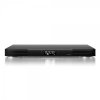
Specifically, I ALREADY have the really nice (and expensive) fan below (and a similar one on another amp - a Yamaha M-65.

Would using this fan on top of a Yamaha M-80 cause issues? Have the chance to do more harm than good? Would the airflow (pulling air out of the unit) threaten to harm the biasing, or have a better chance of prolonging the life of the amp?


AC Infinity AIRCOM T8, Quiet Cooling Blower Fan System 17" Rear-Exhaust for Receivers, Amps, DVR, AV Cabinet Components
by AC Infinity
Learn more: https://www.amazon.com/dp/B01LW1Q429/ref=cm_sw_em_r_mt_dp_U_OF7HCbQE2RXM9
 

Attachments

  • fan pic.jpg
    fan pic.jpg
    16.4 KB · Views: 13
Would using this fan on top of a Yamaha M-80 cause issues? Have the chance to do more harm than good? Would the airflow (pulling air out of the unit) threaten to harm the biasing, or have a better chance of prolonging the life of the amp?
Only person that can answer that is someone with direct experiance like "I had 3 transistors fail in 4 months, switched off the fan and
not a problem for the last 2 years"... or so

Not familiar with the M-80. The transistor or diode in question is heat sink mounted, ie attached to a great slab of "iron" with a significant
thermal mass. The transistor/diode will have no impact on this thermal mass and will be at about the same temperature provided
good techniques are used (thermal paste or... ok there may be a 10C difference but this is reasonably constant). Provided the fan
provides a gentle draw (not a cooking extraction fan) it's hard to see how cold air on one side of the transistor/diode will cause a
sufficient temperature gradient across the transistor/diode to do damage, keep in mind the actual transistor is encased in plastic.

While the M-80 is designed to work at such temperatures I would probably use the nice fan too.
 
The bias circuit in the M80 is very sensitive to airflow. If you blow air inside, the bias current is lowered to a point near to zero, and the crossover distorsion is increased. If you decide to put a fan, it must suck air at very low speed.
 
Last edited:
They’re supposed to run hot, especially in class A. It actually needs to run hot. I’d just make sure it has good ventilation space around it, and as long as the amp is in good shape, it’ll run fine with no fan. There are some weak spots in these amps that need to be addressed, like solder joints, maybe some old glue. Heat can make these problems worse, but they still need to be addressed. A fan isn’t going to solve a problem if something is failing on the amp.
 
The bias circuit in the M80 is very sensitive to airflow. If you blow air inside, the bias current is lowered to a point near to zero, and the crossover distorsion is increased. If you decide to put a fan, it must suck air at very low speed.


Thank you for that explanation!
 
My M-80, with adequate ventilation above, (more than 4"-6") runs in Class A around 50C at the warmest locations at the output devices/heatsink, even after hours of usage. This is well under the critical point where temps become an issue. Just ensure you have adequate space around and above the amp, so that convection currents can properly move air around. This means you don't want to place it inside of an enclosed stand or theater center.
 
Everyone....thank you so much for your expert explanations. It all makes sense now (when before, I was just confused).
 
Back
Top Bottom