• The move to the new server is done. There are some software and database maintenance updates in process. This has us passing the hat around to help out. We appreciate any donations. Seriously, even a dollar helps. The payment page may be found here - https://www.audiokarma.org/support.html

Willsenton R300 voltages and settings with different tubes

Mopardave

Member
Banned
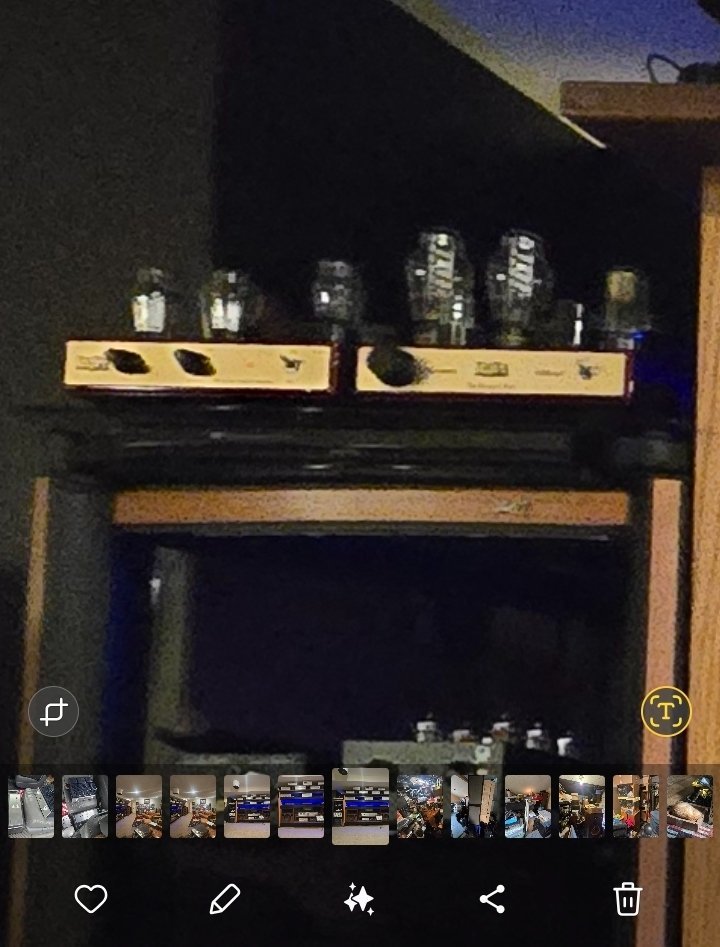
Since i have my R300 on the bench installing new pots, i took the time to measure a few more things. I have noticed if i use 5AR4 rec tubes and the EH 300b and set bias needle in the middle of the scale, this gives 75% dissipation. I have 461B+ and 426 plate with the bias at .70ma. These 5AR4 tubes bump the B+ and the plate voltage up quite a bit . If using a 5U4G and set bias needle in middle, im set to 70% dissipation. At this setting i have 437B+ and 406 plate voltage. Now, if setting to a lower bias and using 5U4G with Sophia Electric Princess 300B/n tubes, i set the bias at .60ma, this gives a dissipation of 65% with 448 B+ and 420v on the plate. The needle is set between the 2 smaller marks left of center for this setting. So, if your using a mesh plate tube, you might want to be careful what rec tubes your plugging in. Yes, the 5AR4 slows the current surge at start up, but looks to me carries constant higher voltage once current surge has completed. I could be wrong, but i dont think that would be a good thing for longevity on the mesh type 300B/n. According to StepheK studies on this amp, comparing notes to what she had on one video, the 274B would have similar voltages as the 5U4G.
One other thing i measured is the resistor in the bias path, one measures 10.5 and the other 10.3. This explains why my bias reads .1ma different between the two when the needle is straight up set in the middle.
 
Register to hide this ad
If you're talking voltage as in bias voltage, which really means current flow through the tube, broadly speaking higher idle current does tend to reduce distortion, but you can only go so high before it exceeds plate dissipation. In theory what you really want is to center your idle point along the load line, but there are two potential centers depending what you're after. There is dead center for max swing, and there is centered along the most linear portion which gives the least distortion. Most tubes get wonky down towards the bottom of the curve so "center" tends to be biased a little more towards the higher current end of things and we give up a little theoretical max output power to make it better on average.
 
Running low filament voltage drops emission and current flow, and that's especially bad in a power tube location
 
changing the bias wouldn't affect the filament voltage, but the bias value reflects plate current. what that might do to the sound is hard to say, maybe nothing, maybe something. Not all amps are fussy about that value.

having the filament voltage below spec on a tube that flows a lot of current is hard on the tube though and can cause them to wear out faster. Generally you want filament voltage within 10% of spec, but 5% is better. For a 5v filament, thats 4.5 - 5.5 volts.
 
i dont know a lot about the mechanics of tube amps, but my Sophia Electric Princess specs are 5v filament/1.2a filament and 300v, 450v max. 60 bias. On my amp i am measuring 4.36 filament/1.35a filament with 420v on the plate at .60mv.
Appears the nominal plate voltage for the Sophia Princess 300B is 300V. Running at 420V, which is still below the stated 450V max, seems way off nominal to me.

 
Voltage is measured plate to cathode, so if this isn't fixed bias, its not actually 420v

But 4.36 volts for a 5v filament won't do it any favors. Have to measure the voltage across the filament to get an accurate read on that too, and if its grounded on one end you may see some slight change since its also flowing plate current across the filament. Should be small enough to not matter but you may see a few mv
 
Looks like this is fixed bias, so negative voltage fed to the grid. In this case that 420v is pretty much what the tube has across it, minus a bit for whatever is dropped across the 10.5 ohm and balance pot, but thats not enough to really care about. I just dug up schematics to confirm. If this was cathode biased, the filament would be sitting probably ballpark +75v, so if measured from filament to plate it would be ~350 volts across the tube.


what I meant by the plate current affecting the filament reading, depending on how it was measured what you can see is both the filament current plus plate current show up on the meter. If you measured across the fat pins the voltage is the voltage.


has two nice high res schematics posted by @StepheK showing how its wired.
 
Back
Top Bottom