• The move to the new server is done. There are some software and database maintenance updates in process. This has us passing the hat around to help out. We appreciate any donations. Seriously, even a dollar helps. The payment page may be found here - https://www.audiokarma.org/support.html

Wood Glue as Vinyl Cleaner

why screw around with other glues when this one is so reasonably priced and a proven performer???

Not that I would do this but if we didn't experiment with new methods of cleaning we wouldn't have the glue method in the first place. Who knows if there's a faster-drying, less static-inducing glue out there? I doubt it but it's possible. Let the experiments continue (for the adventurous). I'm sticking with what's proven. :music:
 
Great thread

another convert here. Started off with Elmers School Gel and Elmers Craft Tacky Glue. Didn't like the School gel because it goes on clear which made it very hard for me to tell how thick was the coat. The Elmers tacky glue worked ok but it was easier to spread after a slight dilution with water. Ready to head off and buy some titebond II.
 
Last edited:
Anyone in the UK had a try with this?? (Click for link)


:scratch2:

To answer my own post. I bought a bottle of this (£5.60 for a 1 litre bottle) and tried
it out yesterday.

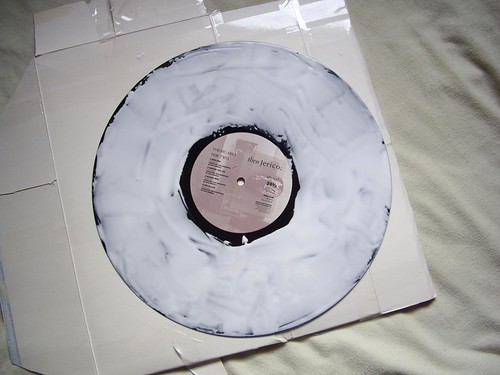
4611943160_040c09396e.jpg


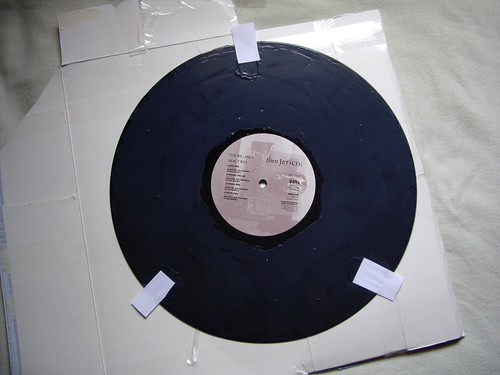
4611332647_058bcfc040.jpg


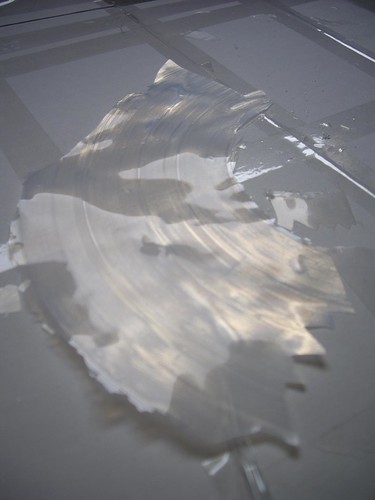
4611943538_84c213b0b7.jpg


I let it dry overnight and tried to peel it off but it tended to break into sharp pieces.
I suspect I didn't use enough? The other side has now been done and is drying out
as I type this.

Results were very encouraging. It's not an LP in great condition but the glue certainly
cleaned up the sound. The LP previously had a fair bit of background noise that
I believe was ground-in dirt. Now? Gone. :D Clean & crisp detail flowed from the
record.

I'll be doing this many more times. :smoke:


James H
 
i used elmers wood glue before, but always had problems peeling.. tried tightbond II today, worked great, it peeled out in one try...
 
I thought I'd give the method a whirl myself, of course to hedge my bet I tested the method on a 45 I picked up for a buck. Worked really well, the slab of glue reminded me of those little plastic records that would sometimes come in magazines.

I had thought about using regular Elmers white glue in place of my more expensive tite- bond, yes I really am that cheap, it's good to know ahead of time that it wouldn't work.

I have used Elmer's regular glue, and it works fine.:thmbsp:
 
After deliberating about whether to glue or not to glue I gave it go.
Used an old Neil Young Harvest LP that I bought for $1 at a garage sale that was filthy and lots of micro scratches.
Got some PVA glue (Fullers Maxbond which seems to be the Aussie equivelent of Titebond II).
Applied it using an old turntable and credit card.
Couldnt have been easier.
The glue peeled easily in one piece as it is very flexible and resiliant to tearing when dry.
Doesnt fix the microscratches as you all know but the sound quality was fantastic.
I am a believer and will use this again. It is a simple and quick process (drying time is a non-issue for me as you can do other things during this time) which produces great results.
 
More tales using Screwfix's 'No Nonsense Wood Glue' (£5.60 for a 1lt bottle or £20 for a big 5lt jerry can...)

2hdy2w4.jpg


I went to town on a rather tatty copy of The Blue Niles 'Walk across the Rooftops'
that I bought second hand a few years ago for £1.

All I can say is wow. This LP now sounds like it's just left the pressing plant. All dirt is
completely gone. Trick is to make sure you use enough at the lead-in and lead-out
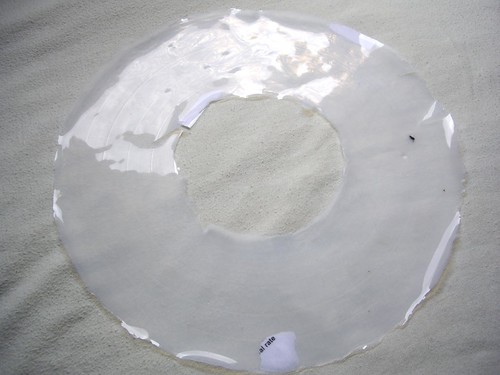
grooves - makes it easier to peel off. Like icing a cake...

Side 1...
4627725584_47cd0f646f.jpg


Side 2 after cleaning...
4632490424_2a3679e9a8.jpg


That Blue Nile LP now sounds amazing. I was ready for chucking it and getting a
new copy of it. Glad I didn't. It cost me 5 minutes of my time to give it good coating
of glue, then let it dry for 20 hours. No skin off my nose how long it takes to dry
out - I can do more LPs in that time.

:music:


James H
 
Last edited:
There is a guy in Australia that has a product called Vinyl Revirginizer.
Dries to a very rubbery texture.
Peels of easily but still takes hours to dry.
 
Just peeled my Neil Young Harvest after a second glueing with fullers maxibond diluted about 15% with filtered water and listening now. Fantastic! The sound quality is great, it is like a veil has been lifted from the music. It almost sounds like Neil is in the room with me. If glueing can produce results like this even on the odd record then I am a fan. This LP is now very enjoyable despite the background noise from the microscratches, definately gone from frisbee to a keeper because of the glue :music::thmbsp:.
I found the diluted glue slightly easier to spread but perhaps a little thin on the outside edge so it was a liitle harder to get the peel started.
 
So I just happen to have a leftover bottle of Gorilla Wood Glue from my subwoofer project and after reading most of this thread I tried it out last night on one of my old Heart albums.

It was about 30% dry after a couple of hours and I was able to peel off the outer edge. I let it continue to dry overnight and the rest came off pretty easily this morning. There were some spots here and there that had some residue still stuck in the grooves and I was able to get some of that off with my fingernail but there's still some left. I'll probably give it a 2nd go tonight. There was quite a bit of static on the lp after peeling off the glue. I used a Swiffer sheet to wipe off loose debris and that also seemed to reduce the static.

I played it a bit this morning and aside from the fact I didn't get all of the glue off (which caused more clicks and pops and skips) I immediately heard a huge difference!

1) The dynamics and attack of the music was restored. It sounded much more live and punchy!

2) More depth and space around instruments and vocals. Accoustic guitars and vocals seemed to have more body to them and bass was better defined.

This is definitely going to give me some work over the summer as I found my initial results more effective than the last couple of upgrades I did to my turntable!
 
It was about 30% dry after a couple of hours and I was able to peel off the outer edge. I let it continue to dry overnight and the rest came off pretty easily this morning. There were some spots here and there that had some residue still stuck in the grooves and I was able to get some of that off with my fingernail but there's still some left. I'll probably give it a 2nd go tonight. There was quite a bit of static on the lp after peeling off the glue. I used a Swiffer sheet to wipe off loose debris and that also seemed to reduce the static.

I played it a bit this morning and aside from the fact I didn't get all of the glue off (which caused more clicks and pops and skips) I immediately heard a huge difference!
Sounds like you did the same thing I did with my first attempt - used too little
glue. Better to give the record a good coating and leave it to completely dry
before trying to peel it off.


James H
 
I just tried this with a thrift-store Bolero. I first did my usual thorough Alconox mix/toothbrush/vacuum cleaning, which takes me maybe 5 to 10 minutes depending on how much I think I should scrub. I ALWAYS do this before playing a new-to-me record, as otherwise I'll have to clean junk off the stylus, and I'll know the record won't sound near as good as it could with a good cleaning anyway. This Bolero still had a lot of ticks and things, especially at the start of the side as so many LP's seem to have.

So I used Titebond, perhaps a bit too thin, as others here have stated - it dried completely in about six hours. It was hard to peel off, I got a few large pieces and many smaller pieces, and some that were too hard to get off toward the end of the side. Also, I could feel the static electricity from the thing. I ran it back through my toothbrush method and the remaining glue came up, and also the mix I use appears to get rid of the static electricity.

I played it, and got what appears to be the same thing, about the same amount of ticks and pops. This is what I sort-of suspected but hoped wouldn't be, these noises are actual scratches and defects in the vinyl rather than foreign matter that my other method failed to remove.

I recorded both playings for comparisons, though I've yet to do a "side by side" comparison to hear better if there's any improvement.

It seems that LP's in this condition have been abused. I have several thrift-store purchases that have cleaned up well and sound great, with VERY few unobjectionable ticks.

 
That was my first time doing the glue thing, and there were spots of glue left on the record after peeling it off, and that was the only way I knew to get it off.

After listening to my before-glue and after-glue recordings more closely, there IS audible improvement, thought there's still lots of ticks.

I've since done the glue thing again on this LP with a thicker layer of glue, and after drying it all came off in one piece. And it DOES have substantial reduction in ticks and
surface noise, though many ticks remain. I'm becoming a believer in this method, with what it can do even over a vacuum RCM.

This (RCA Red Seal "Dynagroove" LSC-2664, 1963) appears to be a well-worn LP. The first 80 percent of Bolero sounds fine (other than the ticks, which become less audible in relation to the music as the volume level builds up), but at the end with all the instruments going the distortion sounds horrible. But the beginning sounds good through all the ticks.
 
Back
Top Bottom