
• The move to the new server is done. There are some software and database maintenance updates in process. This has us passing the hat around to help out. We appreciate any donations. Seriously, even a dollar helps. The payment page may be found here - https://www.audiokarma.org/support.html

X-202: Faint sound heard despite zero volume setting

ssouci

Well-Known Member
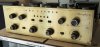
I've developed an issue with my restored Fisher X-202 integrated tube amplifier

if I play a CD, I can hear the faint sound of music coming through at ZERO volume setting

I usually start off a playing session at zero volume, then immediately raise to the desired listening level... I do not remember ever hearing this issue before (usually, it's dead silent)

the sound is very faint, however is audible from 10-15 feet away in a very quiet room... similar sound comes out of both speakers, at the same level... it seems undistorted

so I experimented by moving various switches etc., and nothing affects it -- except for the Tape Monitor switch

the Tape Monitor switch is normally OFF, but if I switch it to ON, the "sound leak" immediately goes away (at zero volume setting)... however, the sound will appear and gradually increase if I increase the volume setting... at max volume setting, it becomes fairly "loud" and I can detect music from approx. 20 ft away

any ideas?

is my Tape Monitor switch bad, and if so, maybe I should just disable it? (it serves no useful purpose for me)

otherwise, the amp sounds very nice with no other issues, and I love it...

thank you!

PS:
- I cleaned all my switches just a couple of months ago, and make sure to exercise them all at least once/month... don't really think I could get them much cleaner
- my CD player is connected through Aux input
- my Low Filter switch and Stereo Dimension control have both been disabled
 

Attachments
  • DSCF0287_cropped.jpg
    DSCF0287_cropped.jpg
    59.7 KB · Views: 8
Last edited:
Register to hide this ad
This model has been none for bleed over having so many connections in close proximity. Notdigital added the link that has information about this.
 
thanks, I will check that other thread out

Q: what would cause my unit to suddenly start doing this though?

it has not been happening for the past 2 years, and I have not done anything to my unit recently, other than swap a couple of the 12AT7 tubes in the preamp section a few days ago

I would assume that if there was an inherent shielding issue, or an inherent component proximity issue, that I would have had the problem all along

seems to me the sudden appearance suggests that perhaps a component or a connection somewhere has (suddenly) changed?

 
Last edited:
I had one volume pot with wiper wearing through silver track plating on the end of the ground side. That was on Pioneer SS receiver though. About 10 years newer then most of tube Fisher gear. I looked for replacement and couldn't find one in time. I fixed it. I had to take pot apart. Cleaned track silver plate with fine sandpaper and washed with alcohol. Then I applied several thin coats of copper paint designed to restore car's damaged rear window defroster grid. Let it dry overnight, then polished with fine sandpaper again. Washed with Deox-it and reassembled with Fader lube. As far as I know it still works now, some 2 years later. It took a lot of patience. My first try was sloppy and I had to remove that paint before it dried. Second time I used much thinner brush then one that comes with the repair kit and it worked out well.
 
more info:

- although both channels exhibit sound bleed through at zero volume setting, the R channel's is noticeably louder... approx. twice as loud
- seems that only higher frequencies are bleeding through (although I suppose it might be hard to even hear low frequencies at such low volume)

yes, I am studying D. Gillespie's thread on physical mods to eliminate the bleed through in an X-202, HOWEVER, I still don't understand why I have so far not had this problem... something must have changed recently, and what could that be?... if I can figure out what, then I should be able to simply fix that, thus making my unit quiet again (without having to resort to a series of mods)
 
ssouci -- In my experience, the factors that can affect this issue that are internal to the amplifier range from storage/operating conditions (for units that were in storage or see very little use), to components used and/or lead dress (from service events), to general component deterioration (carbon track wear). Storage/operating conditions specifically means moisture, the presence of which actually tends to help alleviate this problem in these units. As a unit drys out, the problem can then become more apparent if it is a factor.

One other very real issue as well is the type of source used. Sources from back in the day typically had a maximum output voltage of 0.5 vac. But a modern CD player often outputs 2.0 vac. Against that, in Fisher amplifiers in general, the line stage(s) operate at rather high signal levels, because the volume control appears after them. In lower tier designs (X-10XX), this results in a fairly simple layout using a passive tone control design, and poses few problems. In the X-202 series however, there are two extra stages included in each channel to facilitate the unique volume control used in these units, and the active tone control design used. One of these stages is a cathode follower with a low output impedance, operating at a very high signal level immediately before the volume control -- making this stage and the wiring at its output a superb transmitter. The other stage operates at a very high input impedance as part of the active tone control design, and appears after the volume, but before the power amplifier section. The high input impedance of this stage and its wiring make it a superb receiver for any signals running around loose inside the chassis. Anything it picks up is then fully amplified by the power amplifier section and heard in the speakers even with the volume full down, because this stage appears after the volume control. Now, input a very hot (for the day) source signal into this design arrangement, and the possibility exists for sound to be heard with the volume control at minimum.

A compromised volume control will allow sound (or increased sound level) at a minimum volume setting. So will a very high source signal level, poor lead dress/shielding, overly large components used, changing to higher sensitivity speakers, and/or reduced moisture from a previously poor operating/storage environment. From a purely scientific standpoint, almost certainly, something within these areas must have changed, if you are now experiencing an increased sound level at minimum volume settings. It can also certainly be from a combination of these things as well. Even if you don't determine the exact cause in your specific case, this gives you a background and understanding of the problem to help you go about resolving it.

I hope this helps!

Dave
 
Dave: thanks for the amazing info!... I will have to study this a bit (I'm no electrical engineer/designer, so takes a while to figure some of it out -- if I even can!)

what do you think about using an inline attenuator, to reduce the signal level of my CD player?... might that not solve this issue, without needing to make any hardware changes? (such as installing metal shields, relocating components, etc.)

I actual made a separate post on AK about this, because it seems that attentuators MIGHT benefit a lot of people with older Fisher tube equipment... or would they hurt the sound?
 
Sometimes, inline attenuators are truly needed. For example, the rather pitiful Heath AA-141 preamp's high-level inputs will overload with anything more than a .5 vac rms signal applied to them. Connect a standard CD player with no built in level control to this unit and the sound is just gross. Some Scott units are dangerously close to overload at this input level as well.

The X-202 can take this input level in stride from the standpoint of overload, but due to its design and build, is susceptible to feed-through around the volume control. Using inline attenuators can certainly help in this scenario but to me, come off being a band aid for the problem. That is, the attenuators are not being used for their primary purpose but rather, to help address an unrelated problem they just also happen to indirectly address as well. Back in the day, nobody specified a maximum allowable high level input signal before overload, although Heath should have for the unit mentioned. For the X-202, the bleed through issue -- assuming the volume control is not the issues -- is simply a product of trying to cram so much performance into such a tight space. In the B series of this amplifier, they corrected the problem (significantly more shielding used), but due to circuit changes in that series, also created possible component failure conditions that could also create the condition.

The use of attenuators won't "hurt" the sound, but may produce an undesirable feeling in that the amplifier just seems to be less responsive because it takes more volume control rotation to produce a given change in sound level. As long as this is not bothersome, then the use of attenuators with CD players is fine. I would not recommend their use with vacuum tube based sources due to the potentially low impedance level the attenuators operate with, which could be detrimental to LF performance.

Dave
 
Sometimes, inline attenuators are truly needed. For example, the rather pitiful Heath AA-141 preamp's high-level inputs will overload with anything more than a .5 vac rms signal applied to them. Connect a standard CD player with no built in level control to this unit and the sound is just gross. Some Scott units are dangerously close to overload at this input level as well.

The X-202 can take this input level in stride from the standpoint of overload, but due to its design and build, is susceptible to feed-through around the volume control. Using inline attenuators can certainly help in this scenario but to me, come off being a band aid for the problem. That is, the attenuators are not being used for their primary purpose but rather, to help address an unrelated problem they just also happen to indirectly address as well. Back in the day, nobody specified a maximum allowable high level input signal before overload, although Heath should have for the unit mentioned. For the X-202, the bleed through issue -- assuming the volume control is not the issues -- is simply a product of trying to cram so much performance into such a tight space. In the B series of this amplifier, they corrected the problem (significantly more shielding used), but due to circuit changes in that series, also created possible component failure conditions that could also create the condition.

The use of attenuators won't "hurt" the sound, but may produce an undesirable feeling in that the amplifier just seems to be less responsive because it takes more volume control rotation to produce a given change in sound level. As long as this is not bothersome, then the use of attenuators with CD players is fine. I would not recommend their use with vacuum tube based sources due to the potentially low impedance level the attenuators operate with, which could be detrimental to LF performance.

Dave
thanks Dave!

what about using a lower level of attentuation?

it seems that -12db value seems to be the standard level offered, but there can be others... would going to -10db (or maybe even lower) perhaps be better, for example, by giving the volume control a bit more range, but not excessively so?

right now, I reach my max "normal" listening sound level fairly quickly: somewhere around the 10 o'clock position of the volume knob(?), and that comes up rather suddenly (depending on the particular CD), and it can be slightly tricky to achieve the right listening level... going up to around 12 o'clock is very loud.... so there's definitely a fair bit of the volume control range that never gets used
 
All you can do it try one and see if you can achieve the level of attenuation necessary to minimize the bleed-through, yet still leave enough signal for the volume control to work well within loudness control range if needed.

Dave
 
ssouci; I now remember I went thru the same thing with My X-202 (I just looked to doublecheck) had bleed thru, and I got some thin tin sheet I think it was $3.50 a pack of 3 4x7 sheets or something like that, at AES, and built some shielding per Dave's instructions in this thread. https://audiokarma.org/forums/index.php?threads/turning-down-the-fisher-x-202.757457/ Quick, easy, somewhat bloody (I left DNA samples,,,LOL) Yeah I DID round off the corners..... Post 13 & 14 this thread.

I would strongly suggest this extra shielding and if you have physically LARGE COUPLING CAPS anywhere near a power source (meaning boutique film caps (Solens, Angela, F&T, etc.),anywhere in the X-202) get some smaller sized Mallory 150 axials, Panasonic ECQE, or Cornell Dublier DME series and MINIMIZE the ANTENNA properties of the caps.

My Pioneer DVD player outputs 1.4V (no volume control) into the AUX with absolutely no problems now. I have the TV, Laptop (spotify thru the amp) on a A-B tape deck switcher on the tape monitor. No problems with distortion or touchy volume control. No attenuators.
 
Last edited:
Back
Top Bottom