• The move to the new server is done. There are some software and database maintenance updates in process. This has us passing the hat around to help out. We appreciate any donations. Seriously, even a dollar helps. The payment page may be found here - https://www.audiokarma.org/support.html

Yamaha B-2 fuse, slo or fast?

destroyerzx1

Active Member
I wanted to replace the fuses in my b2 with "audio grade fuses", ya ya pelt me with rocks... the ones that are in there are normal acting the board says T500ma and from what I can gather that is Time Delay but I really don't want to mess anything up. Also has 2 5A fuses they don't specify on print if there fast or slo
 
Register to hide this ad
I wanted to replace the fuses in my b2 with "audio grade fuses", ya ya pelt me with rocks... the ones that are in there are normal acting the board says T500ma and from what I can gather that is Time Delay but I really don't want to mess anything up. Also has 2 5A fuses they don't specify on print if there fast or slo
save some moneys and do yourself a favor to replace with some pig-tail fuses to fend against poor contact of the holder types. Stay away from the snake oil, audio grade fuse business...adds no value and solves no problem if you have one...such as fuse holder oxidation
 
wanted to replace the fuses in my b2 with "audio grade fuses"

???
What for ?

save some moneys and do yourself a favor to replace with some pig-tail fuses to fend against poor contact of the holder types. Stay away from the snake oil, audio grade fuse business...adds no value and solves no problem if you have one...such as fuse holder oxidation

Listen I'm not here to convert anyone or change anyones mind, but I changed the fuses that were in some of my other equipment amp/pre etc sometimes there was a pretty significant difference sometimes it just changed the flavor. I did change the b-2 fuses from glass to ceramic (Shcurter they're like a $1 ea) and it changed the sound cleaned up the highs, a little more bottom end and a much fuller sound. then get this I changed the direction and it changed the sound again. I don't pretend to know what I'm talking about, I know I'm a moron you don't need to convince me.
 
Well then there you have it. It is calling for slow blow. You can try the fast fuse, won't hurt anything but likely will have nuisance blows.
 
You can use what you want, but the only place audio grade fuses that I can hear a difference is in Crosovers on speakers where the signal path actually goes through the fuse.

But I use fast blow in my B2, id rather be safe than sorry.

Nashou
 
Hello

I always think that people replacing ordinary fuses by "audiophile type" don't know about what they are talking about
Replacing fuses by golden type (or other very expensive other one ) is a non sense and worse where the power supply lines are and without any relation with audio signal will bring us NOTHING.
Rottalpha is perfectly right , fuse holder oxidation is a real problem and not only in B2 !
In YAMAHA B2 all fuses values are on the boards and you can't make any mistake
 
Last edited:
but I guess you can use fast blow where slo blo goes just not the other way around
Not really, slo-blo fuses offer less protection than fast-blo fuses simply because they are slower to open when excess current is flowing. This means the current is flowing for longer potentially causing more damage. Slo-Blo are chosen where there is the likelihood of surge currents which don't indicate a fault condition, so you don't get 'nuisance blowing' of the fuses. Fast-Blo are chosen where you want the fastest possible current flow interruption, to reduce damage or the possibility of a fire starting before current flow is interrupted. For protecting semiconductor gear you generally want the fastest possible fuses, but sadly transistors and diodes still beat the fastest cartridge fuses, and short (or open), before the fuse has had a chance to react. ;)

You should never replace a Fast-Blo with a Slow-Blo, as this reduces circuit protection.

https://www.swe-check.com.au/pages/learn_fuse_markings.php
 
Last edited:
slo-blo fuses offer less protection than fast-blo fuses simply because they are slower to open when excess current is flowing. This means the current is flowing for longer potentially causing more damage. Slo-Blo are chosen where there is the likelihood of surge currents which don't indicate a fault condition, so you don't get 'nuisance blowing' of the fuses. Fast-Blo are chosen where you want the fastest possible current flow interruption, to reduce damage or the possibility of a fire starting before current flow is interrupted. For protecting semiconductor gear you generally want the fastest possible fuses, but sadly transistors and diodes still beat the fastest cartridge fuses, and short (or open), before the fuse has had a chance to react. ;)

You should never replace a Fast-Blo with a Slow-Blo, as this reduces circuit protection.

Well said!
 
In YAMAHA B2 all fuses values are on the boards and you can't make any mistake
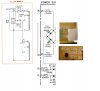
Well maybe you can. Here's a picture of some B-2 conFusion for you between the Sch and the PCB. According to the schematic, fuses F201, 202, 203, and 204 are shown as Flast-Blo but what's marked on the PS PCB for those is a Slo-Blo T type fuse¿

I would never use and I've never seen Slo-Blo fuses used there in any of the B-2's I've restored so far.
B-2 ConFusion 01.jpg
 
Listen I'm not here to convert anyone or change anyones mind, but I changed the fuses that were in some of my other equipment amp/pre etc sometimes there was a pretty significant difference sometimes it just changed the flavor. I did change the b-2 fuses from glass to ceramic (Shcurter they're like a $1 ea) and it changed the sound cleaned up the highs, a little more bottom end and a much fuller sound. then get this I changed the direction and it changed the sound again. I don't pretend to know what I'm talking about, I know I'm a moron you don't need to convince me.

"Listen" no worries of what we think, so take it for what is worth...it is your $$ and your amp. I am just looking to point out that changing the fuse from one type to the other, all else being equal means Jack ...unless you do a blind folded , side-by-side comparison there is so way to tell how much of a placebo effect "you hear"... What usually makes a difference is replacing or cleaning an old fuse and fuse holder.

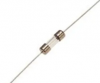
What I suggested to ya is to get some pigtail fuses so you would not need to worry about poor contact which is what causes issues...replace with something like this: upload_2020-4-23_13-55-2.png


and no, worrying about replacing a fuse on the fly in case one goes out is not an issue as you would not want to pop another fuse back in, iwithout investigating root cause which in turn means rolling your sleeves up anyway.

all that aside, I need to know if you can clone those FX-1s and send me a pair

 
"Listen" no worries of what we think, so take it for what is worth...it is your $$ and your amp. I am just looking to point out that changing the fuse from one type to the other, all else being equal means Jack ...unless you do a blind folded , side-by-side comparison there is so way to tell how much of a placebo effect "you hear"... What usually makes a difference is replacing or cleaning an old fuse and fuse holder.

What I suggested to ya is to get some pigtail fuses so you would not need to worry about poor contact which is what causes issues...replace with something like this: View attachment 1841828


and no, worrying about replacing a fuse on the fly in case one goes out is not an issue as you would not want to pop another fuse back in, iwithout investigating root cause which in turn means rolling your sleeves up anyway.

all that aside, I need to know if you can clone those FX-1s and send me a pair

I played around with the fuses a bit more yesterday and other than orientation ( both ceramic and glass sound harsh especially in higher frequencies when installed in the wrong direction) anyways the fuses on the pcb once the right orientation is decided I could not hear a difference between them I went back and forth several times with different audio tracks and could not definitively say which was which however for the 5A fuses for the transformers I could hear the difference between ceramic and glass again with the right orientation, so I may play around with those fuses. I did notice that on one of the fuse holders on the pcb there is some corrosion and the fuse clip has offset solder pins vs new fuse clips for pcb have the solder pins the the center for both sides so I may have to go to the pigtails as you suggested. As for the FX-1's I wish I could clone them, I really really do.
 
Personally, i prefer to choose a fuse that has a datasheet confirming independently verified electrical safety parameters rather that any mystical audiophile properties. Most audiophile fuses are somewhat "vague" on the specifications they meet.

As to the concept of fuses being directional, you're 23 days late..
 
Back
Top Bottom