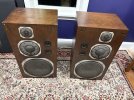
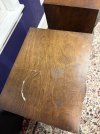
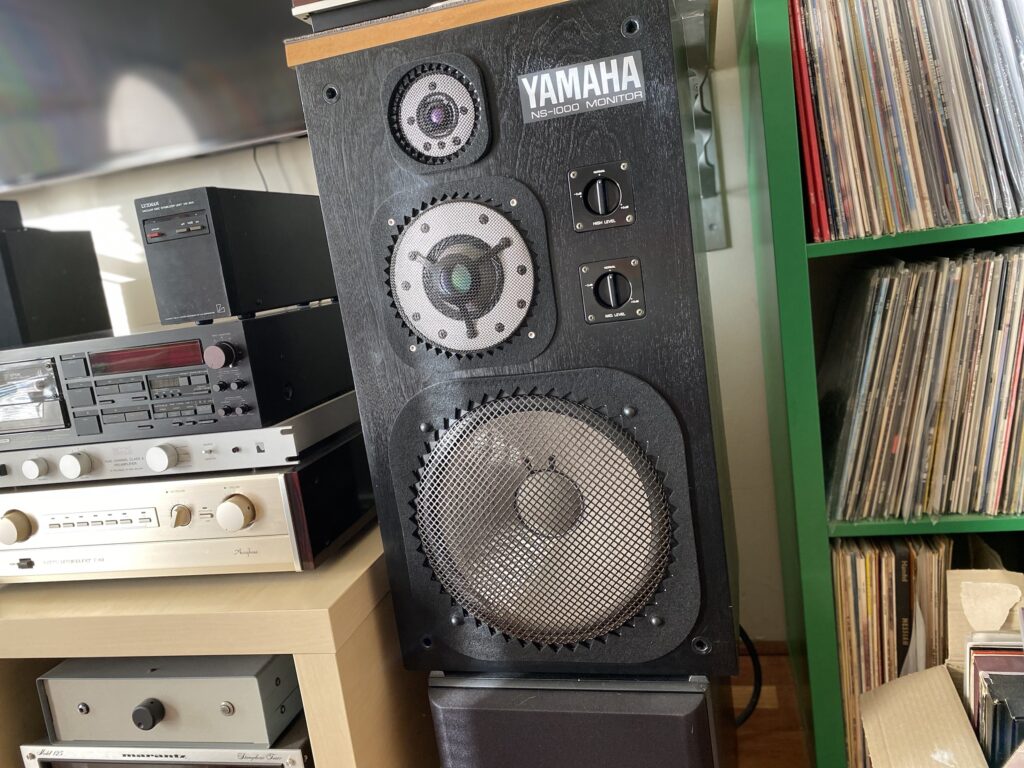
I began the restoration of my NS-1000M a little while ago and the cabinets were finished in autumn, ‘24. A property of the wood is it readily absorbs water and chemicals, so the grain will rise during processing and then retract, several months later. When you want to wipe the dust from the speaker during the sanding and filling phase, I recommend a grab cloth, and if you need to wet the surface I recommend IPA. Alcohol does not swell the grain like water does. If you want a polished finish, it may require a second cutting and polishing phase after the wood has reached hygroscopic equilibrium in four months.
I think the biggest concern are the drivers. I might suggest the first thing to do is to test the drivers individually for Ohmic value using a digital multimeter.
Starting at the bottom, if both woofers move freely without scratching, that will be a solid beginning. Be careful not to drop the cabinets or introduce a jolt to the woofers, because the magnet and rear plate can slide and pinch the voice coil. There is a proactive rather than reactive procedure of cleaning the steel and applying new slow setting epoxy to the outside to help with this. The DC resistance of the woofers is about 5 Ohms or a bit less.
If the midrange is behaving inappropriately there could be several causes. If it has been overheated, the voice coil may have deformed and is rubbing against the outside edge of the magnetic gap. This can be caused by electronic failure in the amplification chain, a clipping amplifier, or excess power levels. The second possibility is oxide on the L-pad’s internal contact points, which can manifest as symptoms of distortion. I think that is unlikely. Third, is a shorted capacitor in the crossover. The capacitors are self-healing metalized paper in wax or oil and they are quite resistant to this failure mode, but shorting has been documented on an NS-1000’s midrange capacitor. Fourth, the glue around the dome may have released and is buzzing, but I’ve only ever seen that when a pair of NS-1000’s were subjected to prolonged exposure to the elements. The last possibility is the rear pole piece has slid. The DC resistance is about 6 Ohms.
Since both tweeters are dead, I’m going to suggest overheating as the prime culprit. The DC resistance is about 6 Ohms.
After the drivers have been tested, the crossover should be verified. It could cause any symptom that the speaker is displaying, or even have killed them. Depending on how far you want to go, later on we may get to the crossover and specifics of driver protection.