gdmoore28
Super Member
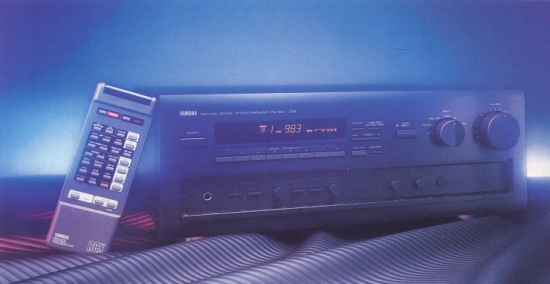
A few months ago, after building his new media room, my long time neurologist gave me his old power components, one of which is a mint Yamaha RX-950 stereo receiver. For those unfamiliar with this receiver (as was I), here's the info (preceded by pictures, because we all want pictures):

Specifications:
https://www.manualslib.com/manual/340448/Yamaha-Rx-950.html?page=14#manual
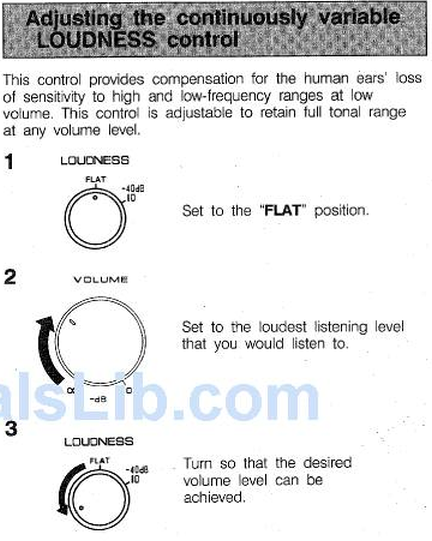
Loudness compensation instructions:
https://www.manualslib.com/manual/340448/Yamaha-Rx-950.html?page=9#manual
Review from Hi Fi Review:
http://www.hifi-review.com/153689-yamaha-rx-950.html
Outside of a little distortion caused by a dirty input selector (which clears up immediately when the switch is moved), the receiver is perfect in every way as far as function. All the bulbs work, for cryin' out loud.
My question refers to the "continuously-variable loudness control." This manually-chosen loudness compensation is totally independent of the volume control position. No matter how high the volume control is turned, the amount of loudness compensation remains the same. Fine and dandy. I'd rather have it volume-dependent, but that's neither here nor there.
The real oddity here - and the point of my post - is that even though the volume control has no effect on the level of loudness compensation, the loudness compensation level has a big effect on the volume control. As the loudness compensation level is increased, the volume level decreases.
For example, when adjusting the controls as the instruction manual directs, I will set the volume control to approximately 1/4th of its travel, then adjust the loudness control. As I do so, the receiver's volume progressively lowers. By the time I've selected half of the available loudness comp., I have to raise the volume control to twice its original setting, going from 1/4th of its travel to 1/2.
So, is this normal for this kind of "continuously-variable loudness compensation?" Doesn't this design rather defeat the purpose of loudness compensation altogether?
By the way, I can totally live with this design, and the bass/treble boost is actually quite enjoyable, as it never seems unnatural and never becomes intrusive. Using the Yamaha on my Altecs is (besides curiosity fulfilling) a temporary arrangement while I build new interconnects for my Dynaco tube system, in which no tone controls are used at all.
Thank you for your endurance with my wordy posts!
GeeDeeEmm
Specifications:
https://www.manualslib.com/manual/340448/Yamaha-Rx-950.html?page=14#manual
Loudness compensation instructions:
https://www.manualslib.com/manual/340448/Yamaha-Rx-950.html?page=9#manual
Review from Hi Fi Review:
http://www.hifi-review.com/153689-yamaha-rx-950.html
Outside of a little distortion caused by a dirty input selector (which clears up immediately when the switch is moved), the receiver is perfect in every way as far as function. All the bulbs work, for cryin' out loud.
My question refers to the "continuously-variable loudness control." This manually-chosen loudness compensation is totally independent of the volume control position. No matter how high the volume control is turned, the amount of loudness compensation remains the same. Fine and dandy. I'd rather have it volume-dependent, but that's neither here nor there.
The real oddity here - and the point of my post - is that even though the volume control has no effect on the level of loudness compensation, the loudness compensation level has a big effect on the volume control. As the loudness compensation level is increased, the volume level decreases.
For example, when adjusting the controls as the instruction manual directs, I will set the volume control to approximately 1/4th of its travel, then adjust the loudness control. As I do so, the receiver's volume progressively lowers. By the time I've selected half of the available loudness comp., I have to raise the volume control to twice its original setting, going from 1/4th of its travel to 1/2.
So, is this normal for this kind of "continuously-variable loudness compensation?" Doesn't this design rather defeat the purpose of loudness compensation altogether?
By the way, I can totally live with this design, and the bass/treble boost is actually quite enjoyable, as it never seems unnatural and never becomes intrusive. Using the Yamaha on my Altecs is (besides curiosity fulfilling) a temporary arrangement while I build new interconnects for my Dynaco tube system, in which no tone controls are used at all.
Thank you for your endurance with my wordy posts!
GeeDeeEmm