

You are using an out of date browser. It may not display this or other websites correctly.
You should upgrade or use an alternative browser.
You should upgrade or use an alternative browser.
Do binding posts really affect sound quality?
- Thread starter Onebean
- Start date

One of the reasons I'm fully convinced a lot of audio folks never really just sit and enjoy with an empty mind.So, the more mods you make the more you will need to make even more mods?

Someday, someone will attempt to quantify the differences and characteristics of different wires and connectors. Until then, it's all speculation.
Well almost all of it. The real issue that nobody ever delves into is what the baseline for a connection should be, and how you can only go down. A passive wire cannot improve a signal. I think then we could start discussion on what degrades the signal, and how time will affect even the best interconnect. Always ignored is also what's happening inside the components. Your amp may have 40 year old 18ga jumpers to the posts. It has smaller gauge signal wires for sure. Soley investing in interconnects is like painting rotten wood with lacquer.
Some of the most notable improvements I've made have centered around replacing old internal wiring. But that's just me apparently...
Well almost all of it. The real issue that nobody ever delves into is what the baseline for a connection should be, and how you can only go down. A passive wire cannot improve a signal. I think then we could start discussion on what degrades the signal, and how time will affect even the best interconnect. Always ignored is also what's happening inside the components. Your amp may have 40 year old 18ga jumpers to the posts. It has smaller gauge signal wires for sure. Soley investing in interconnects is like painting rotten wood with lacquer.
Some of the most notable improvements I've made have centered around replacing old internal wiring. But that's just me apparently...

audiotemp
Super Member
I'm not entirely sure what was meant. That modded gear is more revealing, so each change makes the impact of later changes easier to hear, I think. But indeed one can question whether it is the ears that are improving more so than the gear. In any case, I think you do see cases where the need for further change is just enhanced rather than quenched.It reads more like practice makes perfect.
Last edited:

I wonder if simply breaking and making connections, or reflowing soldered ones isn't responsible for much of any perceived improvement in sound.
Given that the signal passes through a very long and very thin gauge wires in the voice coil, I'm not convinced that a foot or two of even modest wire inside the enclosure is critical. But replacing it does mean new connections so it may be a distinction without a difference.
I especially wonder about the solder joints to the tinsels in woofers and midranges - I've encountered a bunch of drivers where the joint at the cone was problematic - cold solder joints or perhaps the solder never really wetted out on the tinsel. I suspect the tinsel may be nickle plated, which is difficult to make a really good solder joint to.
When the joint is really bad, the driver appears to be dead, but if the volume knob is turned up high enough, suddenly the driver starts operating and then behaves itsself for a while. I assume that the larger current breaks through corrosion or gaps and establishes continuity, at least for a while. But I wonder how often it starts at a subliminal level and it's only after it gets really bad that we actually notice. But maybe on some level we are unhappy with the sound even before it's obvious even to non golden ears.
Given that the signal passes through a very long and very thin gauge wires in the voice coil, I'm not convinced that a foot or two of even modest wire inside the enclosure is critical. But replacing it does mean new connections so it may be a distinction without a difference.
I especially wonder about the solder joints to the tinsels in woofers and midranges - I've encountered a bunch of drivers where the joint at the cone was problematic - cold solder joints or perhaps the solder never really wetted out on the tinsel. I suspect the tinsel may be nickle plated, which is difficult to make a really good solder joint to.
When the joint is really bad, the driver appears to be dead, but if the volume knob is turned up high enough, suddenly the driver starts operating and then behaves itsself for a while. I assume that the larger current breaks through corrosion or gaps and establishes continuity, at least for a while. But I wonder how often it starts at a subliminal level and it's only after it gets really bad that we actually notice. But maybe on some level we are unhappy with the sound even before it's obvious even to non golden ears.

H2oman7.62mm
Super Member
I don't know if they changed the sound in any way, but changing out the factory speaker terminals on my Harman / Kardon 730 so I can use banana plugs makes it easier for me to plug-n-play.
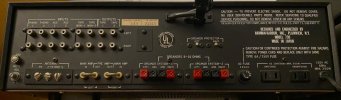
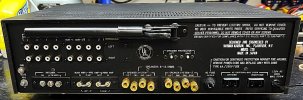
Those Amazon Banana Plugs are absolutely the worst - the basket around the pin compresses in the socket, but not enough that it doesn't stay loose around the pin! Then the whole thing rattles around and crackles. The box I bought was cheap but they ended up in the rubbish.
Neutrik Speakon connectors are really good.
Neutrik Speakon connectors are really good.

fredgarvin
Super Member
Really? They pay someone to maintain and sometimes mod that sound reinforcement system.Except that all that practice will never get you to Carnegie Hall...


Danny Ritchie - GR Research claims ferrous metals in the signal path smear spatial cues in the time domain by storing energy too long. He says even iron core inductors cause smearing. My guess is there are lots of way more important issues for each person's system and setup in the room that make more audible differences. But, if you've done all those other things right, then ferrous metals in the signal path might degrade the sound stage. Doubt it is measurable, but might be audible.
The resolution of modern equipment is far far better than the human ear. If it isn't measurable, then it cannot be audible.Doubt it is measurable, but might be audible.
The resolution of modern equipment is far far better than the human ear. If it isn't measurable, then it cannot be audible.
How do you measure sound stage width, depth, height and layering.

RVT1K
Super Member
The resolution of modern equipment is far far better than the human ear. If it isn't measurable, then it cannot be audible.
I'm of the "if you can hear it, you can measure it" camp. And if you can't measure it, you are not measuring correctly.
The capabilities of even older test equipment is quite extraordinary.
RVT1K
Super Member
How do you measure sound stage width, depth, height and layering.
By identifying this :
signal path smear spatial cues in the time domain
and then identifying the measurements/equipment needed.
...for example that the Neutrik Speakon connectors are only good up to 200Hz.Danny Ritchie - GR Research claims...
Those are human perceptions of sound quality, not electronically specified & generated ones. Different listeners can have different perceptions of S.Q. listening to the same piece of equipment.How do you measure sound stage width, depth, height and layering.
I'm of the "if you can hear it, you can measure it" camp. And if you can't measure it, you are not measuring correctly.
The capabilities of even older test equipment is quite extraordinary.
All I know is the exact same audio set up sounds different in my workshop than it does in the dedicated, acoustically treated listening room. The room and placement of gear in the room is the only difference and it is very audible.
typo?...for example that the Neutrik Speakon connectors are only good up to 200Hz.
I use these in my main system and can assure you they do fine above 200 Hz.
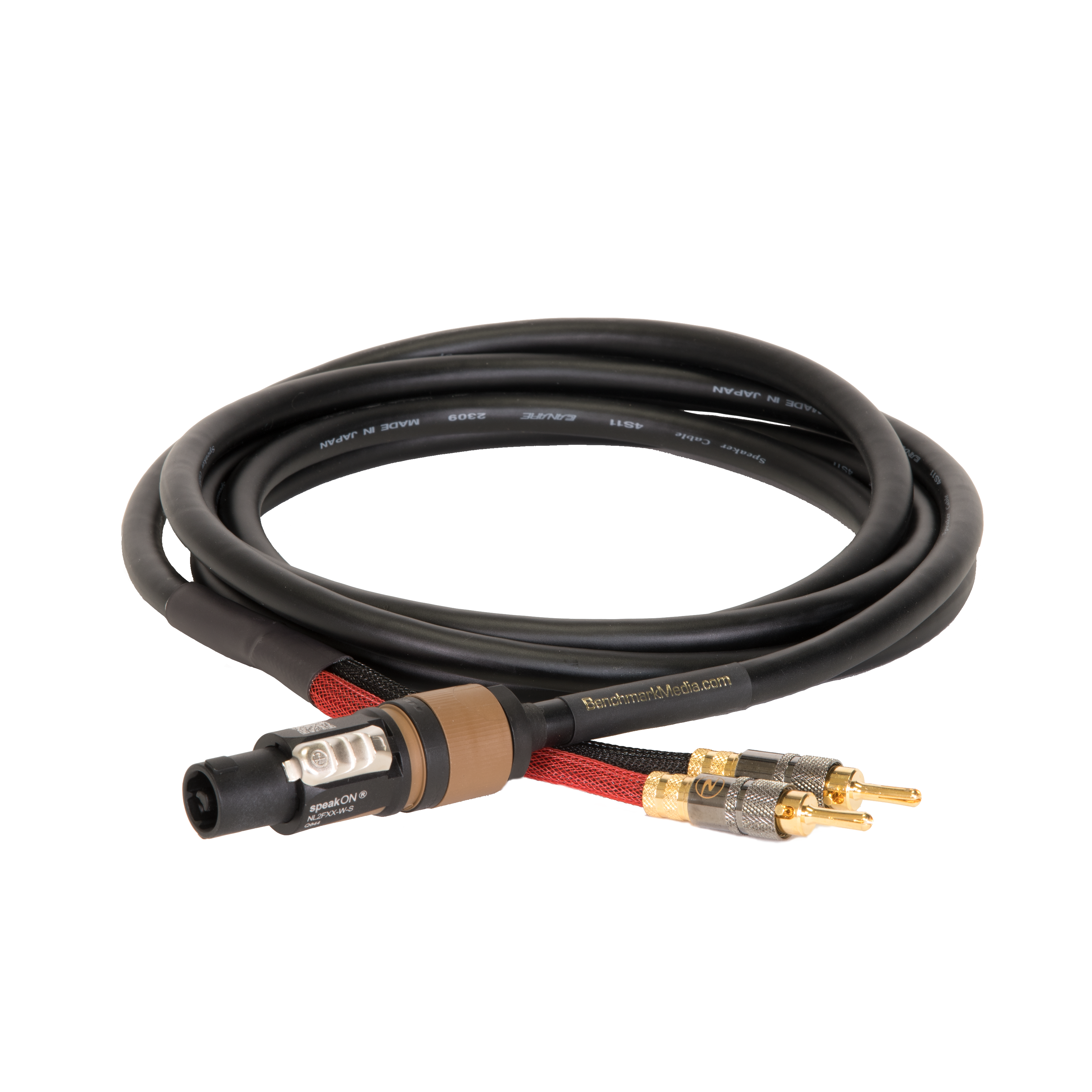
Benchmark Speaker Cable - NL2 to Banana - 2 pole
BENCHMARK STUDIO&STAGE™ SPEAKER CABLE - NL2 (or NL4) TO LOCKING BANANA CABLES ARE SOLD INDIVIDUALLY Price is for one cable, Order 2 for a stereo pair. Hand assembled in the USA Benchmark Studio&Stage™ Speaker Cables combine the best cable, connectors, and construction techniques in order to...
 benchmarkmedia.com
You're describing very measurable differences in the acoustic environment, ain't no mystique here.All I know is the exact same audio set up sounds different in my workshop than it does in the dedicated, acoustically treated listening room. The room and placement of gear in the room is the only difference and it is very audible.