You are using an out of date browser. It may not display this or other websites correctly.
You should upgrade or use an alternative browser.
You should upgrade or use an alternative browser.
anyone else running vintage Empire carts?
- Thread starter gadget73
- Start date

Can anyone explain difference between bi-radial and elliptical? I see in specs LTD500 and LTD400 have bi-radial and LTD200 has elliptical. Although 0,2 x 0,7 is the same elliptical as 0,3 x 0,7 but smaller. In other hand in 2000Z 0,2 x 0,7 described as elliptical. What difference?

doctor fuse
Super Member
No difference, different word for the same thingCan anyone explain difference between bi-radial and elliptical? I see in specs LTD500 and LTD400 have bi-radial and LTD200 has elliptical. Although 0,2 x 0,7 is the same elliptical as 0,3 x 0,7 but smaller. In other hand in 2000Z 0,2 x 0,7 described as elliptical. What difference?


Interesting question. It's probably the difference between the Grado-patented cost-reduced method of making an "elliptical" diamond (called by the cognoscenti "pseudoelliptical" because the tip doesn't form an actual ellipse) and a "true" elliptical, which is, as you'd expect, more difficult/expensive to grind.
The bi-radial term is, I'm guessing, engineer types being uncomfortable calling something elliptical that's not an ellipse. Not without reason, they probably think of the bi-radial as a corrected conical-- the fat parts where the conical gets in its own way, causing tracing distortion, have been removed. It would be interesting to know where the term bi-radial originated. Shure is a prime suspect, but regardless of who named it, the question arises: has anyone determined that the true elliptical grind actually sounds better and if so, what are the circumstances where this advantage appears? In other words, are the two cuts effectively the same?
If interested, check out a patent that cites Grado's: US3534968A - Elliptical phonograph stylus - Google Patents
The bi-radial term is, I'm guessing, engineer types being uncomfortable calling something elliptical that's not an ellipse. Not without reason, they probably think of the bi-radial as a corrected conical-- the fat parts where the conical gets in its own way, causing tracing distortion, have been removed. It would be interesting to know where the term bi-radial originated. Shure is a prime suspect, but regardless of who named it, the question arises: has anyone determined that the true elliptical grind actually sounds better and if so, what are the circumstances where this advantage appears? In other words, are the two cuts effectively the same?
If interested, check out a patent that cites Grado's: US3534968A - Elliptical phonograph stylus - Google Patents
Last edited:
This would be normal if it were in different tables. But when it's in the same table, how do we understand it? 0,2 x 0,7 is bi-radial and 0,3 x 0,7 is elliptical? No, there's something different here.No difference, different word for the same thing
Attachments


doctor fuse
Super Member
This would be normal if it were in different tables. But when it's in the same table, how do we understand it? 0,2 x 0,7 is bi-radial and 0,3 x 0,7 is elliptical? No, there's something different here.
Hmmm, you got me. This goes against Wualta's guess that "bi-radial" is a cost-saving cut.
Now my guess is that Empire is simply using the "bi-radial" the way some call a 0.2 x 0.7 tip a "hyperelliptical", to differentiate between the larger 0.3mx 0.7 elliptical.
Last edited:
Although earlier 2000Z, 2000 e/III with 0,2 x 0,7 were described as simply elliptical. And at the same time 4000's were 0,2 bi-radial. But a year before they were miniature nude diamond with 0,1 mil tracing radius 4-dimensional. (It's enough to drive me crazy... Why did I even go there?)Hmmm, you got me. This goes against Wualta's that "bi-radial" is a cost-saving cut.
Now my guess is that Empire is simply using the "bi-radial" the way some call a 0.2 x 0.7 tip a "hyperelliptical", to differentiate between the larger 0.3mx 0.7 elliptical.
Last edited:
I suggest that anyone who has both, say, a 200E and a 300ME stylus (both made in USA), plus a good hand magnifier or microscope, examine the two diamonds to see if there's a difference in the cuts that's enough to make it necessary or useful to describe them using different terms. I would not expect to see such a difference, other than the 3x7 having smaller flats than the 2x7. If that turns out to be the case, then I can't explain why Empire described them differently in the same published spec sheet.
Maybe "bi-radial" sounds more high-tech than "elliptical"? Ya got me. Grado patent drawing below:
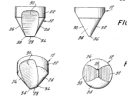
Maybe "bi-radial" sounds more high-tech than "elliptical"? Ya got me. Grado patent drawing below:


Empire, always moving fast and breaking things, mostly itself, managed to publish a bunch of error-bedeviled brochures, ads and even user guides in English and, I see now, in German as well. The other brochure you show, the one with the tracing radius spec, has correct information.
Last edited:

russdall
An Uprooted Oklahoman
Seems like audio sales teams across the world were trying to pseudo-science their way in to our pocket books.
Quote from a Banned member of audioshark;
"Our pseudo-scientific approach has proven to align the copper atomic structure with favorable electron "orbits" that follow the same sacred orbital geometry of our own natural Lunar satellite (The Moon) and improve the performance of any system."
Quote from a Banned member of audioshark;
"Our pseudo-scientific approach has proven to align the copper atomic structure with favorable electron "orbits" that follow the same sacred orbital geometry of our own natural Lunar satellite (The Moon) and improve the performance of any system."
Now there's a man who takes his pseudoscience pseudoseriously.
Over the years, I learned to ignore Empire's stumbles and overpromising in their ad campaigns. But seeing it spill over into the instructions that came with the cartridge is a little disturbing, or would be if we didn't already know that of course they'd mess it up somehow, while still making very good cartridges that should be able to speak for themselves. Sigh.
Doug G is correct, by the way. A typical line-contact stylus does have 3 radii. Don't tell nobody, or they'll start adding "tri-radial" to their ad copy.
Over the years, I learned to ignore Empire's stumbles and overpromising in their ad campaigns. But seeing it spill over into the instructions that came with the cartridge is a little disturbing, or would be if we didn't already know that of course they'd mess it up somehow, while still making very good cartridges that should be able to speak for themselves. Sigh.
Doug G is correct, by the way. A typical line-contact stylus does have 3 radii. Don't tell nobody, or they'll start adding "tri-radial" to their ad copy.
Last edited:
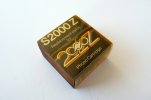
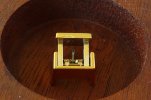
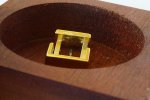

Jeannot61
Active Member
Hi, if it's the seller Jean-Pierre in France, no need to worry, he's honest and his stock really comes from old NOS inventory.
During some productions, some colors were added in different places on the cantilever (black, blue, etc.). Generally, if I remember correctly, starting from '80.
The blue color corresponds to hyper elliptical
During some productions, some colors were added in different places on the cantilever (black, blue, etc.). Generally, if I remember correctly, starting from '80.
The blue color corresponds to hyper elliptical
Last edited:
Rolls-Royce
Active Member
I think all the stylus-cut gobbledygook industrywide was more an attempt to avoid the copyright and patent police than to designate real differences.
doctor fuse
Super Member
The Empire 1000ZE/X I picked up on an old plastic Marantz deck for cheap wouldn't align on a Grace 707 (so frustrating!) so I decided to mount it on a Denon DP-35F with "Dynamic Servo Tracer" electronically-damped tonearm. What a great match! It sounds very, very good on this arm. I will probably listen to this turntable more often now.