

You are using an out of date browser. It may not display this or other websites correctly.
You should upgrade or use an alternative browser.
You should upgrade or use an alternative browser.
“A Modest Proposal”: Remaster, better? No, just different.
- Thread starter Ishmael
- Start date



Absolutely true. I was just illustrating how far it's possible to depart from simply capturing a performance.But live performances of "pop" do happen in studios often.
All the Live at TMR are well done. This one sounds like your sitting in the studio on the couch.
View attachment 3107620
Today's artists and producers can choose to place themselves anywhere on a spectrum from simply capturing a performance at one end of the spectrum to spending months assembling a collage of sounds/tracks/takes/samples at the other end of the spectrum.
Last edited:

DesertRatt
All Bark, No Bite!
Ex:Eva Cassidy. Nightbird album---spectacular performances live.

RunOutGroove
Addicted Member
An interesting take and I agree... I remember hearing some Beatles stuff that was remastered and may have been remixed as well on CD in the early 90s and despite all of the hype behind it (which there always seems to be for Beatles stuff), I wasn't that crazy about it. I heard it from having worked at a record store at that time and though there was lots of praise about how detailed it was, I thought that there were some details that were thrown into sharp relief that were better off being more blended into the background. A tambourine overdub that one might have hardly even noticed was now really prominent and competing for space with everything else. It did bring out some details of the mix, but I felt that the original was more unified sounding and ultimately more of a satisfying listen.
Currently, I'm really curious about this new remastered version of the Marquee Moon LP by Television. It's a favorite album of mine and though I certainly wouldn't call it "low-fi," it's not the smoothest recording either. I've actually never really been all that bothered by the recording quality as it seems to fit the music, but I'd still love to get my hands on a copy of this new version to see whether or not they've really improved the thing. I saw a YouTube video from someone who said that it sounds more conventionally hi-fi but doesn't feel like what the artist had probably intended (and the leader of the band, Tom Verlaine isn't around anymore to ask).
Not quite in the same category, as it's a remix, not simply a remaster, but the 90s version of the Stooges Raw Power CD is very different from the sound of the original. The original was apparently mixed by David Bowie, who's skills at the board were apparently suspect and the result was a kind of echoy, diffused, vintage kind of a sound that not everyone liked. Iggy Pop himself apparently never liked the sound of that album and finally did a remix, making the guitars far more agressive sounding and the whole mix crunchier and more modern seeming. I have a very old copy of the LP, but bought the remastered CD when it came out, and I have to say, the more modern, more agressive sound of it, kind of ruins it for me. I like the older, if somewhat lo-fi sound, of the original far better.
Then there are records that I do feel benefit from a bit of tweaking. One of those that comes to mind is Blue Oyster Cult's Tyranny and Mutation album, a favorite of mine, but the mix on my old LP always seemed a bit muddy. The remastered CD makes it all a bit clearer and I would say is an overall better listen.
Then there are records that in my opion sound so good as is, that I don't really feel the need to seek out and even shiner sounding version... Steely Dan's Aja comes to mind as I know that there are many different, hi-fi versions of that, but my very old vinyl copy of it sounds good enough that I don't feel the need to seek better...
Currently, I'm really curious about this new remastered version of the Marquee Moon LP by Television. It's a favorite album of mine and though I certainly wouldn't call it "low-fi," it's not the smoothest recording either. I've actually never really been all that bothered by the recording quality as it seems to fit the music, but I'd still love to get my hands on a copy of this new version to see whether or not they've really improved the thing. I saw a YouTube video from someone who said that it sounds more conventionally hi-fi but doesn't feel like what the artist had probably intended (and the leader of the band, Tom Verlaine isn't around anymore to ask).
Not quite in the same category, as it's a remix, not simply a remaster, but the 90s version of the Stooges Raw Power CD is very different from the sound of the original. The original was apparently mixed by David Bowie, who's skills at the board were apparently suspect and the result was a kind of echoy, diffused, vintage kind of a sound that not everyone liked. Iggy Pop himself apparently never liked the sound of that album and finally did a remix, making the guitars far more agressive sounding and the whole mix crunchier and more modern seeming. I have a very old copy of the LP, but bought the remastered CD when it came out, and I have to say, the more modern, more agressive sound of it, kind of ruins it for me. I like the older, if somewhat lo-fi sound, of the original far better.
Then there are records that I do feel benefit from a bit of tweaking. One of those that comes to mind is Blue Oyster Cult's Tyranny and Mutation album, a favorite of mine, but the mix on my old LP always seemed a bit muddy. The remastered CD makes it all a bit clearer and I would say is an overall better listen.
Then there are records that in my opion sound so good as is, that I don't really feel the need to seek out and even shiner sounding version... Steely Dan's Aja comes to mind as I know that there are many different, hi-fi versions of that, but my very old vinyl copy of it sounds good enough that I don't feel the need to seek better...

gizzyman47
Addicted Member
If your not using the exact equipment that they used in the studio, then your not hearing it EXACTLY like they did anyway. I don't get stressed out about any of it. If the remaster sounds good to me then I'm happy. I do have a few remasters that I don't like as much as the originals, but most that I do have, have been an improvement to my ears.

petes'picks
Super Member
Some recordings are in dire need of remixing and remastering, others that were done right the first time should be left alone. Just so those doing the remastering do not get heavy handed its not a bad thing but when they do get heavy handed its can be a terrible thing.
There are some old delta blues and jazz albums that sounded like they were recorded on portable cassette recorders that benefited tremendously from being redone while some remasters of modern recordings just put a smiley EQ into the mix and mess things up. When I see someone trying to remaster a Bob Ludwig master I just cringe.
Stevie Wonders Definitive Collection is an example of horrible remastering and they should of just used the original recordings as previously mastered or used the Original Musiquarium masters. In the late 80s I remember someone decided to add a bunch of ambience and reverb to some early ZZ Top drum tracks to try and match the drum machine sound of day is an example of downright awful remastering.
There are some old delta blues and jazz albums that sounded like they were recorded on portable cassette recorders that benefited tremendously from being redone while some remasters of modern recordings just put a smiley EQ into the mix and mess things up. When I see someone trying to remaster a Bob Ludwig master I just cringe.
Stevie Wonders Definitive Collection is an example of horrible remastering and they should of just used the original recordings as previously mastered or used the Original Musiquarium masters. In the late 80s I remember someone decided to add a bunch of ambience and reverb to some early ZZ Top drum tracks to try and match the drum machine sound of day is an example of downright awful remastering.
Last edited:

Pyrrho
Super Member
Not quite in the same category, as it's a remix, not simply a remaster, but the 90s version of the Stooges Raw Power CD is very different from the sound of the original. The original was apparently mixed by David Bowie, who's skills at the board were apparently suspect and the result was a kind of echoy, diffused, vintage kind of a sound that not everyone liked. Iggy Pop himself apparently never liked the sound of that album and finally did a remix, making the guitars far more agressive sounding and the whole mix crunchier and more modern seeming.
The Iggy Pop remix is infamous for having the dynamic range squeezed out of it even more aggressively than most popular music these days, and is one of the most dynamically compressed albums ever released. There is a rating site for dynamic range of CDs and records; with the following two links, one can make a comparison of an earlier CD release (so the David Bowie version) with the 1997 Iggy Pop remix:
To understand the numbers, you might want to take a look at the FAQs:
This may also help one understand what is going on:

Loudness war - Wikipedia
And an audio example of the concept:
Back to Raw Power and the 1997 remix, here is a quote about it:
Iggy Pop and the Stooges
Raw Power (Columbia, 1997)
Remixed by Pop in 1997, this remains among "the loudest CDs ever made".

How CDs are remastering the art of noise
Albums are getting louder and the sound quality is suffering. Audiophiles and engineers despair of the trend, but who is driving it?
 www.theguardian.com
Its average volume is loud because it has almost no dynamic range, with everything nearly maxing out the levels possible on a CD, instead of actually using the dynamic range capabilities of the CD format.
And since the trend on popular music these days is to eliminate dynamic range, it is an extreme example of the recent trend, so you could say, as you do, that it is very "modern."
RunOutGroove
Addicted Member
Yeah, I know something about the whole "loudness wars" thing. I never saw those albums analyzed like that, but it's pretty clear hearing the remastered CD version of it that there's lots of dynamic compression going on. I dig Iggy as an artist, but maybe he's not so gifted behind the boards?The Iggy Pop remix is infamous for having the dynamic range squeezed out of it even more aggressively than most popular music these days, and is one of the most dynamically compressed albums ever released. There is a rating site for dynamic range of CDs and records; with the following two links, one can make a comparison of an earlier CD release (so the David Bowie version) with the 1997 Iggy Pop remix:
To understand the numbers, you might want to take a look at the FAQs:
This may also help one understand what is going on:
Loudness war - Wikipedia
en.wikipedia.org
And an audio example of the concept:
Back to Raw Power and the 1997 remix, here is a quote about it:
How CDs are remastering the art of noise
Albums are getting louder and the sound quality is suffering. Audiophiles and engineers despair of the trend, but who is driving it?
Its average volume is loud because it has almost no dynamic range, with everything nearly maxing out the levels possible on a CD, instead of actually using the dynamic range capabilities of the CD format.
And since the trend on popular music these days is to eliminate dynamic range, it is an extreme example of the recent trend, so you could say, as you do, that it is very "modern."
That record is really of it's times though, as the 90s, when it came out was when the whole "nu metal" thing was exploding and to my ears, nothing sounds quite as dynamically crunched as that stuff, so maybe Iggy thought that he was giving the public what they wanted? I like some heavy type music, but the whole nu metal vibe with all of that compression really turns me off. As soon as I hear the first few bars of anything like that, I want to turn it off, so that I can't relly even get to a point where I might find some little thing to like in any of it. To be fair, a lot of popular music seem to mix everything "into the red" well before the time of the loudness wars. I suspect some really old reggae stuff is mixed that way, and I'll admit to digging that...

cpt_paranoia
Addicted Member
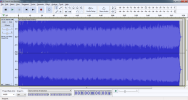
Oh crap. Looks like I have the remastered version...The Iggy Pop remix is infamous for having the dynamic range squeezed out of it even more aggressively than most popular music these days
Pyrrho
Super Member
Oh crap. Looks like I have the remastered version...View attachment 3107728
Regarding this topic, but not that album, my wife wanted some music from the 1980's on CD a few years back, so I bought a couple of new remasters for her, with bonus tracks. The first time I put one on to play, I thought that it sounded like crap. I remembered hearing about this compression issue, so I then looked online and found that site that gives data on different releases of albums. Using that as a reference, I went on eBay and bought an old used copy of the album that, according to that website, would have a wider dynamic range. When I got it and played it, the difference was pretty dramatic, as the old CD sounded so much better, so much more natural. So now, when I want to buy popular music, I plan on looking them up on that website before making a purchase. I have used it for several, and I have never had a problem when making a purchase based on what is claimed on that site (though I obviously have not bought everything they mention, and cannot vouch for the accuracy of everything there).
It is worth mentioning that I have had a very different experience with remastered classical music. There is a great performance of Mozart's Horn Concertos with Dennis Brain on the horn, that is an old mono recording from the 1950's on EMI (unfortunately, EMI at that time was not recording things as well as RCA and some others). After getting it on CD, they released a remastered version, which I bought, and which sounded a little better. They later on remastered it yet again, and I bought that one, and it sounded a little better than the earlier remaster. That is typical of my experience with classical and jazz remastered, that it usually is better. But with rock and pop, it usually sucks when they remaster it, making it sound unnatural and horrible, by removing the dynamic range that was present in the original recording. Evidently, though, most people don't notice and don't care. Frankly, if everything were released like most recently released popular music, I would not bother with a good stereo, as everything would sound like crap anyway.
cpt_paranoia
Addicted Member
I buy pretty much exclusively from charity shops these days. Raw Power was £1. I'm pretty sure it replaced an MP3 copy I had.So now, when I want to buy popular music, I plan on looking them up on that website before making a purchase.
I'll just try to look out for an original copy. If I remember...
May need to add a field to identify DRC processing to my database...

I always listened to Rubber Soul on CD and considered it as the Beatle's work, mixed by George Martin. But BION, the CD is a re-mix that was prepared by George Martin because the original didn't transfer well to stereo. Does that make it's CD (or Help!) any less "authentic"??? Remembner that it was originally issued in mono in 1965 and my CD has both the mono and stereo versions on it.Every remastered album starts from a source, the original tape/digital file created by the artist. In other words, whatever the format, it was first their performance.
But what is being sold via this “remaster”? Let’s consider the Beatles Rubber Soul album. The Beatles performed in a recording studio to create the master tape, which they listened to, tweaked, and finally declared their album. Again, their performance.
Compact disc reissues[edit]
Rubber Soul was first released on compact disc on 30 April 1987,[366] with the fourteen-song UK track line-up now the international standard.[236] As with Help!, the album featured a contemporary stereo digital remix prepared by George Martin.[116] Martin had expressed concern to EMI over the original 1965 stereo mix, claiming it sounded "very woolly, and not at all what I thought should be a good issue". He went back to the original four-track tapes and remixed them for stereo.[367]A newly remastered version of Rubber Soul, again using the 1987 Martin remix, was released worldwide as part of the reissue of the entire Beatles catalogue on 9 September 2009. The album was available both as an individual CD release and as part of the Beatles (The Original Studio Recordings) box set. The accompanying Beatles in Mono box set contained two versions of the album: the original mono mix and the 1965 stereo mix.[368][369]
The Capitol version was relaunched in 2006, for the Capitol Albums, Volume 2 box set,[204][370] using original mixes of the Capitol album, and then in 2014, individually and on the box set The U.S. Albums.[371]

twiiii
Lunatic Member
I have my own tone controls and processors. I prefer they would just make the reissue faithful to the original sound. If I decide or you decide the low bass needs a little help or there is to much mid bass or the highs are to strident then let us choose to change sound the way we want as we all have different speakers in different rooms. The changes if any should be our choice. There are a number of us that can't change the sound, so for them the sound should be preserved as if were the original.
Now I will admit that early tape machines and electronics were compromised compared to today But the original recordings were what they were and very popular at the time with people or they never would have sold. So quit trying to make a digital silk purse out of an analog sow's ear.
Now I will admit that early tape machines and electronics were compromised compared to today But the original recordings were what they were and very popular at the time with people or they never would have sold. So quit trying to make a digital silk purse out of an analog sow's ear.
Pyrrho
Super Member
Why don't they just issue "un-mastered" recordings and let the audio-nerds figure it out for themselves ?
Do you have a multitrack tape deck of the type they used for the original recording? If not, then you need them to master it for you, and get it to you in a format you can play.
Also, the raw multitracks are not what they intend for you to hear. They are just part of the process to create what they (or someone) decides to release. Sometimes, they don't use all of the tracks that are recorded. For example, they might record two different guitar solos, and then when they are playing it back, they may decide which one they want to include in the final release, depending on how they feel about how each one sounds with the other tracks. Or maybe they will not include either one.
Also, they don't record for "audio-nerds." They record for people generally, who just want to play it, and not have to think about how to mix or adjust anything. If you go to a concert and hear musicians play, whether it is acoustic and un-amplified, like an orchestra is typically heard in person, or with amplification and speakers, the way rock music is typically done, the listener does not get to decide about the level of each instrument, or which speakers reproduce what sounds, or anything else about the sound. You are there and you get whatever sound it is that they create. The home experience, originally, was intended to recreate the sound of a live performance. Of course, it was soon realized that things could be done in a studio that would be different from a live performance, with a famous example being the Beatles' Sgt. Pepper's Lonely Hearts Club Band, though it is by no means the first example of this idea. But, still, they are trying to create something for you to hear, and are not intending for you to create something for yourself that simply uses pieces of what they have done.

Ishmael
Super Member
Thanks all, as usual great thoughts and conversation from all.
My topics question: what, if anything, is being lost in the forever war of formats and re-mastered music? I get it, just as a masterpiece painting needs cleaning, so can the sound of an original master tape have noise, sonic artifacts removed by technology that now exists. But what else gets removed and/or added in the process? To say it is only the noise or sonic artifacts, may just be it, but we know with each re-master the sound is different. We often also know with the release and coverage of a new re-master what the current recording engineer did to change the sound, a change I am sure intended to be faithful to the musicians.
So, the next question, whose sound is it? Sure, the original sound was of a technology and recording engineer from a point in the past, even of defective equipment of that time, maybe of a manager, but even if that is all true, who were the creators? None of these people were the musicians who wrote, played, sang, and ultimately released what the others stirred into the pot. After all the squabbles, over dubs, splicing, and their equivalent of today’s Pro-Tools, what was created came from them.
But there is a reckoning coming to music being re-mastered, the day when “them” is no longer needed.
“By far, the greatest danger of Artificial Intelligence is that people conclude too early that they understand it.”
Eliezer Yudkowsky, co-founder and research fellow at the Machine Intelligence Research Institute
McCartney also said that AI was used to "extricate John's voice" from a cassette for the Peter Jackson film "Get Back."
"We were able to use that kind of thing when Peter Jackson did the film 'Get Back,' where it was us making the 'Let It Be' album," McCartney said. "He [Jackson] could separate them with AI. He could tell the machine: This is a voice, this is a guitar, lose the guitar. And he did that. So, it has great uses."
McCartney revealed that what he called "the last Beatles record" is on its way, adding that it was created with the help of AI.
"It was a demo that John had that we worked on," he said. "We just finished it up and it will be released this year. We were able to take John's voice and get it pure through this AI. So then we could mix the record as you would normally do."
By Jill Lances and Angeline Jane Bernabe
June 13, 2023, 4:06 PM GMA
How then does A/I work?
AI systems work by combining large sets of data with intelligent, iterative processing algorithms to learn from patterns and features in the data that they analyze.
Each time an AI system runs a round of data processing, it tests and measures its own performance and develops additional expertise.
Because AI never needs a break, it can run through hundreds, thousands, or even millions of tasks extremely quickly, learning a great deal in very little time, and becoming extremely capable at whatever it’s being trained to accomplish.
Colorado State University-Global Campus
The owners of the music industry have most, if not all, of recorded music, massively large sets of data. We are not talking about Rappers sampling other’s songs into their collage creation. We are talking about a change greater than the creation of recorded music. We are talking about the performance of dead artist.
With access to the entirety of all music, outtakes, etc. of The Beatles you have the data available for the A/I to learn, to incarnate: John, Paul, George and Ringo. The next logical step? To tease apart their genius and create new content.
And all that’s at stake is just money.
My topics question: what, if anything, is being lost in the forever war of formats and re-mastered music? I get it, just as a masterpiece painting needs cleaning, so can the sound of an original master tape have noise, sonic artifacts removed by technology that now exists. But what else gets removed and/or added in the process? To say it is only the noise or sonic artifacts, may just be it, but we know with each re-master the sound is different. We often also know with the release and coverage of a new re-master what the current recording engineer did to change the sound, a change I am sure intended to be faithful to the musicians.
So, the next question, whose sound is it? Sure, the original sound was of a technology and recording engineer from a point in the past, even of defective equipment of that time, maybe of a manager, but even if that is all true, who were the creators? None of these people were the musicians who wrote, played, sang, and ultimately released what the others stirred into the pot. After all the squabbles, over dubs, splicing, and their equivalent of today’s Pro-Tools, what was created came from them.
But there is a reckoning coming to music being re-mastered, the day when “them” is no longer needed.
“By far, the greatest danger of Artificial Intelligence is that people conclude too early that they understand it.”
Eliezer Yudkowsky, co-founder and research fellow at the Machine Intelligence Research Institute
McCartney also said that AI was used to "extricate John's voice" from a cassette for the Peter Jackson film "Get Back."
"We were able to use that kind of thing when Peter Jackson did the film 'Get Back,' where it was us making the 'Let It Be' album," McCartney said. "He [Jackson] could separate them with AI. He could tell the machine: This is a voice, this is a guitar, lose the guitar. And he did that. So, it has great uses."
McCartney revealed that what he called "the last Beatles record" is on its way, adding that it was created with the help of AI.
"It was a demo that John had that we worked on," he said. "We just finished it up and it will be released this year. We were able to take John's voice and get it pure through this AI. So then we could mix the record as you would normally do."
By Jill Lances and Angeline Jane Bernabe
June 13, 2023, 4:06 PM GMA
How then does A/I work?
AI systems work by combining large sets of data with intelligent, iterative processing algorithms to learn from patterns and features in the data that they analyze.
Each time an AI system runs a round of data processing, it tests and measures its own performance and develops additional expertise.
Because AI never needs a break, it can run through hundreds, thousands, or even millions of tasks extremely quickly, learning a great deal in very little time, and becoming extremely capable at whatever it’s being trained to accomplish.
Colorado State University-Global Campus
The owners of the music industry have most, if not all, of recorded music, massively large sets of data. We are not talking about Rappers sampling other’s songs into their collage creation. We are talking about a change greater than the creation of recorded music. We are talking about the performance of dead artist.
With access to the entirety of all music, outtakes, etc. of The Beatles you have the data available for the A/I to learn, to incarnate: John, Paul, George and Ringo. The next logical step? To tease apart their genius and create new content.
And all that’s at stake is just money.
Ishmael
Super Member
I've seen things you people wouldn't believe... Attack ships on fire off the shoulder of Orion... I watched C-beams glitter in the dark near the Tannhäuser Gate. All those moments will be lost in time, like tears in rain...
Blade Runner
So, find music that moves you anyway you can. I have streaming and hard content, FM radio and internet radio, but change is going to come. So, for me, while I can I gather hard content from the thrift stores, knowing that when streaming erases my content, I will still hear and know the music of my memories and maybe even turn a grandchild on to rock-n-roll, a tear drop not lost in the rain.
Take Care
Blade Runner
So, find music that moves you anyway you can. I have streaming and hard content, FM radio and internet radio, but change is going to come. So, for me, while I can I gather hard content from the thrift stores, knowing that when streaming erases my content, I will still hear and know the music of my memories and maybe even turn a grandchild on to rock-n-roll, a tear drop not lost in the rain.
Take Care

malden
Lunatic Member
"audio-nerds" are the only ones dissecting themAlso, they don't record for "audio-nerds."
those people don't care about the soundThey record for people generally, who just want to play it, and not have to think about how to mix or adjust anything.
yes, I have a Mozart recording from 1950 that sounds like WAM is in my living room, I'm not kiddingThe home experience, originally, was intended to recreate the sound of a live performance.
Last edited:
cpt_paranoia
Addicted Member
I took malden's comment to be a tongue-in-cheek reply to twiiii. I was certainly thinking along the same lines...Do you have a multitrack tape deck of the type they used for the original recording?