

You are using an out of date browser. It may not display this or other websites correctly.
You should upgrade or use an alternative browser.
You should upgrade or use an alternative browser.
2275 FM tuning meter aligment
- Thread starter Leokarma
- Start date


Leokarma
Well-Known Member
Tune to a dead spot on the dial (just noise) and adjust L201 secondary (top core) to center the meter. Use a non-metalic tuning tool such as GC AS-9300 so you don't damage the core. Don't touch the primary (bottom core) unless you have the proper test equipment to do an alignment.
Tom
Is the procedure same for 2265 ?

catrafter
Marantz Specialist

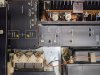
This is an old thread but was useful for me to align the tuning meter on a 2275 I rebuilt. It was unclear after reading the thread how to access the top slug on the FM if transformer. On the 2275 it can be accesses via the access port labeled "FM-IFT2" Once I figured how to access it the alignment was straightforward, just followed the directions in this thread. I am attaching a picture of the IF access port for clarity/ Hope this helps others!
Last edited:
Can anybody say if one of this tool fits on L201 coil? https://toolboom.com/en/core-alignment-screwdrivers-goot-cd-10/
Thanks a lot!

Thanks a lot!
Last edited:

Dave Sanders
Active Member
The 2.0 Size will fit the core on L201. GC Tool P/N 9304 will work.

ukfan4sure!
Expert Smoke Releaser
Once in a while I come into a thread that helps me out enormously. This was one of them. Thanks for everyone's input, especially Silversleep (for the procedure) and Richiem46 (who clarified where the slug was). I took a bamboo sharpened skewer and gently created enough friction to turn the core. It worked!

Tune to a dead spot on the dial (just noise) and adjust L201 secondary (top core) to center the meter. Use a non-metalic tuning tool such as GC AS-9300 so you don't damage the core. Don't touch the primary (bottom core) unless you have the proper test equipment to do an alignment.
By the way if the slug doesn't want to move, wet it with some alcohol and hopefully it will work loose.
It is the top core from the component side. The bottom core is the one you can access from the bottom side and is to be adjusted for lowest distortion which is why the advice to not touch it is valid unless you have a good audio oscillator and distortion analyzer. From experience this is usually never far off at all anyway.
Using a metal tool is very risky as it often breaks the ferrite slug. I use a set I got from DigiKey made by Aven. They are black antistatic although that property isn't needed. The DK part number is: 243-1016-ND.
The top of the coil is the end that faces up when the receiver sits on its feet.
If you use a metal tool, you will most likely break the core.
Once in a while I come into a thread that helps me out enormously. This was one of them.
This thread is an oldie but goodie - so I just wanted to add another success story: I found I had the exact same issue as the OP with a Marantz 2275 that I just recapped, the FM Signal meter had a large offset to the right when a station was tuned for Stereo reception. I used Tom's L201 adjustment procedure on it today with outstanding results. So many thanks to the original experts, Tom @catrafter and Randy @rBuckner, for sharing their expertise!