• The move to the new server is done. There are some software and database maintenance updates in process. This has us passing the hat around to help out. We appreciate any donations. Seriously, even a dollar helps. The payment page may be found here - https://www.audiokarma.org/support.html

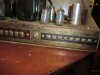
3 Grommes Precision G 101 A, 100 watt mono block tube amps

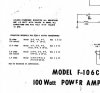
I found the proper jumper pattern for these. It is from the schematic of a Frazier F-106-c which is the same exact amp as these just under a different name. Should I use the 1.4 ohm for my Maggies :idea:
 

Attachments

  • terminal connections grommes.jpg
    terminal connections grommes.jpg
    51.6 KB · Views: 42
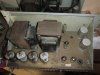
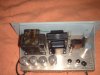
Okay I have been looking on the internet for all the info I can on these. Even though there are not that many of these to compair all of the others I have seen pics of have a different transformer configuration. Mine has 2 real large transformers. All the other ones I see pics of have 3 transformers. But all of those with 3 have 1 very large one just like mine, 1 a little smaller, and then 1 very small that mine does not have. Am I right thinking that mine does not have the 3rd very small one because the second one on mine is much bigger than the second one on all the others? All I know is the 3 I have are a totally different transformer setup than any I have seen. Also from looking at the 3 I have I see no evidence that a 3rd small transformer was ever on any of them. No marks of any kind where they would have been removed.

Mine is the first pic
 

Attachments

  • CIMG3812.JPG
    CIMG3812.JPG
    74.4 KB · Views: 56
  • grommes1top.jpg
    grommes1top.jpg
    99.3 KB · Views: 56
Last edited:
I'd be very curious about the bandwidth & any resonance peaks on large output transformers. The size of them indicates they likely deliver full power down to very low frequencies. The tertiary feedback winding is unusual and the multiple identical secondaries indicate these were well considered. My money is on the iron being decent.

Is there any numbering at all on the output? There should be one that is the EIA code and you can determine who made them.
 
I'd be very curious about the bandwidth & any resonance peaks on large output transformers. The size of them indicates they likely deliver full power down to very low frequencies. The tertiary feedback winding is unusual and the multiple identical secondaries indicate these were well considered. My money is on the iron being decent.

Is there any numbering at all on the output? There should be one that is the EIA code and you can determine who made them.

I have not seen any marks on the transformers. I will look a little harder and see if I can find some.
 
I looked again and I see no makers marks on the transformers :idea:

Usually they are stamped on the end bells or other obvious location. This was done for inventory at the manufacturer and service in the field. Sometimes though they can be on the bottom and you can't see them unless you unbolt from the chassis. That is pretty rare though. Try a flashlight shone across the face of the end bells. If they used paint it may have just oxidized off over the years. There might be a faint trace though and you can still read it with contrasting light. Or, the numbering on their service info is all there was and the actual vendor info remained in the purchasing dept.
 
Usually they are stamped on the end bells or other obvious location. This was done for inventory at the manufacturer and service in the field. Sometimes though they can be on the bottom and you can't see them unless you unbolt from the chassis. That is pretty rare though. Try a flashlight shone across the face of the end bells. If they used paint it may have just oxidized off over the years. There might be a faint trace though and you can still read it with contrasting light. Or, the numbering on their service info is all there was and the actual vendor info remained in the purchasing dept.

I used a flashlight but I have only checked one amp. Something tells me if they where marked it was on the bottom but I will check the other 2.
 
Usually they are stamped on the end bells or other obvious location. This was done for inventory at the manufacturer and service in the field. Sometimes though they can be on the bottom and you can't see them unless you unbolt from the chassis. That is pretty rare though. Try a flashlight shone across the face of the end bells. If they used paint it may have just oxidized off over the years. There might be a faint trace though and you can still read it with contrasting light. Or, the numbering on their service info is all there was and the actual vendor info remained in the purchasing dept.

I found a mark on one. It is of course in between the 2 where it is hard to read but it looks like (TP 102 A)
 
Very nice save, it's good to know stuff is still out there.... and it sounds like they were hard won, I'm not sure I'd have been so persistent!

As for how can they be 100W, probably high plate voltage, and low screen voltage, and near class B operating conditions. Sweep tubes can put out a ton of power under the right circumstances.
 
Missing the choke on the first pic

I am not sure it is missing. I think they where made this way. Here is one that was modified that shows they removed it.

Before and after pics
 

Attachments

  • yes 1.jpg
    yes 1.jpg
    27 KB · Views: 47
  • yes.jpg
    yes.jpg
    36.9 KB · Views: 46
Okay I got the mark off the large transformer on mine that the others like this don't have. It is (TO-101, 883015) Will this tell who the maker is?
 

Attachments

  • CIMG3821.JPG
    CIMG3821.JPG
    83 KB · Views: 21
Or possibly 1960. If there are any date codes on the can caps or the other transformer, one may have a 4 digit one to say for sure.
 
Thanks. is that a good brand.

No idea, but I wouldn't be too worried about it, most likely they were the cheapest bidder to build transformers to Grommes specs. If the specs were good the transformers will be good. There's no magic dust in them though, like UTC or some other coveted makers get to claim.

Gadget the only reason I suggest it's 1970, is styling and the use of compactrons. I have never seen a compactron output tube in something from before the early 1960s, definitely not in 1960. If it was from 1960 I would anticipate it would use octal output tubes, and very likely a tube rectifier.
 
Back
Top Bottom