
The Stromberg Carlson ASR-120 console amplifier used them. I think that's where mine came from (I parted it out).Other than Dynaco amps, what other brands used them, do you know?
Jack


The Stromberg Carlson ASR-120 console amplifier used them. I think that's where mine came from (I parted it out).Other than Dynaco amps, what other brands used them, do you know?

Yes, the very nice sounding Scott LK-150 tube amp uses 7199's, the LK-72 (w/7591) & LK-48 (w/7189) integrated amps, and for a hot moment the 222C ('61) also both used 7199's; with 7189 power tubes with 420V plate voltage, and 345V on the screen grids.Didn't some Scott gear use them?

I think the difference would be really minor at best.Anecdotal evidence, but I can't tell a difference between an RCA 6GH8A with a socket adapter and an RCA 7199 on the SCA-35 where I did a good amount of listening tests. Obviously some differences electrically, even distortion and such that can be measured, but the end result in my experience was they sounded exactly the same. I think anyone would be hard pressed to tell them apart in a blind test.

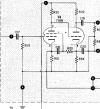

The R33 C18 combination does 2 things : stabilizes the idle voltage of the pentod and : inject positive feedback to increase gain.There is also a not insignificant amount of feedback to correct most ills so unless the tubes are really screwed up you probably wouldn't ever hear it.
Just for reference, this is the SCA-35 circuit
View attachment 3595442
Feedback and servo mechanism is R33. It biases the screen, but it also couples some AC signal in via C18. Discussion about this and why this specific circuit can be moody about it's tubes here
Hidden Treasure: Bringing Out The Very Best of Dynaco's SCA-35
This thread presents a significant work for this amplifier, examining all of its virtues and warts, providing explanation of all the various issues, and presents real modifications for resolve. It will be presented in a number of sections as the thread develops, which will allow for questions or...audiokarma.org
FWIW, that France Amperex 6GH8A in my test data looks to be the same one Dave shows in that post.
Wondering if I could do 2 resistors in series with a cap to ground at the mid point. That should bring over the DC without the AC signal. If they are high enough in value it shouldn't present too much of an extra load for the cathode.
The R33 C18 combination does 2 things : stabilizes the idle voltage of the pentod and : inject positive feedback to increase gain.


Much harder, I've been looking on Ebay for the better part of the year and haven't seen a single one come up. I did work on a 299a 2 years ago for a guy who found someone in Canada selling them. One was bad and we sent it back, thankfully he was able to get a replacement from the guy, he's since sold out though.And what about using 7687 tubes as a replacement for 7199? Supposedly, it was Sylvania's attempt of a 7199 for audio that did not take off?, And phase inverter replacement for the 6U8.
Although, I think finding a good pair of them is even harder to find than a 7199.
The 7199 was used only to save cost, and good performing examples were more readily available back in the day. I also believe the tube manufacturer graded the tubes before stamping the Dynaco name on them. That was a common practice at that time. In any event, the best thing that can be done for the ST-70 is to simply replace the board with one that can accept low distortion audio-grade tubes. I know people who have searched for years in an attempt improve the sound quality, eventually settling on tubes like the EF86, 6SN7, 6CG6, 12BH7, etc. Considering how prices for these amps have skyrocketed over the last few years, someone could probably do well by offering a point-to-point replacement for that board. It's not much additional cost to fabricate an aluminum plate with terminal strips and standard tube sockets.I'm kinda curious why the ST70 circuit is so picky about which specific tube you use.
Sounds strange. What is your test conditions ? Is it a real unmunged dynaco st-70 ?I'm kinda curious why the ST70 circuit is so picky about which specific tube you use.
I spent quite a bit of time over the weekend working on one. It took quite a bit of swapping around to find tubes that had acceptable THD performance.
For example, the JAN Sylvania 6u8a's that Tubedepot ships with the 7199 to 6u8a adapter, both tested perfect on my RoeTest. However in circuit (1khz, 1v signal to the amp), one had great THD+N (0.4% or so) and the other 1.5% under the same test conditions.
I ended up having to sort thru about 20 tubes before I ended up with two pairs of 6GH8A's that had acceptable distortion performance.
I had one 6gh8a in particular that tested perfect on the RoeTest but measured 6% THD!! under the same conditions as the others that were good.
Out of the sleeve of 7199's I bought, 3 of them had acceptable performance in the ST70.
I've seen the same thing with 6u8a, 6bl8 and 6f1p's in the ST70. Seems like its specific to the tube itself, and not necessarily the manufacturer/batch
Yes, I have two ST-70's here now, mine and another persons that I just restored. Both are stock (other than the 80/40/30/20 can cap, yellow sheet diode mod, and silicon rectifier in the bias circuit). Both have had critical resistors replaced on the driver board (the latest one, all with metal films). Mine has IC polypropylene caps but I left the Black Cat PKM mylar caps in the 2nd st-70 (they test perfect and they don't have any leakage)Sounds strange. What is your test conditions ? Is it a real unmunged dynaco st-70 ?
It’s not, but it seems picky about driver tubes. I wonder how many people out there are rocking high distortion ST-70's and don't even know it.Strange as ST-70 is not known as a poor performer.

