• The move to the new server is done. There are some software and database maintenance updates in process. This has us passing the hat around to help out. We appreciate any donations. Seriously, even a dollar helps. The payment page may be found here - https://www.audiokarma.org/support.html

9090DB Restoration

Cr0ck377

New Member
Hello All. I have a non-working 9090DB that I'm hoping to get restored. I'm not all that technically literate when it comes to electronics. So to better understand the scope of what this may require, I figure it would be in my best interest to come here and see what I can learn.

A little background. About a year ago, I took it to a local technician. At that time, the issue was that when the unit was switched on it would come out of protection mode (like normal)…however, there was zero audio output. After looking it over, the tech explained there were "lots of shorted transistors and IC's", along with a "bad driver board" and a "bad preamp board". Also that it appeared to have experienced a possible power surge/lightning. He declined to proceed with servicing it saying it would be too cost prohibitive to repair and suggested selling it for parts. So I took it home and set it aside.

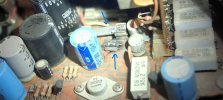
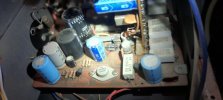
Fast forward to present day. I recently opened it up to see inside for myself. And I actually did find a burnt component. A resistor (I think). And there is also a fuse adjacent to it that is blown. In the close-up photo you can clearly see the damage. The charring it left behind on the circuit board also has me concerned as to whether the circuit board is still functional.

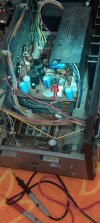
Visually, the overall condition throughout the rest of the unit looks okay. In other words, I see no visible evidence of any other shorted out components as described by the technician. But don't know if that necessarily means anything. Interestingly though, now when it's switched on, the protection light continues to blink red and no longer comes out of protection mode like it did before taking it in for service. Hmmm...what's up with that?

I would greatly appreciate some feedback and opinions on whether there a feasible path for a restoration in this case. I have taken into consideration that sourcing the parts might be an issue. But not ready to give up on it yet.

Thanks in advance.


9090DB Short Circuit2.jpg9090DB Short Circuit.jpg
 

Attachments

  • 9090DB Short Circuit.jpg
    9090DB Short Circuit.jpg
    61.8 KB · Views: 10
Register to hide this ad
Anything is repairable, at a cost.
A service would not help. It is at the point of a repair and if you cannot repair it yourself it will be costly.
The burnt components are obviously in need of repair. Transistors and other components usually need testing to see if they are bad.
Your unit is in need of a restore type repair/ rebuild that will be expensive to tender out the work/labor.

The Tech you took it to didn't want to get that involved.
Post your general location and maybe someone from AudioKarma will offer some help or repair it at a hobby level price.
It is worth restoring or selling to someone who will.
Good luck
 
Last edited:
The 9090DB has several inherent issues, the Dolby PC board is an issue on almost all of them. This could easily have been the reason for your comes out of protect, but no audio symptom. At this point when I service one, I just disconnect and bypass the Dolby board altogether. There are also several flame proof resistors on the driver PC board, and on the power supply PC board that need to be replaced. They just increase in value or open up all together due to age. The burned resistor is an issue that will need to be troubleshot and repaired. I would suggest you find a good technician familiar with servicing the 9090DB, and have it repaired. Once serviced it is a very nice receiver.
 
The Tech you took it to didn't want to get that involved.
Post your general location and maybe someone from AudioKarma will offer some help or repair it at a hobby level price.
It is worth restoring or selling to someone who will.
Good luck
I could tell he really just didn't want to mess with it. That's why I held on to it. I'm in the greater Houston area if anyone might know someone.
 
Sourcing parts is not hard usually. Do you have ANY experience working on this stuff? What have you done before?
No hands on experience repairing vintage electronics. Probably have some transferrable skills from my own diy repair projects. Some soldering and light duty electrical work. Motorcycle and small engine repair, etc.
 
The 9090DB has several inherent issues, the Dolby PC board is an issue on almost all of them. This could easily have been the reason for your comes out of protect, but no audio symptom. At this point when I service one, I just disconnect and bypass the Dolby board altogether. There are also several flame proof resistors on the driver PC board, and on the power supply PC board that need to be replaced. They just increase in value or open up all together due to age. The burned resistor is an issue that will need to be troubleshot and repaired. I would suggest you find a good technician familiar with servicing the 9090DB, and have it repaired. Once serviced it is a very nice receiver.
Thanks. I've become familiar with the Dolby issue lately through some of my research on repairing this model. It no longer serves a purpose so bypassing makes total sense.

Finding a good technician familiar with this model has been a challenge. I'm currently on a waiting list to ship it to a service outfit in Eugene Oregon that specializes in restoring vintage Sansui equipment. You may already be familiar with them. There are some techs in my area (Houston), but none that inspire my confidence as of yet. Still looking.
 
you can search here for restore/repair threads on the 8080db & 9090db to get an idea of what's involved & common problems

it might take you less time than waiting in a queue + repair ( maybe a year? )

if you can solder & have the time to do it that'd be my vote

shipping damage is a real risk too
 
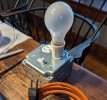
before you do anything I'd read this & build a Dim Bulb Tester

 
We can walk you through it, it’s probably not that bad. I would replace the resistor and fuse, pull the driver board, and power up on a dim bulb tester and see what happens.
 
First off thank all of you for your replies. I also appreciate the diy encouragement. To be honest, the diy route would actually be my preference. My lack of experience isn't a concern to me. That can be overcome. It's really more about having the proper tools, support and clear guidance/instructions to complete the task. Also becoming familiar with the nomenclature and technical jargon for better comprehension.

That being said...I've always gone on the assumption that there would be specialized tools involved. The only useful tools I have are a soldering kit and a multimeter. Looks like a dim bulb tester would be needed too. And a service manual. Beyond that I don't really know. I don't mind investing in new tools within reason. But I see a lot of expensive specialized equipment being used in tech videos. I simply can't get down into the weeds that deep. But if that level of investment is not needed, then I'm game. I really strive to be self-reliant if at all possible.

So if I start the process, my problem would be on where to start. What should be my first step? Any recommendations. Thanks
 
One additional possibility to think about is a temperature controlled soldering iron if yours doesn't have that capability.

There are some reasonably priced units available that will work fine for hobbyist needs but will help as you try to avoid lifting traces.
 
Downloaded the service manual. Thank you for that. My soldering iron does have temp control, so I'm good there. Will need to get a solder sucker and wick.

Can someone tell me the correct composition of the solder for this application? Thanks
 
Composition wise 63/37 is almost certainly what was used when the unit was assembled, stick with that. I like rosin core, Kester is one well liked brand but I can't speak to availability since I've been working off my current spool for quite a while now.
 
You can do it! A spool of solder wick braid is also useful to remove extra solder when necessary. I would maybe practice using it on some old junky circuit boards or electronics. A Be gentle and keep a careful eye on the copper traces whenever you're removing or replacing caps or transistors. Preamp boards seem to be especially susceptible to that. You want your solder joints nice and shiny if possible! A solder flux dropper or marker is helpful also, for when some joints just won't flow even when heated. Awesome receiver you got there!
 
Last edited:
the only thing you really need to be careful with those phenolic boards as it is easy to overheat the trace and here you are dealing with the lifted pad
 
Back
Top Bottom