• The move to the new server is done. There are some software and database maintenance updates in process. This has us passing the hat around to help out. We appreciate any donations. Seriously, even a dollar helps. The payment page may be found here - https://www.audiokarma.org/support.html

A bit in over my head - Need help building a 2.1 setup

audio noob58

New Member
I have an H/K 330B receiver and a turntable (does not have a preamp). Because of this I plan to be using the phono input which to my understanding will utilize the receiver’s preamp.

I plan to get tower speakers and a subwoofer but because there’s no subwoofer output I’m not sure what my strategy should be. This source (https://www.whichmountsubwoofer.com/how-to-connect-subwoofer-to-receiver-without-subwoofer-output/) suggests I get an active subwoofer and utilize the pre-out ports on my receiver. I prefer this rather than getting a passive subwoofer and an amp because of space. However, currently on my receiver there are jumpers from main amp in to pre amp out (right) and from main amp in to pre amp out (left).

I thought that these jumpers needed to stay in place in order to use the phono input. Anyone familiar with older receivers or H/K please chime in and help me build my setup, I’m getting more confused the more I read forums.
 
Register to hide this ad
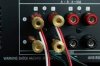
Run main speakers off "A" terminals, and sub wires off "B" terminals if you are using a powere3d/active subwoofer. Then select A + B on the speaker selector.
Or (more confusing to newbies) run a pair of wires off the A terminals, one set to the mains and one set to the subwoofer. In this example reds to mains and whites to subwoofer.
NEVER connect or disconnect wires with the receiver on and NEVER let any wires touch each other with the receiver on.
You'll want nice twisted ends on the speaker wires (or solder the ends) since your HK only has screws for speaker wire connection.
upload_2022-9-22_13-54-20.jpeg
Using a passive/not powered subwoofer will add a load to your receiver so it's best to make sure it's an 8 ohm rated subwoofer if not active/powered.
 
Last edited:
I've been using a setup where I have an active subwoofer hooked up via Y cords, splitting the amp/preamp connections on my old receiver. That's the only way that I can do it with my current SVS subwoofer, but my old JB sub had the option for a speaker connection on it so that with the second set of speaker connections on my receiver I ran one set of speaker wires to the sub. If you're amp doesn't have connections for two sets of speakers you could run your speakers though a speaker slitter box (which I also use as I have a remote set of speakers hooked up in another room in addition to the sub). My SVS sub is far superior to my old JBL one, but I actually prefer the speaker out option that the JBL had, if for no other reason than I could turn the sub on and off from the main amp just to see what effect it was having. With the hookup that I have running now, I have to turn the power on the back of the subwoofer on and off. Not that big a deal though and either method can work fine... it just depends on waht kind of connections the subwoofer you're dealing with has.
 
Many powered subwoofers provide both high-level (speaker level) and line-level connections. Some have only line level connections, and a very, very few have only speaker-level connections.

Either connection method is fine. For speaker-level, use the "B" terminals to connect the subwoofer (and "A" terminals for the main speakers). A benefit of this arrangement is that you can use the speaker selector on the receiver to switch off the mains or the subwoofer, which can make "balancing" the sub with your mains easier.

For line level, if you indeed need to keep the jumpers in place, you can use Y adapters (RCA, single male to two males). Single end into the receiver's preamp-out jacks. One of the male outputs into the receiver's power amp-in jacks. The other male output to an RCA cable long enough to reach the subwoofer. Repeat for the other channel.

The long RCA would need to be male at the subwoofer end, and female at the end connected to the Y adaptor.

Note that if you choose a subwoofer which offers the option of a high pass filter (to keep the lowest frequencies out of your main speakers), the filter works only on the line level inputs.
 
you could go all out and put a minidsp in the pre out/ main in jumpers, high pass the output to the receiver to relieve it of any bass duties . added bonuses are adjustable delays and a bunch of parametric eq "bands"

without an active crossover sub and mains will be reproducing bass.
 
you could go all out and put a minidsp in the pre out/ main in jumpers, high pass the output to the receiver to relieve it of any bass duties . added bonuses are adjustable delays and a bunch of parametric eq "bands"

without an active crossover sub and mains will be reproducing bass.


Not necessarily a bad thing.

And some subwoofers offer a built-in high-pass filter (or filters).

It appears that the OP has not yet purchased his subwoofer, so he has options.
 
As the OP can see, more than one way to do it depending on the receiver (known) and subwoofer (not known at this time). It's not an "all set ups are the same" situation, just as all receivers are not the same and don't have the same inputs/outputs and other options.
And all subwoofers are not the same as far as hookup options. Does it have line level inputs, cutoff point for the subwoofer, rca inputs only, etc..
Once the subwoofer is known proper options for hook up can be given.
Based on the OP's comment about " I prefer this rather than getting a passive subwoofer and an amp because of space." aan active/powered subwoofer might be his best option. In addition it would place no extra load on his HK receiver.
 
Not necessarily a bad thing.

.

i've done it before and it's not a good thing. add to that it's only 18wpc so why would you want to use (waste) the receiver's amp to reproduce bass when the sub is already handling it?


a high pass filter in the sub is usually only found on the speaker level, not line level although not totally unheard of, it's not very common.

if the op was a diy guy then i'd say build your own sub and try out a dayton dsp sub plate amp that has does an active high pass on the line outputs. although i am skeptical of dayton's dsp capabilities. i know, use and trust minidsp capabilities.
 
For 2-channel purposes, I would value a sub that has speaker-level inputs over one that does not. I also like stereo bass, so I would consider running the mains full-range, depending on what you end up with, and maybe even w/o a sub, if your mains are good enough in the bass department, and space is an issue.
 
I have an H/K 330B receiver and a turntable (does not have a preamp). Because of this I plan to be using the phono input which to my understanding will utilize the receiver’s preamp.

I plan to get tower speakers and a subwoofer but because there’s no subwoofer output I’m not sure what my strategy should be. This source (https://www.whichmountsubwoofer.com/how-to-connect-subwoofer-to-receiver-without-subwoofer-output/) suggests I get an active subwoofer and utilize the pre-out ports on my receiver. I prefer this rather than getting a passive subwoofer and an amp because of space. However, currently on my receiver there are jumpers from main amp in to pre amp out (right) and from main amp in to pre amp out (left).

I thought that these jumpers needed to stay in place in order to use the phono input. Anyone familiar with older receivers or H/K please chime in and help me build my setup, I’m getting more confused the more I read forums.

Hello and Welcome. If your receiver has phono inputs, you will not need a separate phono preamp. Some turntables, however, have built-in preamps, and those you connect directly to typical line-inputs. As far as the subwoofer... If it were me, I would purchase the tower speakers you were thinking of, and then see if I would actually need (or even desire) a subwoofer. Tower speakers tend to be fairly bass heavy. :)
 
Very few (almost none) powered subs have any high pass filtering. For those that do the crossover frequency is usually fixed and above 100Hz (not a good idea). It's that high because those subs are usually part of a three-piece system with very small mains (satellites).

IME removing the low frequencies from the mains allows them to play louder and cleaner while requiring less power. Like some others on AK I prefer stereo subs. I also prefer an external electronic crossover.
 
Last edited:
As the OP can see, more than one way to do it depending on the receiver (known) and subwoofer (not known at this time). It's not an "all set ups are the same" situation, just as all receivers are not the same and don't have the same inputs/outputs and other options.
And all subwoofers are not the same as far as hookup options. Does it have line level inputs, cutoff point for the subwoofer, rca inputs only, etc..
Once the subwoofer is known proper options for hook up can be given.
Based on the OP's comment about " I prefer this rather than getting a passive subwoofer and an amp because of space." aan active/powered subwoofer might be his best option. In addition it would place no extra load on his HK receiver.

Thanks everyone for their replies. I have acquired an active subwoofer, it’s called Monoprice 8248. It has speaker-level inputs (2 black 2 red) and line-level in ours (1 L and 1 R). The subwoofer came with an RCA cable that is 1 male on one end, and 2 male on the other. The last owner plugged the 2 male end into the line-level inputs.

My confusion still lies in the outputs of the receiver. I don’t understand what the purpose of the jumpers are and if they are forced to stay in if I used the phono input. I agreed with spark1 that using the speaker-level inputs would make it easier for balancing later, but I think that ship has sailed since this subwoofer is active, meaning I cannot utilize the “B” terminals on the receiver (right?).

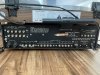
I have attached a picture of the back of the receiver to help in discussion.
70B7BA2B-E8FD-4FE7-AA06-B32E95D86B18.jpeg
 
The jumpers when removed allow the preamp and power amplifier sections to operate independently.

If the subwoofer has speaker level inputs it's OK to use them. Some prefer speaker level inputs on a subwoofer others prefer line level connections. Try both and decide for yourself.

For line level: Do not use a Y connector from any pair of receiver outputs to a single connector on the subwoofer. If you do you make the receiver mono regardless of switch settings.

For proper subwoofer connection you need two Y connectors..
1. Remove both jumpers.
2. Connect an RCA Y connector to the left pre out and left main in.
3. The third RCA connector goes to the left line input on the subwoofer.
4. Do the same for the right channel.

Once you get the sub's level and crossover frequency set there should be no need for further adjustment as the sub's level will track the receiver's volume control.

Most complaints about a subwoofer sounding boomy or muddy are because either the sub's level is too high or the crossover frequency is too high. Usually it's both.

Suggestion for setting up a subwoofer.
1. Set the subs crossover frequency (low pass) at the -3dB point of the mains.
2. Turn the subwoofer to a level where you can barely hear it. Then, turn it down a tad.
3. Minor tweaking may be desired. However, these two steps will get you 90% of the way there.

If you can tell a subwoofer is in use it's not set up properly. You should only notice a subwoofer when it's turned off. The disappearance of the bass is very evident.

If you have free reign for positioning the subwoofer you can do the subwoofer crawl.
1. Place the subwoofer in the listening spot.
2. Crawl around the floor and listen for the best/most bass.
3. Where you hear the most/best bass is where the subwoofer should be placed.
 
Thanks everyone for their replies. I have acquired an active subwoofer, it’s called Monoprice 8248. It has speaker-level inputs (2 black 2 red) and line-level in ours (1 L and 1 R). The subwoofer came with an RCA cable that is 1 male on one end, and 2 male on the other. The last owner plugged the 2 male end into the line-level inputs.

My confusion still lies in the outputs of the receiver. I don’t understand what the purpose of the jumpers are and if they are forced to stay in if I used the phono input. I agreed with spark1 that using the speaker-level inputs would make it easier for balancing later, but I think that ship has sailed since this subwoofer is active, meaning I cannot utilize the “B” terminals on the receiver (right?).

I have attached a picture of the back of the receiver to help in discussion.
View attachment 2673961

You most certainly use the "B" terminals. Run the main speakers off the "A" terminals, and the sub off the "B" terminals, then select A+B on the speaker selector on the receiver. BUT with your HK 330B you'd use system one and system two since HK gave them numbers rather than letters. This is ass long as your HK allows both sets of speakers to be selected at the same time. If not, refer to my post above, though with only screw terminals on the HK it might require careful attachment of speaker wires.
One thing some people won't like is that setup allows your main speakers to run full range (as they were originally designed to be run actually). I'll let someone else explain why some don't like that way of running their system.
 
That's easy PG. If you remove the low frequencies from the feed to the mains, they will play louder sound cleaner and require less power to do so.
 
My confusion still lies in the outputs of the receiver. I don’t understand what the purpose of the jumpers are and if they are forced to stay in if I used the phono input.

These jumpers are to separate the tone and volume controls which are known as the active preamp (pre-outs) of your receiver, to the internal power amplifier (main-ins) of your receiver.

Your confusion is that there are actually 2 preamps in your receiver. The phono inputs just utilize an internal preamp known as the built-in phono preamp that just boosts the voltage coming from the MM (Moving Magnet) cartridge of your turntable and have absolutely nothing to do with your "pre-outs" and "main-in" jacks. The "Phono" inputs are only for magnetic cartridge turntables and nothing else. All other jacks like AUX, CD player, "Tape in" or "Tape play" are all line level inputs and can be used for everything else like phones and computers etc.

The "pre-outs" and "main-in" are so you can do things like add stuff like a separate sub woofer, EQ, separate power amplifiers, separate volume and tone controls, Dolby units, processors etc. to your existing receiver.

Example: With your receiver, you could drive 2, 3, or 4 more power amplifiers each with their own set of speakers plus the speakers connected to your receiver for a big powerful stereo system.

At 21, you certainly are a noob! :thumbsup: :beerchug:

Hope you learned something new today! :bigok:
 
Last edited:
That's easy PG. If you remove the low frequencies from the feed to the mains, they will play louder sound cleaner and require less power to do so.

I can see where that could be a factor if using a low powered receiver and inefficient speakers. Thanks.
 
It works very well for my esl's and Magnepans. Removing the deep bass from both pairs allows me to use a pair of Dynaco MKIII's (60 Watts) to drive my relatively inefficient main speakers.

Bass while requiring 60% of the power is only ~25% of the music.

The bridged Crown XLS-2002's I use to drive my subs are rated to produce 1300W each into an 8 Ohm load. My DIY TL subs have 12" drivers and dual 4 Ohm voice coils that I connect in series.

IMO that's adequate power for the average levels (85dB-90dB) I normally use
 
Last edited:
Back
Top Bottom