

You are using an out of date browser. It may not display this or other websites correctly.
You should upgrade or use an alternative browser.
You should upgrade or use an alternative browser.
A Burson Discrete Op Amp For My CDP
- Thread starter SET12
- Start date

Not raining on the parade, but I'd be a lot more enthusiastic if these guys would give a few specs on the device.*
Slew rate?
Settling time?
Input offset voltage?
Input bias current?
Equivalent input noise?
Among others. Burson seems to be deliberately (and perhaps suspiciously) silent about such things.
I just hate to see reasonably priced IC solutions which approach ideal amplifiers (and sound excellent by anyone's standards) dismissed simply because they are IC's. There are a LOT of advantages to having the entire 'amplifier' on one common piece of silicon that can't be duplicated by a discrete design.
Anytime you have a supposedly superior solution that costs upwards of 1500% more than a conventional one, scepticism and hard scrutiny are your allies.
*and maybe lower the price
Slew rate?
Settling time?
Input offset voltage?
Input bias current?
Equivalent input noise?
Among others. Burson seems to be deliberately (and perhaps suspiciously) silent about such things.
I just hate to see reasonably priced IC solutions which approach ideal amplifiers (and sound excellent by anyone's standards) dismissed simply because they are IC's. There are a LOT of advantages to having the entire 'amplifier' on one common piece of silicon that can't be duplicated by a discrete design.
Anytime you have a supposedly superior solution that costs upwards of 1500% more than a conventional one, scepticism and hard scrutiny are your allies.
*and maybe lower the price

Emission
Member
I just hate to see reasonably priced IC solutions which approach ideal amplifiers (and sound excellent by anyone's standards) dismissed simply because they are IC's. There are a LOT of advantages to having the entire 'amplifier' on one common piece of silicon that can't be duplicated by a discrete design.
Anytime you have a supposedly superior solution that costs upwards of 1500% more than a conventional one, scepticism and hard scrutiny are your allies.
*and maybe lower the price
I can't bring myself to see the difference, honestly. The IC form of the design sounds incredible as it is, what could possibly be gained by spending 1500% more? You definitely won't hear a 1500% difference, I can tell you that for sure.

Brinkman
Analog loyalist
Dan,
Enjoying the thread. I have taken note about the increased capacitance solution and look forward to finishing my Ripper build which may potentially use the Burson Discreet in the buffer chip position. I've been set back on that build, as I had a part mix-up with Digikey. I will re-order when I know what additional parts to get for a project just around the corner.
In the meanwhile I will be awaiting a certain ESR meter kit I was inspired to purchase...:thmbsp:
Enjoying the thread. I have taken note about the increased capacitance solution and look forward to finishing my Ripper build which may potentially use the Burson Discreet in the buffer chip position. I've been set back on that build, as I had a part mix-up with Digikey. I will re-order when I know what additional parts to get for a project just around the corner.
In the meanwhile I will be awaiting a certain ESR meter kit I was inspired to purchase...:thmbsp:

SET12
Super Member
Dan,
Enjoying the thread. I have taken note about the increased capacitance solution and look forward to finishing my Ripper build which may potentially use the Burson Discreet in the buffer chip position. I've been set back on that build, as I had a part mix-up with Digikey. I will re-order when I know what additional parts to get for a project just around the corner.
In the meanwhile I will be awaiting a certain ESR meter kit I was inspired to purchase...:thmbsp:
Hi everyone!
Ben,
Nice to hear from you! Yes the Bursons are singing well! Far superior to the IC's that the player was using! I am enjoying their resolve, expression of space in layering, The sound stage is far deeper the former presentation was very forward at times. The pitch definition is just superb the former IC's were sloppy in contrast! The Bursons have such resolve as to resolve artifacts of the supply! Meaning the players discrete regulators.
Pretty amazing if I do say so myself!
Distortion is at .001 for the spec I saw but believe me they are far cleaner sounding then the former IC's so far worth every penny I paid! A real bargin in this day and age of $10,000 CDP's
Harmonics of the Burson's are very rich with nice decays.
One can have spec's but they are meaningless if the sound is not satisfying.
The Bursons are very refined and as near to what some refer to as neutral as I have ever heard! Yet the Bursons will call a spade a spade! Meaning if the recording is thin it will tell you that! But they tell you in a very graceful way that I have never heard from this player.
I might add that the resolve is so high I can hear the difference in texture of many analog master tapes used to make digital CD's from! Its uncanny.
I'm working with the regulators and the supply as the Burson's current requirements are high!
I feel that inadequate supplies will leave people with a bad impression of the Bursons as I have read of a comment or two most people seem to beef them up!
So I have a stash of Muse Electrolytic's that are said to be some of the finest. Only I have had them in storage for a decade! So the ESR meter was a must have especially the Blue! You'll love as I do!
 and its already paid for itself in finding a high ESR cap that was feeding my DAC's and I have some other large volumes of caps that have some yrs on them! but they are in excellent condition as well as my 900 joule Phono stage power supply caps. so the meter really gives peace of mind!:thmbsp:
If anyonbe likes they can follow my other threads comments at
http://newaudiosociety.com/cgi-bin/...gital;action=display;num=1220618330;start=0#0
I looked for a Stereophile article that was a letter to the editor from a major manufacture of high-end gear debunking the IC superiority to discrete but can't find it! I'll keep looking!
Well I found the manufacture at least! Charlie Hansen, Of Ayre Electronics! Here's a quote from a review of one of his players!
"I'd heard these recordings before, on DVD-V players as well as on at least two universal players from mainstream but upscale mass-market manufacturers. Why was I hearing so much more in them now? Charlie Hansen credits his zero-feedback, no-integrated-circuit design philosophy: "I sound like a broken record, but 99.9% of the digital products out there have high-feedback op-amps in the analog signal path. High-feedback, IC op-amps make sense in a $500 product when you're trying to get the most bang for the buck, but when you're selling a $5000 product, it's like cheating.""
Perhaps this is some of the story of just what I am hearing from the Burson's
SET12


vincei
aka MasterControlMedia
It would be cool to hear a completely modded player against a non modded one to get a real big impact of the improvements. As soon as I finish my other project I will take a look at these mods...I am quite impressed with the Bursons as is, but I can only imagine with some tweaks how good they will sound! 
SET12
Super Member
It would be cool to hear a completely modded player against a non modded one to get a real big impact of the improvements. As soon as I finish my other project I will take a look at these mods...I am quite impressed with the Bursons as is, but I can only imagine with some tweaks how good they will sound!
You got that right!:yes:
The Player with Burson's is just like the one described in my previous post!
SET12:thmbsp:
SET12
Super Member
After several hundred hours of and playing time and idling
As of today I feel the Bursons are really coming into their own after several hundred hours of playing time and idling I thought it would be worth a try to use the 4 ohm taps again as I formerly have always used the 4 ohm taps but switched to the 8 ohm taps after discovering a higher level of involvement with the midrange even with the stock IC's.
As the woofers are 4 ohms and the mid and tweeter 8 ohms
So I did an A-B-A or 8 ohm connection, 4 ohm connection and back to 8 ohms
:scratch2:To see if my friend Andrews observation of what may maybe the lower midrange upper bass area would have a little more body and weight.
The answer is yes!
But there is compromise! After spending many months using the 8 ohm tap I can say that there is some compromise one has to live with!
Namely, Life and Drama in the mids!
I was almost bored! on the 4 ohm taps!:thumbsdn:
I did not notice any loss or gain in the overall bass with the cuts I listened to.
And when I think of it the Bursons really flush out the dynamics more then what I remember with the stock IC's WOW!
So its the 8 ohm taps for me! :thmbsp:
SET12
As of today I feel the Bursons are really coming into their own after several hundred hours of playing time and idling I thought it would be worth a try to use the 4 ohm taps again as I formerly have always used the 4 ohm taps but switched to the 8 ohm taps after discovering a higher level of involvement with the midrange even with the stock IC's.
As the woofers are 4 ohms and the mid and tweeter 8 ohms
So I did an A-B-A or 8 ohm connection, 4 ohm connection and back to 8 ohms
:scratch2:To see if my friend Andrews observation of what may maybe the lower midrange upper bass area would have a little more body and weight.
The answer is yes!
But there is compromise! After spending many months using the 8 ohm tap I can say that there is some compromise one has to live with!
Namely, Life and Drama in the mids!
I was almost bored! on the 4 ohm taps!:thumbsdn:
I did not notice any loss or gain in the overall bass with the cuts I listened to.
And when I think of it the Bursons really flush out the dynamics more then what I remember with the stock IC's WOW!
So its the 8 ohm taps for me! :thmbsp:
SET12


SET12
Super Member
SET,
If you get those Burson regulators,post your findings on this thread,so that we can follow the plot.
Thanks.
Ok,
Getting back to the Burson's.
My player is on the bench and of course I order the 4 replacement caps 22,000 uf's each that will boost the capacitance after the rectifier to 44,000 uf's on each negative and positive rail.
Today I also measured 55 millivolts of ripple at the board before the regulators and I inserted a diode between 40,000 uf's and the board and measured a 40 millivolt drop across the diode in noise.
:scratch2:So here's what I am going to do!
I am going to swamp all high AC resistance across the series pass transistor but let it do its job of maintaining the 5 volt drop from the 20 volts into the board to the 15 volt positive and negative rails.
This will eliminate essentially all the feedback effects of the regulators to the sound and I can tell you that is substantial!
But I will leave the DAC regulator basically alone and use a small bypass on its series pass transistor.
As I listened I constantly have wondered about the total elimination of it as I have been listening with partial elimination.
My thought is the bass may take on a much different presentation and if I don't like it I can always go back to the partial bypass.
Whats the partial bypass sound like?
Well its a much warmer sound fuller and has a greater level of involvement!
For those that have variable feedback on their amplifiers its like going from one extreme to another!
I just prefer the low or zero feedback levels.
So with two Diodes I hope to lower the ripple essentially were it was with the regulators to the same level with them with the additional capacitance!
Small levels of capacitance with voltage regulators may make the voltage stiff and quite!
And without regulators and the small volume of capacitance it would be like being in a row boat on in choppy seas thrown all over.
But with the new supply of 100,000 uf's plus! Its like an Aircraft Carrier its not going to be bothered!
And As J.C. Morrison would say "sure regulators make the bass big and all but they also make the mids and treble barren"
So sorry no regulator effects for me, thank you!
SET12

SET12
Super Member
So if I understand correctly, you are not using any regulators?
Vincei, I hope this explains what I'm exactly doing! Which basically is eliminating the high ACR of the Pass Transistor yet allowing it to regulate DC as shown in the photos.
:scratch2:When I said I don't like the feedback effects of regulators I didn't mean to do without! Or even away with them!
Whats cool about the bypass is that the voltage regulation is still maintained!
And I have demonstrated it by simulating wall voltage falling to 105 Volts AC at the wall.
Notice the two meters one shows the incoming 105 Volts AC to the player which I used a Variac to lower it with. And the other shows the 15 volts DC supply rail to the Bursons.

Now notice what happens when the AC Voltage is raised to 130 Volts AC

This is within a .33 % of the original 15.1 Volts DC
Basically what this shows is that the regulator is still functioning like a regulator maintaining the reference 15 volts DC.
But what I have done is to either partially eliminate or will entirely eliminate its ability to drop noise over it like a normal regulator. With a bypass cap.
I plan to use 2 Diodes/ 15 volt rail like D-C-D-C
The bypass cap is what makes the sound so natural sounding. You can see the ones I used just jumpered in!
Yet we still have regulation!:thmbsp:
As shown :yes:
This is what I find so cool!

And not to mention some of the most natural sounding Digital I have heard IMO.

SET12
SET12
Super Member
How do these compare to the Hardy 990, the API 2520, or the Forssell?
Hi Philcib,
Thanks for asking! I wish I could say!
I would like to say that certainly everyone's experience is likely to be very different based on my experience with the sound of regulators. Making it a hard to rely on other opinions.
But I find the Bursons well ahead of the IC's they replaced. Could they be as good as the ones you mention hear?
Probably! The have an unbelievable amount of resolve so much so that they really revealed the shortcomings of my players supply and regulators inspiring me to work with them to get the results I have now and perhaps more yet!
I enjoyed the Forssell site! Very much! Thank you!
So to the others following the thread I hope you all find Philcib's alternative discrete Op Amps as interesting as I did!
Here's the Forssell module which is potted.

http://www.forsselltech.com/jfet992.shtml
The JFET992 is a 1.10" x 1.10" x 0.50" potted module containing a Class A, all Discrete JFET amplifier. This module is compatible with the industry standard discrete opamp footprint which includes the John Hardy 990 and API 2520 modules.
Very nice! At $65 each
Its nice to know their are some alternatives!
Heres a link to the API 2520 Op Amp Schematic.
http://www.waltzingbear.com/Schemati..._schematic.pdf
The API 2520 Data Sheet with a picture of the module.
http://www.waltzingbear.com/Schematics/API/API_2520.htm
And the Hardy 990 Op Amp

www.johnhardyco.com/pdf/990.pdf
Just very cool stuff!:thmbsp:
History to!
SET12
SET12
Super Member
I see, cool info! You're really going all out!
Thanks Vincei!
I have a local Audio Club meeting I'm hosting at my home on Nov. 1st so I have a lot of work to do!
I just ordered My 3rd Furman for my system!
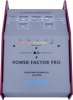
 These are the professional versions and are very rugged not to mention less expensive as well!
I use one on each monoblock and will use the third one for my front-end components which is my Sony for now! Otherwise the Sony was sharing one Furman with one Monoblock. This way now there won't be any cross talk on demand and the Sony will be isolated!
They really work well and have now saved my gear twice by shutting the system down when the line voltage exceeded 137 volts!
Not to mention they are very audible in the sense that they are Power Factor Correction devices that can source up to 45 amps each.
Power Factor is a serious issue to quality sound! So much so that there are several High end manufactures building correction into their amplifiers.
These are relatively inexpensive at $459 list and I purchased mine for $279 today my others are 2 yrs old and were purchased for $200 a call to these people will take another $110 off their advertised website price! of $389
http://www.fullcompass.com/product/241428.html
They also make a nice rack mount version of these in Black.


But are at least another $100 or so.
So yes I'm going to town on my system!
SET12