• The move to the new server is done. There are some software and database maintenance updates in process. This has us passing the hat around to help out. We appreciate any donations. Seriously, even a dollar helps. The payment page may be found here - https://www.audiokarma.org/support.html

A curious anomaly - 07-series amps without power outlets

sansui au719

Active Member
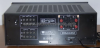
My AU-719 has no power outlets on the rear. I only noticed it when I went to plug in a TU-719. A quick google image search turned up one other, in Denmark.

Today I came across a pic of a 919 with no power outlets on the rear. It was also in Denmark.Coincidence ?

They don't appear to be after-market modifications. Perhaps Danish law in the late 70s prohibited the powering of one device from another. Was it just Denmark ? Was it just

Here's the pic of the 919 I came across
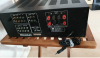
au-919 rear no power.png
 

Attachments

  • Screen Shot 2021-04-15 at 4.25.21 pm.png
    Screen Shot 2021-04-15 at 4.25.21 pm.png
    383.1 KB · Views: 6
Register to hide this ad
The general export models and models for North America and Japan will have them. Yours is probably a dedicated 220/240V unit built to European electrical safety standards. Post pictures of the ID plates. These standards started taking effect in the late 1970s.

- Pete
 
The general export models and models for North America and Japan will have them. Yours is probably a dedicated 220/240V unit built to European electrical safety standards. Post pictures of the ID plates. These standards started taking effect in the late 1970s.

- Pete
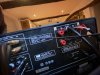
Interesting hypothesis. I'll stick my phone down the back of my 719 and take a pic
 
I think LBPete is on to something.

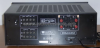
My AU-719 has only 240v or 220v (switchable) and no AC outlets. It also has a UK label on it.
Sansui Au-719 rear.jpg
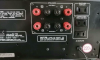
My AU-919 is clearly an international version with voltages from 100v to 240v and AC outlets
Sansui AU-919 rear.jpg

My other amps are with John (Hyperion). I know one of them has AC outlets but can't recall off the top.
 
That series of Symbols under the ID plate are a list of the electrical safety standards it's built to meet.

The factory service manuals often show the regional variances. I know the ones I've looked at from Yamaha do.
Yes the service manual will show the electrical differences in the various regional models.

- Pete
 
My au 417 also doesn't have them. My au d55x has them but they for the flat plugs, useless in the Netherlands anyway and they are not wired inside.
The au D77X and C2101 have them, the EU ones I can use.
 
I know UK safety standards required integr conveneicne outlets to be omitted due to the high mains voltage. Other. European countries likely had similar regulations in place. The practice of being switchable for 220/240 mains is also related to those regulations.

In US we have much the same with UL (Underwriters Labs, an independent safety certification outfit here) required devices sold here to have 120V mains capable transformers only, so the voltage could not be changed even by hard wiring a different primary. The voltage select plug typically seen on Sansui gear was not allowed for the same reason.

In Canada, CSA filled the same role as UL in the states, with much the same restrictions. Both UL and CSA also required additional fusing not present on the international/general export versions. Many Sansui models have power supply circuit boards where there are pads for additional fuse clips, but are jumpered on non-UL or CSA versions, where they are populated as required on units originally sold in the US and Canada.
 
Pete_mac, the multi-voltage (100, 120, 220, 240 volts) models always had convenience outlets, unless the model in question never got them to begin with. The outlets were only useful in N America, at least without an adapter plug to convert to the local standard.

Units directly exported for sale specifically to much Europe, US, Canada and parts of Asia that had their input voltage localized oftentimes did not. The multi voltage units were the general export versions, sold in US military exchanges and in areas where a specific localized version was not required by law or regulation.
 
Interesting that at various times Sansui used filler plugs - which I have seen a couple of times - at others there were metal overlay plates screwed to the rear panel (which I've seen pictures of) and in some cases the rear panels were fabricated without the convenience outlet openings stamped in them to begin with. No idea why there wasn't a consistent approach to handling such detail, but there you have it.
 
Interesting that at various times Sansui used filler plugs - which I have seen a couple of times - at others there were metal overlay plates screwed to the rear panel (which I've seen pictures of) and in some cases the rear panels were fabricated without the convenience outlet openings stamped in them to begin with. No idea why there wasn't a consistent approach to handling such detail, but there you have it.
It must have been a nightmare for Sansui designers dealing with such a wide variety of regulations. Exporters such as car makers deal with them all the time. Unique standards are often used as a way of applying non-tariff trade barriers.
 
Back
Top Bottom