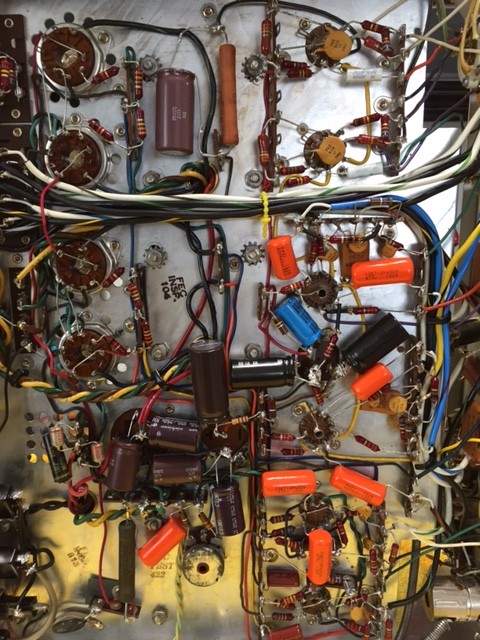
There is actually no need to strip any components out of the chassis, except for the transformers.
Many people are concerned about possible damage to resistors and capacitors when they first look into this type of cleaning. But they find that these components are not harmed. Electronics manufacturers and restoration experts have been using water washing, and even ultrasonic cleaning for many years. Electronic components actually emerge with lower humidity content than before they were cleaned and then dried with these methods. Water is the worlds universal solvent, yet a lot of folks are scared of it, and rightfully so if not done properly I guess.
Any water that might seep into components is evaporated in the drying process. Drying should be done directly after cleaning. This type of low-temperature long-duration drying process is very effective. In fact, there are many well documented cases of tube equipment being completely restored using this technique even after being submerged for days and even weeks from flooding. Even units submerged in salt water can be restored by soaking them in freshwater for up to weeks, with the water being changed regularly to dilute out the salt. Once the unit is thoroughly dried, there is often no residual damage from the water even in these extreme cases. In the case of ultrasonic cleaning they are only wet for a few minutes.
You might wonder why this is. In the case of carbon composition resistors, they are made of a mixture of powdered carbon and a ceramic material, encased in molded Phenolic resin. These materials are highly impervious to water or water damage. Carbon comp resistors will change value over time when stressed with over-voltages and overheating, but not by absorbing water. The only negative effects excessive water absorption has on them is if they are exposed to very high temperatures, such as soldering or overheating from over-voltages caused by things like tube failure or failed capacitors. Moisture absorption is not a cause of failure under normal operating conditions, even in hot running tube amps. Likewise, ceramic disk capacitors also are not a problem because they are made of water resistant materials, even though they can be affected by water absorption with high voltages applied. In both cases this lack of any harm is because there is no internal moisture content left after proper drying.


Please tell you strip the chassis first... or do you leave water saturated abused caps and resistors in place?