• The move to the new server is done. There are some software and database maintenance updates in process. This has us passing the hat around to help out. We appreciate any donations. Seriously, even a dollar helps. The payment page may be found here - https://www.audiokarma.org/support.html

Adcom GFA-555

avguytx

Lunatic Member
I sold these amps at retail back in the latter part of the 80's at the local shop I worked at. We stocked the whole like at the time including the 535, 545, 555, and 565 along with the preamps, tuner/preamps, and CD players. I remember the owners brought in a pair of JBL D55000 Project Everest speakers for the showroom and we had a GFA565 bridged mono to each one; something like 600 watts mono I believe. Man, that was something else watching Top Gun on "laserdisc" after it had been released.

Saying all of that, someone local is selling their GFA 555 and it's about as pristine as it gets including the owners manual. I know these have a following because of the Nelson Pass input on these, or maybe that was the 555 II, but I know these amps also have their shortcomings due to no relays for the outputs. I believe years ago, we used external fuses for everything and never had an amp cook any of the JBL or Paradigm speakers in the store...and we ran them bitches hard on occasion.

What's the "average" price you guys have seen in your necks of the woods and what are your thoughts on these in general?

It's this version below which does not have the four 7 amp Voltage Rail fuses on the back. I believe it's the Series II which is the better of the two and may have had Nelson Pass' design on?
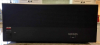
Adcom amp.PNG

Doing some more searching, I ran across this thread in diyAudio where Nelson Pass said he designed the first one and then Adcom changed some things on the 555II version.
 
Last edited:
Register to hide this ad
I had a pair of the original GFA-555s when I had BiAmped JBL 4341 monitors. But - one was an older design than the other - one had handles, one did not.
I ran them in stereo, not bridged (which tends to raise the noise floor for most amps). They sounded great to me and were very robust, tho I never ran them stupid loud.
Haven't seen any for sale recently - but I think $350-400 was the going rate for quite a while.

Rack-2xAdcom_3194.jpg
 
Last edited:
It's this version below which does not have the four 7 amp Voltage Rail fuses on the back. I believe it's the Series II which is the better of the two and may have had Nelson Pass' design on?
The MkI only has one main 10a fuse in the back panel,the rail fuses are all internally mounted..
The MkII has the four fuses on the back panel.
Also the input RCA jacks are much closer together on the MkI amps vs. the MkII amps.
Doing some more searching, I ran across this thread in diyAudio where Nelson Pass said he designed the first one and then Adcom changed some things on the 555II version.
Correct.
Hence why I tend to prefer the MkI units myself...

Walt Morrey and possibly others (Campos / Jung et-al) were responsible for the MkII version changes.
There are threads here in the archives that explains all the differences.
So a search would provide lots of that GFA MkI vs. MkII info to digest.

HTH

Bret P.
 
Last edited:
I think that $300-$400 in good working condition is reasonable for a first generation 555. I would also consider paying around that price to have it checked and possibly updated to Nelson's original design. Adcom apparently cut a few corners when adopting the initial design for mass production to save some production costs. The DIY site you mentioned could be a source for this information (some I think from Nelson himself) or possibly Hoppes Brain which is site/vendor dedicated to rebuilding and modifying Adcom amps.

I own 2 555's (as well as 2 565's) that were rebuilt by a fellow AK'er @Mayank and they are awesome! One drives a pair of Magnepan MMG's and the other the top end of my bi-amped Von Schweikert VR2's. So with obvious bias towards them it is my opinion that for the money you would be hard pressed to find a comparable Class A/B amp with similar pedigree, performance and specs as a refurbished GFA-555.
 
I have a pristine GFA-5500 and what the OP stated about output relays certainly rings true. Every time you switch these things off the awful sounds that come out the speakers is rather painful with all the caps discharging and squealing in pain. Apart from that, a wonderful amp indeed.

Now their Preamps are another story and as such my matching unit is just sitting there not being used as I use a Pioneer Elite / Reference C-73.
 
Relays aren’t necessary if the unit is in good condition. It’s just one more tiny varying-resistance pin-point connection that can degrade sound and needs maintenance which is one reason many high-end amplifiers do not have relays.

I ran a triplet of GFA-535s in my system for years, had a pair bi-amping PSB Stratus Golds that are notorious for their dips to 2 Ohms and they ran warm! I used to listen to my music loud, those 535s were at their limit frequently I’m sure. Never missed a beat, turn-on and turn-off was quiet, just faded slowly away as the power supply caps discharged, if there was still input/signal.

Now those old amps are 20 years old and I’m sure they all need service by now, if they’re noisy then they need repairs.

I currently have my 555-ii sitting on a shelf, kept it around thinking it’ll be excellent bridged to run a subwoofer but it never has.

Regarding relays, I’ve had two relay-protection receivers that blew up speakers during failure, one an SX-1250 (caught an AR on fire, literally) and can’t remember the other, but no Adcoms have ever caused harm to a speaker. People love to perpetuate this rumor. If you’re really worried about speaker protection buy an amplifier with a transformer/autoformer output, transformers can’t pass DC to a speaker. One of the improvements to the 555-ii from the 555 was the four fuses on the back panel so that separate inline fuses aren’t necessary for speaker protection.

Anyway, my suggestion is to buy it if you want it, listening to it will tell you if it has problems and pops/bad noises shouldn’t be present powering up/down unless it’s coming from the preamp/source, either way it’s a component that needs service.
 
Last edited:
I appreciate everyone's input and valuable information. I'm thinking I'll go ahead an pick up this local one owner amp with manual at $350 which he said he'd take. I thinking about finding a 535 to pair with it for bi-amping my Klipsch CF-3's as the Onkyo P-3000R preamp I use has a "balance" control in the menu via the remote where you can adjust between the 2 sets of RCA outputs. Rather handy since not all amps have gain controls on them.
 
That $350 price is a good deal in the condition you described.

I have had the 555, 555 II, 545, all which I no longer have. But I have kept the 5800, a real bad *ss amp with a bank of 16 outputs per channel. All the Adcom amps I have owned have that thump at start up, and I always hold my breath as I turn on the power switch. But love the power.
 
I appreciate everyone's input and valuable information. I'm thinking I'll go ahead an pick up this local one owner amp with manual at $350 which he said he'd take. I thinking about finding a 535 to pair with it for bi-amping my Klipsch CF-3's as the Onkyo P-3000R preamp I use has a "balance" control in the menu via the remote where you can adjust between the 2 sets of RCA outputs. Rather handy since not all amps have gain controls on them.

Congrats! I think you got a great deal on the 555and I like the idea of using a 535 for bi-amping. As I mentioned earlier I would have them both checked out by a qualified tech and consider appropriate replacement of parts that may be needed.
 
When looking for the 535, I had both the 535 and 535ii and preferred the thermal-protection of the 535ii (IIRC there were other improvements also), so don't overlook a ii.
 
When looking for the 535, I had both the 535 and 535ii and preferred the thermal-protection of the 535ii (IIRC there were other improvements also), so don't overlook a ii.

I do like the connections, in general, on the "ii" series better than the original and how they are laid out. But it seems like the 2nd series had less Nelson Pass "stuff" in it, for whatever reasons they were. I've always liked being able to bi-amp speakers, when they had the option, as you have more control over things although doing this to most speakers leaves the internal passive network fully functional and wastes the amps time/power on playing ranges they don't necessarily need to. It would probably be impossible to replicate the equalization circuits used in the Klipsch CF-3's for the high frequency section, too. I've seen the diagram on the version 2's and 3's and it could be built....or maybe reverse engineered on the version 1's.

Who knows...
 
Use a DSP and calibrated mic, let the REW software do all of the work and you can create a flatter crossover than the original Klipsch without the phase distortion of the passive crossover!

The ii had a couple of upgrades, one being more PS capacitor/filter I believe, protection being another. The original Nelson Pass design is kind of like an old mechanical-injection diesel: works well but there are refinements available, which are incorporated in the ii design, at least in the 535 series.

I have a 555ii also, and again there are modifications from the original design, but many will agree that having speaker fuses built-in is a good direction.
 
Relays aren’t necessary if the unit is in good condition...

True. Re-cap/restoration is a requirement with the 555, some of which are over 30 years old.

...but no Adcoms have ever caused harm to a speaker. People love to perpetuate this rumor. If you’re really worried about speaker protection buy an amplifier with a transformer/autoformer output, transformers can’t pass DC to a speaker. One of the improvements to the 555-ii from the 555 was the four fuses on the back panel so that separate inline fuses aren’t necessary for speaker protection...

Not true. There are many of stories of owners losing expensive drivers to Adcoms. There are many threads from 555 owners wanting to add speaker relays. To be fair, any amp with no speaker relay protection is capable of passing DC and lighting up VC's like light bulbs.
 
Not true. There are many of stories of owners losing expensive drivers to Adcoms. There are many threads from 555 owners wanting to add speaker relays. To be fair, any amp with no speaker relay protection is capable of passing DC and lighting up VC's like light bulbs.

Well I apologize if I am incorrect. There was a thread a year or two ago on this subject, and the question was asked whether anyone had first hand knowledge / experience of this happening. Nobody was able to say that they were witness to such an event, only that they had read/heard/etc. of it happening on a Hafler/Crown/Adcom/etc. amp without relays. Yes people like to add relays, but that isn't because they have actually witnessed a failure (unless it's a flame-linear).

OTOH, I DO have first-hand knowledge of this happening in a relay-protection amplifier: One was my Pioneer SX-1250 which went nuclear and caught a nice Advent speaker on fire, had to be quickly rushed out and hosed off to stop the smoldering cone. The other is my brother's SX-1980 which also went supernova and tore the cone partly loose AND caught on fire a nice Altec speaker.

So, in my world, relays mean little in speaker protection, and even fuses have to be sized correctly. OTOH it is very difficult for any of my autoformer/OPT equipped tube and solid-state amplifiers to pass DC so if you're really worried about your speakers:

1) Be sure that your amplifiers are in excellent condition, in my case there is no warning, update those half-century old amplifiers and receivers' components (and not just a "recap").

2) Consider transformer outputs, can pass wild amounts of AC if your amp goes into oscillation, but no DC so again they DO NEED TO BE SERVICED IF VINTAGE.

Regarding your last sentence, see #2 above.

3) Buy quality new stuff and let the warranty be your safety.
 
I am a former owner twice. Search here and on the various forums. There are too many testimonials to label speaker relay issue as a "rumor".
 
Use a DSP and calibrated mic, let the REW software do all of the work and you can create a flatter crossover than the original Klipsch without the phase distortion of the passive crossover!

The ii had a couple of upgrades, one being more PS capacitor/filter I believe, protection being another. The original Nelson Pass design is kind of like an old mechanical-injection diesel: works well but there are refinements available, which are incorporated in the ii design, at least in the 535 series.

I have a 555ii also, and again there are modifications from the original design, but many will agree that having speaker fuses built-in is a good direction.
Nelson Pass designed the first 5#5 series, Walt Morrey the 5#5 Mk-2.
Iirc, it was aging 565/585 with the seeping capacitor problems, these were designed by another team.
 
Again, I thank you guys for such valuable information and critiquing of these amps. I know there's nothing perfect out there and do know that anything in this age range is just living on borrowed time. Some may last longer than others depending on the life they led, of course. I had a Mcintosh MC250 gone through by a well seasoned long time Mc tech in Little Rock and he found that the 50+ year old main filter caps were still in spec. But there were definitely quite a few other things replaced to get it up to snuff.

I also realize there are better amps than these on the market and a person can spend about whatever amount their heart, and pocket book, desire. I, unfortunately, don't have as large a bank account and especially with a daughter at the U of A in her last semester there of pre-med and has applied at two different schools for medicine where she's darn near a shoe-in with her MCAT score. She should graduate from honors college next fall Summa Cum Laude with a 3.9 GPA. So there's medical school coming up.....not to mention I have a 14 year old son getting closer to driving a car (and me crazy). ha
 
Back
Top Bottom