• The move to the new server is done. There are some software and database maintenance updates in process. This has us passing the hat around to help out. We appreciate any donations. Seriously, even a dollar helps. The payment page may be found here - https://www.audiokarma.org/support.html

ADC's Bricks

No, between the pins of most headshells and the SME.

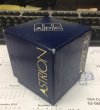
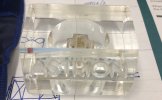
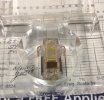
The only Shure cart that comes close in overall quality (read "joy when listening to it") is my NOS M95ED. M97XE and Me97HE are really not bad, especially in the bass, but a bit - well - boring. If I wouldn't have discovered the brick, I would have been totally happy with them. But wait! I own an Astrion for decades now ...
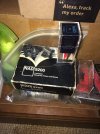
 
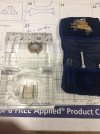
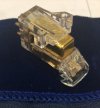
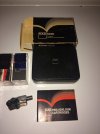
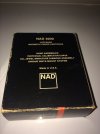
I got this at an estate sale some years back. NOS NIB. $35.

IMG_5262.jpeg
IMG_5263.jpeg
IMG_5264.jpeg
IMG_5266.jpeg
IMG_5268.jpeg
IMG_5269.jpeg

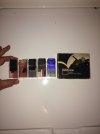
I’ve got the Point 4 w/ original nude conical (more rare than just about any ADC stylus), Point 4E, 660, 770, 10E MKII, 220X, 10E MKIV, 25, XLM MKI, XLM MKII, XLM MKIII, ZLM MKIII, VLM MKII/III, Q36, K3, QLM 36/34/32/30, PSX40/30, TRX-2, and assorted others such as Integras (3) and Integra ST. Also the rare NAD9300 and NAD9200. And many original extra styli besides originals for all of those listed above.
 
Last edited:
No, between the pins of most headshells and the SME.

The only Shure cart that comes close in overall quality (read "joy when listening to it") is my NOS M95ED. M97XE and Me97HE are really not bad, especially in the bass, but a bit - well - boring. If I wouldn't have discovered the brick, I would have been totally happy with them. But wait! I own an Astrion for decades now ...

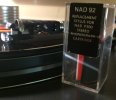
I don’t get the affection for the M95. I have 2 of them. Compared to the M97HE, the 95 has a drooping treble. I have 5 M97-E4, Me97, 2 M97xE (1 still sealed plus NOS NIB stylus), V15-III w/NOS stylus, V15-IV (3 NOS styli), V15V-HE, V15V-MR, V15VxMR, bunches of M44, 91, 93, 75, 70 and p-mounts.

All to say I enjoy the ADCs the most.
 
Last edited:
I got this at an estate sale some years back. NOS NIB. $35.

View attachment 2921652
View attachment 2921653
View attachment 2921654
View attachment 2921655
View attachment 2921656
View attachment 2921657

I’ve got the Point 4 w/ original nude conical (more rare than just about any ADC stylus), Point 4E, 660, 770, 10E MKII, 220X, 10E MKIV, 25, XLM MKI, XLM MKII, XLM MKIII, ZLM MKIII, VLM MKII/III, Q36, K3, QLM 36/34/32/30, PSX40/30, TRX-2, and assorted others such as Integras (3) and Integra ST. Also the rare NAD9300 and NAD9200. And many original extra styli besides originals for all of those listed above.
Designer of the Asterion, @OldADC, is an AK member
 
Designer of the Asterion, @OldADC, is an AK member

My neighbor growing up was an engineer at ADC. 1967-1974 (my family moved from CT in ‘72). He worked with Pritchard on the ADC 220X, 240X, 250X, 550X, 10E MKIV, and the XLM MKI. He had a hand in some of ADC’s other products, such as speakers. He went with Pritchard to Sonus. His hobby was building wooden sailboats, from teak and mahogany. He came from England in 1965 where he worked for Garrard. He and his wife would come over and visit frequently. Back then I had no idea; I would have asked a lot of questions. That’s why I own 7 Garrard tables and all of the “principle” ADC carts from along the years. (No ADC-1/2/3 currently; Robert (neighbor) said they were designed to capitalize his new company.) My first TT had an ADC cart (NAD9200) but at the time I didn’t know it; some 5 years later I found out it was an ADC when I went to buy a replacement stylus. I’ve never owned a Sonus cartridge.
 
Last edited:
Correction regarding the N90XE in the 220X - body: diminishing the VTF to 1.25 p (measured) lets the last sibillance vanish. The pickup is even more balanced, very nice stage. Even at the inner grooves.

This thing is astonishingly dependent from a proper alignment. Even at such a basic turntable and arm as the CEC.
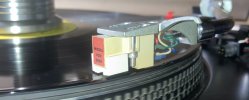
 
This thing is astonishingly dependent from a proper alignment. Even at such a basic turntable and arm as the CEC.

Confused. You mean it’s not very sensitive to alignment, or it’s very dependent on proper alignment?

I use the Conrad Hoffman Arc protractor, DIN Lofgren B mostly, some Stevenson A. So I never have issues from alignment, and no IGD.
 
I want to express that the pickup is very dependent on a proper alignment. Especially the VTA seems to influence the sound and the distorsion significantly. Even small alterations are audible. As the CEC has no possibility to alter the height of the tonearm I use cork mats of different thickness and small wedges between pickup and headshell. After some trial and error I am very satisfied now with the outcome.
 
A big part of that perceived sensitivity to VTA is not actually a VTA issue. It’s an *armature placement* issue.

IMG_0072.jpeg

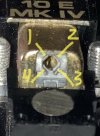
In the non-electromechanically improved cartridges, the armature alignment is critical. When the stylus is inserted, the round barrel of the armature doesn’t line up in the center of the poles’ Diamond pattern. It tends to line up closest to the “bottom set” of poles shown here in this picture:
IMG_6905.jpeg

Once proper VTF is applied, the armature barrel *should* line up in the center of the diamond pattern. It rarely does. Plus, you’ll find variations from one cartridge to the next in the positions of these poles; more than once I’ve had to use needle nosed pliers to straighten out and even out the positions of these poles. Adjusting VTA can be a way of centering the barrel of the armature within the diamond-patterned poles.

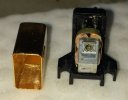
The modification ADC used in the nose guarantees proper pole pattern alignment to a perfect spacing, as well as adding a magnetic damping to the armature barrel. You can see this if you zoom in on the below picture: (XLM MKIII shown)

IMG_7853.jpeg

Only the 550X body and 10E MKIV body had this feature in the “X” series. But from the XLM MKI onwards, ALL subsequent ADC bodies had this feature. It makes VTA much less sensitive, improves imaging, and greatly improves the damping of the armature/cantilever.

The 10E MKIV pole pieces that debuted ADC’s new design:
IMG_9415.jpeg

IMG_9415.jpeg
 
Last edited:
"Once proper VTF is applied, the armature barrel *should* line up in the center of the diamond pattern. It rarely does. Plus, you’ll find variations from one cartridge to the next in the positions of these poles; more than once I’ve had to use needle nosed pliers to straighten out and even out the positions of these poles. Adjusting VTA can be a way of centering the barrel of the armature within the diamond-patterned poles."

Yes, that makes perfect sense - at least partially. However I would not neglect the influence of the VTA itself. When I made the alterations I did not alter the VTF, it was fixed at 1.45 p. This way I could optimize the reproduction quite well and clearly. Then I lowered the VTF. This may have caused the effect you described. It also was a clear improvement.
 
Unless you’re way off on VTA, the bonded elliptical stylus is not overly sensitive to VTA. There is a fairly wide range at which no difference can be heard.

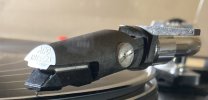
This is illustrated very well using the ADC Integra headshell+cartridge, where the VTA has a very wide adjustment range.
IMG_7430.jpeg
 
I thought so because I know it that way from my Shures (with the exception of the Me97HE), the Ortofons and all the other pickups. The Astrion of course and the ELAC STS 555e with PAROC tip are very sensitive. This should be normal. And no, I am not way off, and because of that I am so astonished.
 
So after a lot of tinkering my search for the for me correct reproducion of viny records is over. Sounds pathetic? Well, yes ...

However: The heavily modified CEC BD-3200 with the ADC 220X body / NOS N90XE stylus lets me play all my records I have again and again. Never before, not even with my Dual 1229 / Astrion / M20E / V15 V MR and much better loudspeakers (and much younger ears) was I able to hear so much difference between different recording on even the same records. And never before listening to any recording gave me more fun.

Of course there are much better turntables and pickups there. I am not saying the table with that pickup is the best ever. It simply makes me to want to listen to the music. In a way I never experienced before.

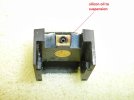
In detail: Since the vtf of 1.4 p seemed a bit low to me I put a needletip of silicon oil onto the suspension. After two hours I had to tune in 2.1 p (with test record of course). This settled in about 1 to 2 weeks to 1.8 p and remains stable there since. Still the pickup was a bit sensible to the vta, I could get rid of even the faintest hint of sibilance by tuning that in. Interesting: there seems to be a correlation between the vta (yes, the angle!) and the amount of skating compensation one has to apply. Which would bear a certain logic in itself. I would be interested in thoughts about this.

In short: I have at once ordered a second NOS N90XE from Thakker, applied silicon oil and put it into storage including those silica gel bags. Now I at last have time to rework some of my speakers. Especially my Philips MFBs. And listen to the music.
 
I put a needletip of silicon oil onto the suspension
If I understand correctly, did you put silicone oil to the tip of the cantilever? In this case, the damping level has changed... and the sibilants were defeated?
 

Attachments

  • bonded.jpg
    bonded.jpg
    39.8 KB · Views: 1
On the suspension rubber, both sides. The brick - suspension is said to get softer over time. As silicon oil is normally good for rubber I simply tried it. And watched it over several weeks. Every now and then I check with a test record to see how the suspension alters. And for a week now there is no further alteration.

Now the cartridge seems to be "healthy". Formerly it was not easy to get rid of sibilance now it is no problem at all. The more as that normally the only cartridges that are susceptiple to sibilance in the CEC are those equipped with a Black Diamond. Including the very new I got for my Astrion body to relieve the unobtanium original stylus (the only Black Diamond that works in my collection is the Shure N75, but I also had to exchange it one time).
 
As I understand it, silicone oil is neutral to rubber and cannot affect the change in its softness...i think so. Perhaps the physical changes occurred with an increase in the load on the needle? In my experience, with an increase in the load on the needle, sibilants disappear, but air also disappears too ... But I'm glad if you got that excellent sound that always pleases us!
 

Attachments

  • 5.7.jpg
    5.7.jpg
    82.3 KB · Views: 13
Back
Top Bottom