• The move to the new server is done. There are some software and database maintenance updates in process. This has us passing the hat around to help out. We appreciate any donations. Seriously, even a dollar helps. The payment page may be found here - https://www.audiokarma.org/support.html

ADC's Bricks

ADC didn’t “perfect” the pivot block dampening until after 1978. It was then that ADC found the butyl rubber compound that really did a good job of dissipating cantilever resonance.

You will also notice that ADC made the hole between the pole ends a universal feature of later carts as ADC was able to control resonance much better.

So, what ADC found in the 25/26 and 10E, 10E MKII was that the cantilevers needed MORE damping, not less, to get the resonance more under control. The styli of the 10E MKIV and 25/26 are built virtually identically, the pivot block hardness was varied to get a change in compliance. (I’m not referring to bonded vs nude here, or straight vs tapered!) But changing the compliance did not tame the resonance.

So there is no mismatch of the 26 stylus with the MKIV body. There is only the ADDITION of more resonance control, using virtually the same stylus, in the MKIV over the previous 10Es and the 25/26.

You are making the assumption that ADC had no problems with cantilever control and resonance in the 25/26 carts. The evidence says otherwise. Or, ADC would never have needed to make changes after those carts. But change they did, because more control was needed.

If you read and compare the description of the MK4 vs the MK2, you will see this. The MK2 was constructed very similar to the 25/26.

The armatures of the 25/26 and MK2/MK4 styli are virtually identical, as are the cantilevers. So the changes in coils has more to do with other compromises than making for a mismatch of styli.

The 26 Stylus is a very good match for the MK4 in every way. Less resonance than the 25/26 carts, and still get flat response in the treble.
 
Last edited:

The MK IV was the last brlck model before the LM models. It was also the first to use the C.E.D. method of damping the high frequency resonance.
ADC continued to use C.E.D until the last LM models (ZLM. Astrion). They never went back to the mechanical damping (suspension block).
In 1978 Shure , not ADC, developed the "two function bearing system". The 25/26 models are different from the MK IV. The inductance of the 25/26 is 850mH compared with the MK IV 700mH and the resistance of the 25/26 is 1050 ohms compared with the MK IV 1025 ohms which indicates the poles/coils are different from the two models.

No mechanical damping in the MK IV because of CED. 25/26 did not use CED.
ADCCED-04.jpg

XLM sales brochure with CED.
ADCCED-02.jpg

1978 Shure Ad. (not ADC) developed the two-function bearing system. ADC continued to use CED until 1982.
ADCCED-01.jpg
 
I never said anything about an additional or secondary damping system in the pivot block design used by ADC. So why are you throwing that in the discussion? But since you brought it up, Empire made very good use of that in their design of the EDR.9 and 600LAC cartridges.

To make my point, let me ask you this: What is the difference in the cantilever suspension, or pivot block design, between the 25/26 and the 10E MK2 and MK4?

Your entire point of this discussion seems to be that the 25/26 design was perfect; that resonance was perfectly controlled and nothing else was needed.

The point that I am making is that ADC found that the design of the 25/26 was inadequate, that more control was needed of cantilever resonance to reduce IM distortion and to damp high frequency resonance. The 25/26 was an incomplete product. ADC moved on from that design.

If you aren’t seeing my point, then answer the question I asked about the difference in pivot block (bearing block) design between the 25/26 stylus and the 10E MK4. (I’m not referring to the magnet)
 
ADC did not develop CED to address an inadequate design to control high frequency resonance.
The mechanical damping used in the suspension block worked fine.
There were no high frequency peaks while testing the Point 4, 10E and 10E MK II. The 25 had a 1 dB peak at 12 kHz with a roll-off after 12 kHz.
ADC used CED as a simpler, less expensive design to handle resonance problems.
Before the MK IV, damping was accomplished in the material used in the suspension block.
They needed material dense enough as a dampener, but also elastic enough to provide the desired compliance. With CED, less expensive material could be used in the suspension block; dampening material was not necessary. That savings was reflected in the price of the MK IV. While the MK II was priced at $60. ADC was able to reduce the price of the MK IV to $50.
What is surprising is the 10 MK IV test from Stereo Review showed a 5 dB peak at 17 kHz. That was with CED and no damping in the suspension block. So at least for that MK IV sample, CED was not working. Subsequent tests from other labs showed ADC was able to tame the peak down and was able to further refine CED with other models.
My point is the 25/26 stylus assembly uses a suspension block with dampening materials while the 10E MK IV has none. So, using the 25/26 stylus with a 10E MK IV body will result in the double hit of damping. The 25/26 is not a perfect cartridge; compliance is too high and the cartridge is too heavy, and the high frequency roll-off could be improved, but these deficiencies cannot be corrected by using a damped suspension with a CED body.
As to your statement that ADC perfected block dampening after 1978: I could not find any references to a new suspension block from ADC after 1978. The only models that ADC released after 1978 were the Astrion, NAD, the Digital Series and the Integra Series; all used the CED design.
 
You still missed my point entirely. Your explanation is like a compilation of mixed metaphors.

My point is that there was, through the 1960s, for the 25/26, for the 10E, 10E MK2, and into 1970 for the 10E MK4, NO difference in the suspension blocks of these styli and carts. Only a change in compliance.

But, using the suspension block solely for proper damping was problematic. Getting the suspension block with the correct damping, exactly critically damped, led to high compliance and a difficult cartridge to match to a tonearm. Stiffening the suspension block led to an overly damped cantilever and drooping response curve. Getting the exactly correct elastomer compound and compliance proved to be a tricky endeavor. Other cart makers got around it by using a thin metal anchoring point (bearing) and even a tension wire.

Trade secrets, protecting them, is why you don’t read about changes in the compound used to form the suspension blocks for ADC carts. Proof is in the iterations of designs that ADC used from 1961 to 1972. They varied the magnet, varied the flux lense, changed the inductance, but overall didn’t change the type of mechanical suspension design.

So yes, ADC did change to the CED concept to fix an inadequate damping system found in the 25/26 and early 10E carts. Depending solely on the suspension block for proper damping proved too tricky. It resulted in designs that wouldn’t perform well on the vast majority of tonearms available for those carts.

The reason the 10E MK4 was cheaper than earlier versions was due to the magnet. Earlier versions of the 10E used the slotted bar magnet. That magnet worked well, but was more expensive at that time to manufacture than the pill magnet and soft iron slotted lens; also used in the $10 220X/E. It’s a cheaper magnet system.

All suspension blocks provide damping, simply by the fact that they clamp the cantilever. Different designs provide more or less damping, but they all damp. Damping critically and providing a realistic compliance was a very tricky proposition. To say the 10E MK4 had no mechanical damping by the suspension block is incorrect.

ADC realized that using a secondary damping system, CED, could make the suspension block damping system a whole lot less finicky, less tweeky, and also more versatile. A cheaper and more reliable design would result. Yes, you did say that, but for the wrong reasons.

I mentioned 1978 because that was when ADC began using a butyl rubber compound for its suspension blocks. It was different from compounds used previously. It wasn’t until about 1980 that test equipment was available and was used to understand why and how butyl rubber had such unique damping properties, at the molecular level. Besides being compliant, very stable in an oxygenated environment, it also absorbed vibration and shock. It allowed producing compounds that allowed lowering compliance and keeping the cantilever critically damped. Previous compounds tended to reverse that; lower compliance didn’t damp as well, higher compliance tended to allow critical damping of the cantilever.

So that’s why the 26 works perfectly for the 10E MK4: it’s lower compliance than the 25, doesn’t damp quite as well, and so makes use of the MK4’s CED to provide just a little more control of the cantilever.

Real world listening:

The original 15E stylus sounds great in the MK4. But the 26 stylus really adds a level of detail and smoothness not matched by the 15E. It’s not rolled off at all. It sounds remarkably like the XLM MKIII Stylus/cart. Well focused, extended highs, smooth mids, tight bass also. It has a treble extension not present by the 15E stylus. There is no “double hit” of damping.
 
I bought a pre-brick, the 770. I wanted to hear what the ADC carts sound like, pre-brick.

The unit I bought has the original stylus grip, but no cantilever or stylus. In fact, the suspension block, or what’s left of it, is mangled. Poor thing!

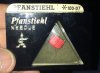
So I bought an old Pfanstiehl replacement stylus. I knew there would be problems with it as soon as I looked at it closely. But I went ahead and mounted it. As I suspected, the stylus armature was jammed against the 4 diagonal pole pieces, and wouldn’t move!

I gently coaxed the cantilever and armature through the suspension block about 1 mm toward the diamond end, to give the butt end of the armature room to move within the pole pieces.

Dropping the needle to the record, I got very little sound. That was because the cantilever was protruding beyond the armature; making room for the cantilever to move positioned the armature too far away from the pole pieces.

I used my miniature file set to remove the small bit of aluminum cantilever. Then I repositioned the armature in the suspension block. Remounted the stylus grip into the body. Then I made sure the cantilever moved freely.

I dropped the needle again onto the record.

Very nice! Lots of detail, smooth, tight bass, great mids!

After several albums, I really like this cartridge! It images very well. Tracks a little heavy at 2.5 grams, but still has sweet and airy treble.

Unlike the original stylus that has the slotted bar magnet, this stylus has the “scissor” magnets, either side of the cantilever armature.

I highly recommend this very vintage ADC cart!

610606F8-8663-4F23-B218-7135BE3E4C09.jpeg
EFBABC2D-AC6F-45EE-A333-B79F87825EFF.jpeg
6870369B-B215-46E1-9FA8-AE6A5C4D8DB2.jpeg 84F51D71-CF65-4F71-AA51-BD432CC1C816.jpeg
2584EB78-11ED-4475-BF89-DFFF27D68151.jpeg
1013EADF-BF8A-48CE-A0FF-20329269B0F1.jpeg
 
Well, I found a 220 X in my fundus, I do not even know, how it got there. I ordered an XE - stylus in Korea (!), it arrived. So I began to assemble that thing into a new Dual TK24 I got together with a Dual setting gauge from the US (the world is small). And found out it is too long, it does not fit. As I have only Duals in the moment I think I need a fitting Pioneer turntable now....

By the way exactly this thread convinced me to stop lurking and to join Audiokarma. Great people here!

Ah yes, I forgot. As I now had an additional TK24 I mounted my old ADC Astrion. So it stays in the family.
 
Welcome to AK!

The 220X(E) is one of my favorite carts. I have 6 styli for it now. Each from a different source. The best aftermarket styli I’ve found so far are the EVG Japan styli. These are marked by colored dots on the grip. I have a green (220 XE), a blue (660 XE), and a yellow (990 XE). Each imparts progressively more detail. The green tracks at 2.5 grams, the blue and yellow track at 1.25 grams.

On the ADC 770 cart I mentioned in an earlier post, I found one of the pole pieces bent slightly. Fixed it. Lovely cart!
 
The stylus I got is an EVG. That is the reason I ordered in Corea and not e.g. at Thakker. Now I need the fitting turntable. In the past when I worked in this business I sold (and repaired if needed) a lot of Pioneer TT´s, especially 512, 514 and 516. Now I start looking for one of these. Pioneer had a remarkable quality then but was not that expensive, at least here in Germany.
 
In hindsight the 220X came with a Lenco L78 I once had. As I did not know the qualities of the old ADC then I at once took it away and mounted something different (a Shure M75 with Paroc - stylus I think). Perhaps I should look for a nice L75. There is one in my hometown available now...
 
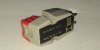
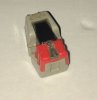
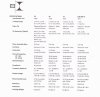
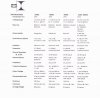
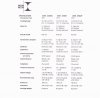
Hours of quarantine = specs for the Bricks!!
ADC-BRICK-1.jpg
ADC-BRICK-2.jpg
ADC-BRICK-3.jpg
Notes:
Suspension Blocks
S-1. (Black). Used in first generation induced magnet models (1964)
S-2. (Pink). First used in 1968 in the Model 25/26. New material for damping the high frequency resonance peak.
S-3. (Black). First used in 1970 in the 10E/IV model. Removed the damping material from the suspension block. Resonance was controlled internally using the current from the pole pieces. Also used in all low-mass models until 1978.
S-9. (Green). Used in 1978 for the ZLM and XLM MK III models. Subsequently used in all the “Improved” models in 1980 as the “omni-pivot” high definition suspension block.
S-4. (Brown). Exclusively used in the Astrion. Optimized for the sapphire cantilever.
 
Hours of quarantine = specs for the Bricks!!
View attachment 1829081
View attachment 1829084
View attachment 1829085
Notes:
Suspension Blocks
S-1. (Black). Used in first generation induced magnet models (1964)
S-2. (Pink). First used in 1968 in the Model 25/26. New material for damping the high frequency resonance peak.
S-3. (Black). First used in 1970 in the 10E/IV model. Removed the damping material from the suspension block. Resonance was controlled internally using the current from the pole pieces. Also used in all low-mass models until 1978.
S-9. (Green). Used in 1978 for the ZLM and XLM MK III models. Subsequently used in all the “Improved” models in 1980 as the “omni-pivot” high definition suspension block.
S-4. (Brown). Exclusively used in the Astrion. Optimized for the sapphire cantilever.

This is some GREAT information! It provides excellent context for those whose collection goes through the years, or those who happen to come across a lone ADC sample!

I saved and archived your charts!

Also great info for matching styli that one sees from time to time.
 
Welcome to AK!

The 220X(E) is one of my favorite carts. I have 6 styli for it now. Each from a different source. The best aftermarket styli I’ve found so far are the EVG Japan styli. These are marked by colored dots on the grip. I have a green (220 XE), a blue (660 XE), and a yellow (990 XE). Each imparts progressively more detail. The green tracks at 2.5 grams, the blue and yellow track at 1.25 grams.

On the ADC 770 cart I mentioned in an earlier post, I found one of the pole pieces bent slightly. Fixed it. Lovely cart!

Wolfie, I'm thinking of picking up an EVG through Gary at TVOM for my 220XE. It's a bit confusing as to what he offers in the 104 group as there are 3 listed as 4104-DE. They all have the same stylus profile (0.3 x 0.7 mil elliptical) and are all the same price, with the only difference being the dot color and tracking force. I reached out to Gary but other than the tracking force he couldn't give me much on the differences between them.

It sounds like you've tried all 3. Is there a noticeable difference between them? I suppose all things being equal, a less compliant one (green dot) might be preferable in my case given the weight of the cartridge and my tonearm (Technics SL-1200 MkII). I'm currently using an original R-20XE, but on one of my lightest headshells and with nylon screws, which still doesn't give much clearance underneath. I suppose that it's also possible that the suspension is giving in a little though.
 
My Hitachi HT-460 arm is very similar in mass to your Technics arm.

Yes, I have all 3 of those EVG Japan styli. All play well on my arm mounted to the 220X brick body. I personally prefer the purple or blue dot variant for sound; just a little more detail. But the green dot one is mounted right now. Yes, it’s a better match for compliance.

It may not retrieve quite the detail as your original XE stylus. But it’s close.

So get the green dot and enjoy it!

The blue dot stylus is the closest aftermarket match I’ve come across for the 10E MKIV cartridge. It’s good!

BTW, your brick will always be a low rider, even with the green dot stylus. Just not AS low!

If you get it, (green dot) report back with your impressions, ok?
 
So I have mounted the 220 XE with the EVG stylus in an CEC BD-3200. The tonearm sports an SME headshell, the geometry fits. I had to tilt the cartridge forward to get it parallel to the record. I have used a test record from RCA Erato to get the correct vtf and antiskating value (about 2.25 p - I will observe it while the stylus settles over time). The outcome: I am astonished! Of course compared with my Astrion the treble is a bit laid back, the bass is not as strong. But especially the bass is wonderfully controlled and dry, the treble seems to be quite right. Overall a very balanced sound, comparable to my Ortofon M20E.However listening to it is much more fun than the Ortofon generates! It oozes musicality!

The next step will be setting up my second BD-3200 with my Shure M75 II and outfitting it with my Paroc stylus. That will be an interesting comparison! The winner turntable will keep its pickup, the loser will get the Astrion...
 
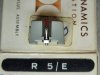
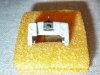
Hi, I have original stylus ADC R-5e, but have not reliable information about it compatibility with ADC 10e or 10e mkII cartridges. Has anyone tried using them? It is very difficult to buy an original p-12e needle now ...
 

Attachments

  • 55.1.jpg
    55.1.jpg
    93.3 KB · Views: 19
  • 55.2.jpg
    55.2.jpg
    168.9 KB · Views: 18
  • 55.3.jpg
    55.3.jpg
    129.7 KB · Views: 17
Hi, I have original stylus ADC R-5e, but have not reliable information about it compatibility with ADC 10e or 10e mkII cartridges. Has anyone tried using them? It is very difficult to buy an original p-12e needle now ...
Usually styli for ADC cartridges with the same body type are interchangeable. I believe the only difference between the R12E and R5E is the compliance. The R5E has a lower compliance and has a slightly higher VTF range (0.75 - 1.5 grams). Otherwise, it should be fine with the 10E body.
 
Back
Top Bottom