• The move to the new server is done. There are some software and database maintenance updates in process. This has us passing the hat around to help out. We appreciate any donations. Seriously, even a dollar helps. The payment page may be found here - https://www.audiokarma.org/support.html

Adding more power to new speakers

Okra

Active Member
I recently bought A pair of Sonus Faber Sonetto III being driven by an Arcam SA20 integrated amp. The sound is sublime but I'm reticent to test the volume beyond 80dB or so because the SF are rated at 50 watts to 250 watts and my amps limit is 150 watts at 4 ohms. I'm afraid of frying the speakers.

Thoughts on adding a power amp to the Arcam or a consideration is buying a Peachtree amp with more power. I'd appreciate any advice.

Peachtree Carina GaN
Direct Digital GaN Integrated Amplifier
200 watts per channel state-of-the-art GaN power

Arcam SA20
150 watts x 2 into 4 ohms
+
Arcam PA240 Power Amp
380 watts x 2 into 4 ohms​
 
Register to hide this ad
I recently bought A pair of Sonus Faber Sonetto III being driven by an Arcam SA20 integrated amp. The sound is sublime but I'm reticent to test the volume beyond 80dB or so because the SF are rated at 50 watts to 250 watts and my amps limit is 150 watts at 4 ohms. I'm afraid of frying the speakers.

Thoughts on adding a power amp to the Arcam or a consideration is buying a Peachtree amp with more power. I'd appreciate any advice.

Peachtree Carina GaN
Direct Digital GaN Integrated Amplifier
200 watts per channel state-of-the-art GaN power

Arcam SA20
150 watts x 2 into 4 ohms
+
Arcam PA240 Power Amp
380 watts x 2 into 4 ohms​

Unless you're hearing distortion go ahead and turn up the volume. But there's nothing wrong with adding more power and my vote is to add the PA240.
 
Some calculations:

The Sonus Faber Sonetto III have a sensitivity of 89 dB (1 watt, 1 meter). So at 1 watt at 2 meters, you will hear 83 dB, which is loud. (6dB loss for doubling the distance). When you are listening at 80 dB, you are using, on average, less than one watt. (Yes, I know it’s more complicated, but the simple math will suffice to prove a point).

Every doubling of power means a 3 dB increase.

2 watts at the same distance = 86 dB

4=89
8=92
16=95
32=98
64=101
128=104 This is about where your amplifier gets close to clipping. Add about 3dB for two speakers.

Somewhere around 106 dB is where the speaker begins to fail, per the 250 watt spec.

On the biological side: 100 dB may cause hearing loss with 15 minutes of exposure.

Opinion: Turn it up. Your room will sound awful at 95dB, stuff will rattle off the shelves, the cops will be at your door, and your lease will be terminated.

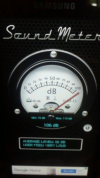
Get a sound level meter app for your phone so you can get a sense of how you listen. They don’t provide professional level of results, but close enough to see when the neighbors will start to complain.
 
Last edited:
With regard to the amplifier, you will gain little in terms of sound pressure level. There are lots of benefits of a great amplifier with power to spare, but playing it louder isn’t one of them.

A 200 watt amp will add a little more than 1dB. 240 will add a little less than 3 dB, while 380 will add about 4dB.

Regardless, you are capable of reaching the hearing loss zone without damaging the speakers, and additional power should be considered for other reasons, not purely more SPL.

EDIT: The cops ain’t coming any faster at 106 dB than at 104 dB. :biggrin:
 
Last edited:
Some calculations:

The Sonus Faber Sonetto III have a sensitivity of 89 dB. So at 1 watt at 2 meters, you will hear 83 dB, which is loud. (6dB loss for doubling the distance)

Every doubling of power means a 3 dB increase.

2 watts at the same distance = 86 dB

4=89
8=92
16=95
32=98
64=101
128=104 This is about where your amplifier gets close to clipping

Somewhere around 106 dB is where the speaker begins to fail.

100 dB may cause hearing loss with 15 minutes of exposure.

Opinion: Turn it up. Your room will sound awful at 95dB, stuff will rattle off the shelves, the cops will be at your door, and your lease will be terminated.

Get a sound level meter app for your phone so you can get a sense of how you listen. They don’t provide professional level of results, but close enough to see when the neighbors will start to complain.
Whenever I read about how someone likes to listen at 100db+ I just laugh. I guess if you live in the country and don’t care at all about your hear go ahead and listen away
 
With regard to the amplifier, you will gain little in terms of sound pressure level. There are lots of benefits of a great amplifier with power to spare, but playing it louder isn’t one of them.

A 200 watt amp will add a little more than 1dB. 240 will add a little less than 3, while 380 will add about 4dB.

Regardless, you are in hearing loss zone, and additional power should be considered for other reasons, not purely more SPL.

EDIT: The cops ain’t coming any faster at 106 dB than at 104 dB. :biggrin:
I'm interested in the other reasons. Can you direct me toward some reading material that will address this?
 
I'm interested in the other reasons. Can you direct me toward some reading material that will address this?
This starts to tread on turf that brings out strong opinions (and those, IMHE, are best avoided, especially on the ‘General’ forum). But you can search terms like dynamic reserve and transient audio peaks if this a rabbit hole you want to enter.

From where I sit, live with the amp you have until you hear a flaw, then find an amp that solves that problem. Or if you have money burning a hole in your pocket, buy whatever appeals. My favorite amps both run Class A at 25 watts, but then, I run them within efficient speakers and don’t like things really loud.
 
Last edited:
I'm interested in the other reasons. Can you direct me toward some reading material that will address this?

With your speakers and at a normal listening distance of 10-12 feet, 4 watts (continuous) will deliver an SPL of around 90dB. With your amp, that leaves more than 15dB of headroom/reserve power for dynamic transients (actually more, but with a bit of additional distortion).

Opinions vary, but one of my considerations when matching amps and speakers is the ability of the amp to provide 12-15dB of headroom at the loudest SPL (averaged level) at which I ever want to listen on an extended basis. In my case, that's about 90dB. So, at least upon a quick look, your amp/speaker combination would meet my criteria.

For every 3dB of SPL, you need double the power. So, if you want to listen at an average SPL of 93dB instead of 90, you would need 8 watts instead of 4. If you want to maintain 15dB of headroom while listening at 93dB, you would need a 300 watt amp instead of 150.

As another member said, get an SPL meter app on your smartphone and use it to see just how loud an average SPL of 90dB is!

The other main consideration in matching amp and speakers is the ability of the amp to deliver the current demanded by the speakers. At a cursory glance, your Arcam integrated shows a fairly decent capability in this regard. Performance of the Arcam power amp appears to be similar, and therefore is not likely to perform any better than your integrated amp, at least on this dimension.
 
Nice summary and rule of thumb, @spark1.

We are in agreement that knowing the preferred listening level is key. This will be different for different types of music and different moods. I took several readings over several weeks, and still check now and again.
 
With your speakers and at a normal listening distance of 10-12 feet, 4 watts (continuous) will deliver an SPL of around 90dB. With your amp, that leaves more than 15dB of headroom/reserve power for dynamic transients (actually more, but with a bit of additional distortion).

Opinions vary, but one of my considerations when matching amps and speakers is the ability of the amp to provide 12-15dB of headroom at the loudest SPL (averaged level) at which I ever want to listen on an extended basis. In my case, that's about 90dB. So, at least upon a quick look, your amp/speaker combination would meet my criteria.

For every 3dB of SPL, you need double the power. So, if you want to listen at an average SPL of 93dB instead of 90, you would need 8 watts instead of 4. If you want to maintain 15dB of headroom while listening at 93dB, you would need a 300 watt amp instead of 150.

As another member said, get an SPL meter app on your smartphone and use it to see just how loud an average SPL of 90dB is!

The other main consideration in matching amp and speakers is the ability of the amp to deliver the current demanded by the speakers. At a cursory glance, your Arcam integrated shows a fairly decent capability in this regard. Performance of the Arcam power amp appears to be similar, and therefore is not likely to perform any better than your integrated amp, at least on this dimension.
 
You are worrying way too much. The speaker manufacturer is telling you that they recommend an amplifier between 50 and 250 watts. This is a general recommendation, not a "power rating." If you are buying SFs, you are well up the speaker food chain, and the company is fairly certain that the end user's "turn it to 11 days are over. The rule here is common sense. If it sounds bad, turn it down.
My speakers are somewhat similar to yours, but the manufacturer used a "power rating" number, 150 watts. I never particularly found that system useful, much preferring the amplifier size recommendation. 25 years in the industry and this system still makes no sense.
My speakers are somewhat similar to yours. I've run them on a 13 watt single ended tube amp, all the way up to 600 watt monoblocks. 20 some years later, they are still with me, and still doing their job. They did their longest stint on a 250 watt Bryston 4BST. I've got kind of a thing for big amps on small speakers. But the term "big" is a bit of a misnomer. It's not about a lot of watts. It's abouta high quality power supply and a well built outputsection. . My current amplifier is "only" 100 watts, but it exerts very nice controloverthe speakers. It's going to be here a while, it just flat out sounds good. Your Arcam is just fine in that regard, far better than most.

As people have been saying, buying power to play louder doesn't work. Buying better to sound better does, and you have largely done that. It would seem to me to be a really nice combo. Worry less, enjoy more. If it sounds bad, turn it down.
 
Suggest you try a different amplifier as you need to hear how they can change the way the system sounds. We have a group that gets together regularly and frequently someone will bring an amp of some sort, phono, power, receiver(tube) for folks to hear. Since you are right behind me, drop by next time we get together and we can try a few different amps so you can get an idea about listening to them so you can pick one that sounds best with your speakers.

between now and then, just crank up the volume and enjoy because you are not using much of the amp and the speakers cant even tell they have a signal coming to them. Your rig is less than idling at 80dB. Get to 90-95 and notice the clean sound is still there.
 
Suggest you try a different amplifier as you need to hear how they can change the way the system sounds. We have a group that gets together regularly and frequently someone will bring an amp of some sort, phono, power, receiver(tube) for folks to hear. Since you are right behind me, drop by next time we get together and we can try a few different amps so you can get an idea about listening to them so you can pick one that sounds best with your speakers.

between now and then, just crank up the volume and enjoy because you are not using much of the amp and the speakers cant even tell they have a signal coming to them. Your rig is less than idling at 80dB. Get to 90-95 and notice the clean sound is still there.
Look behind you.
 
Suggest you try a different amplifier as you need to hear how they can change the way the system sounds. We have a group that gets together regularly and frequently someone will bring an amp of some sort, phono, power, receiver(tube) for folks to hear. Since you are right behind me, drop by next time we get together and we can try a few different amps so you can get an idea about listening to them so you can pick one that sounds best with your speakers.

between now and then, just crank up the volume and enjoy because you are not using much of the amp and the speakers cant even tell they have a signal coming to them. Your rig is less than idling at 80dB. Get to 90-95 and notice the clean sound is still thereLook behind you.
 
Last edited:
Your Arcam is just fine in that regard, far better than most.
Suggest you try a different amplifier as you need to hear how they can change the way the system sounds.
I think these two comments are important because they point to the fact that you are already in the land of good SQ and the changes you make are going to be small refinements based on personal preference and listening tastes. Wholesale improvements are unlikely to happen in the amp/speaker combination. You may get more improvement by looking at your sources.

Enjoy the sublime sound.
 
Whenever I read about how someone likes to listen at 100db+ I just laugh.
When we sit down to listen peaks are often above 100db.
I guess if you live in the country
Yep
and don’t care at all about your hear
Noise exposure limits for 100db unprotected is 15 minutes. Listening to one side of some vinyls is just barely past that, with peaks a little above 100db all is good.

But I get many like to be nannies, kind of like warnings about tube amps that go around murdering people that work on them :blah::blah::blah:
 
You are worrying way too much. The speaker manufacturer is telling you that they recommend an amplifier between 50 and 250 watts. This is a general recommendation, not a "power rating." If you are buying SFs, you are well up the speaker food chain, and the company is fairly certain that the end user's "turn it to 11 days are over. The rule here is common sense. If it sounds bad, turn it down.
My speakers are somewhat similar to yours, but the manufacturer used a "power rating" number, 150 watts. I never particularly found that system useful, much preferring the amplifier size recommendation. 25 years in the industry and this system still makes no sense.
My speakers are somewhat similar to yours. I've run them on a 13 watt single ended tube amp, all the way up to 600 watt monoblocks. 20 some years later, they are still with me, and still doing their job. They did their longest stint on a 250 watt Bryston 4BST. I've got kind of a thing for big amps on small speakers. But the term "big" is a bit of a misnomer. It's not about a lot of watts. It's abouta high quality power supply and a well built outputsection. . My current amplifier is "only" 100 watts, but it exerts very nice controloverthe speakers. It's going to be here a while, it just flat out sounds good. Your Arcam is just fine in that regard, far better than most.

As people have been saying, buying power to play louder doesn't work. Buying better to sound better does, and you have largely done that. It would seem to me to be a really nice combo. Worry less, enjoy more. If it sounds bad, turn it down.

I think these two comments are important because they point to the fact that you are already in the land of good SQ and the changes you make are going to be small refinements based on personal preference and listening tastes. Wholesale improvements are unlikely to happen in the amp/speaker combination. You may get more improvement by looking at your sources.

Enjoy the sublime sound.
I'm currently using primarily a Bluesound Node 2i. Any suggestions?
 
Back
Top Bottom