• The move to the new server is done. There are some software and database maintenance updates in process. This has us passing the hat around to help out. We appreciate any donations. Seriously, even a dollar helps. The payment page may be found here - https://www.audiokarma.org/support.html

Amplifier power/distortion

CopperWizard

Super Member
I was wondering which is more ideal, sound wise. Say I am driving a high sensitivity (100+ db) speaker that is 16 ohm nominal with a 4 ohm output rated amp such as the Magnavox console amplifiers. The sound is awesome with no distortion that my ears find offensive, at a level that doesn't run out of steam but can annoy the neighbors. The resistance mismatch to my knowledge means that the amp isn't making full power. Option A; Keep it as is. Option B; include a resistor in line with the speaker, adequate resistance so the amp sees its 4ohms. Any thoughts, besides the wasted power into the resistor which becomes heat. Does it make for a cleaner sound? The amp is a 142bc mono 6v6 (x4) push pull (parallel push pull kind of.) Or maybe amp topology doesn't or does matter. Maybe impedance swing of speaker matters too, I don't know.
 
Register to hide this ad
resistors will only make the situation worse. The only proper fix for that is

1) get 4 ohm speakers
2) replace the output transformers with something that has a 16 ohm tap

thats it.
 
I was wondering which is more ideal, sound wise. Say I am driving a high sensitivity (100+ db) speaker that is 16 ohm nominal with a 4 ohm output rated amp such as the Magnavox console amplifiers. The sound is awesome with no distortion that my ears find offensive, at a level that doesn't run out of steam but can annoy the neighbors. The resistance mismatch to my knowledge means that the amp isn't making full power. Option A; Keep it as is. Option B; include a resistor in line with the speaker, adequate resistance so the amp sees its 4ohms. Any thoughts, besides the wasted power into the resistor which becomes heat. Does it make for a cleaner sound? The amp is a 142bc mono 6v6 (x4) push pull (parallel push pull kind of.) Or maybe amp topology doesn't or does matter. Maybe impedance swing of speaker matters too, I don't know.
The suggested resistor is contradictionary and not making things better.
But the mismatch is of no concern if you don't miss the power. In fact it will improve the amp's
ability to dampen the lows ( a much debated issue). The amp don't mind.
 
Tube amps are the opposite of solid state amps.

On a SS amp, if you connect a 4 ohm speaker on a 8 ohm tap, you'll damage the amp. So the load resistance the amp sees can be increased, not reduced.
On a tube amp, if you do this, this is ok. But not the reverse.

In your case you do the opposite, 16 ohm speakers on a 4 ohm tap is not a good thing for the amp. The output tube will be more stressed.
 
16 ohm speakers on a 4 ohm tap is not a good thing for the amp. The output tube will be more stressed.

No

The suggested resistor is contradictionary and not making things better.
But the mismatch is of no concern if you don't miss the power. In fact it will improve the amp's ability to dampen the lows ( a much debated issue). The amp don't mind.

Yes
 
Distortion might go down if you add a resistor in parallel - but power to the speaker would drop considerably. Turn it back up and it'll likely be worse, possibly clipping at the previous level.
 
Option A; Keep it as is.

Yes - option A.

With speakers as sensitive as you describe, chances are you'll never miss the extra power nor ever need it. No need to complicate matters further which will in all probability will result in more harm than good, nor will damage come to the equipment by keeping everything just as it is.
 
Tube amps are the opposite of solid state amps.

On a SS amp, if you connect a 4 ohm speaker on a 8 ohm tap, you'll damage the amp. So the load resistance the amp sees can be increased, not reduced.
On a tube amp, if you do this, this is ok. But not the reverse.

In your case you do the opposite, 16 ohm speakers on a 4 ohm tap is not a good thing for the amp. The output tube will be more stressed.
???? Please explain.
 
On a solid state amp without OT, if you load it with a lower resistance than indicated, more current will flow through the power transistors and will increase heat or possible damage if there is no protection circuitry.

On a tube amp, the OT act as an impedance matching device.
For example, a 10k primary impedance is only valid at a certain frequency, and loaded with the right load at the right tap, i.e. 8 ohm speaker at the 8 ohm tap.

Now if you mismatch the speaker impedance with the tap, you change the primary impedance of the OT, therefore is some circonstances, increase or decrease the current in the output tubes.
However, speakers do not have a constant R/L/C and it is difficult to predict the behavior. Most of the time, to our human ears, it sounds better, or not.

That is why OTs have impedance taps, else the great engineers from the past would not have bothered adding more turns (so more copper,cost,weight, etc) into their output transformers if it was "just fine".
 
On a solid state amp without OT, if you load it with a lower resistance than indicated, more current will flow through the power transistors and will increase heat or possible damage if there is no protection circuitry.

On a tube amp, the OT act as an impedance matching device.
For example, a 10k primary impedance is only valid at a certain frequency, and loaded with the right load at the right tap, i.e. 8 ohm speaker at the 8 ohm tap.

Now if you mismatch the speaker impedance with the tap, you change the primary impedance of the OT, therefore is some circonstances, increase or decrease the current in the output tubes.
However, speakers do not have a constant R/L/C and it is difficult to predict the behavior. Most of the time, to our human ears, it sounds better, or not.

That is why OTs have impedance taps, else the great engineers from the past would not have bothered adding more turns (so more copper,cost,weight, etc) into their output transformers if it was "just fine".
Can you name a single solid state amp with an "8 ohm output " tap?
Normal Tube amps, prior to the primary tap of the output transformer, are essentially high voltage low current devices i.e. high output impedance voltage sources. This means that they can deliver relatively little power into low impedances. The output transformer acts to convert the output to a relatively low output impedance low voltage source so that the power match is better. Optimal power match occurs when the source and load impedances are equal- and in this case the maximum power is delivered to the load. However, if the load impedance is greater than the source impedance then the power match is sub optimal, although the voltage delivered to the load gets larger.
 
Say I am driving a high sensitivity (100+ db) speaker that is 16 ohm nominal with a 4 ohm output rated amp such as the Magnavox console amplifiers.
You are underloading the amplifier this way. That can cause abnormally high voltage swings on the primary (HV) side. If it gets too high, your OTs may arc internally causing the transformers to blow out. Its your call, but i wouldn't do it.
 
Running a tube amp with signal and no load, will result in a high voltage being developed at the primary of the output transformer, somewhat similar to how an automotive ignition coil, or a TV flyback transformer works. This can cause catastrophic amplifier failure, in the worst case.

That said, a 16 ohm load on the 4 ohm tap is not the same thing as no load, and is very unlikely to cause any damage to the amp. The current will still have a place to go. Actually, many speakers raise to well above 16 ohms around their resonant frequency, so if 4x the nominal load resistance was enough to damage an amp, then every tube amp driving a speaker at its resonant frequency would sustain damage.

The main problem with the impedance mismatch, is that the voltage delivered to the speakers will limit how much power the amplifier can produce into the higher load impedance. The benefit of this is a better damping factor, which will result in less frequency response error due to the varying impedance of a speaker with respect to frequency. I routinely run 8 ohm speakers on 4 ohm taps for exactly this reason.. the damping factor is double, and with many tube amps the damping factor is marginal to begin with and needs all the help it can get.

For those who are more technical minded, try and draw the load line for the higher impedance load. I have tried this before, and run into only a load line which isn't optimized for power output, not anything terrible.
 
Totally agree. A 1W, 100 ohm resistor across the output terminals (of each channel) is usually sufficient to prevent oscillation in a tube amplifier (with no load connected otherwise).

16 ohm speakers on a 4 ohm amplifier should pose no threat whatsoever.
 
Thanks, I had no idea. What is the age of the amp?

From 1967 - present.

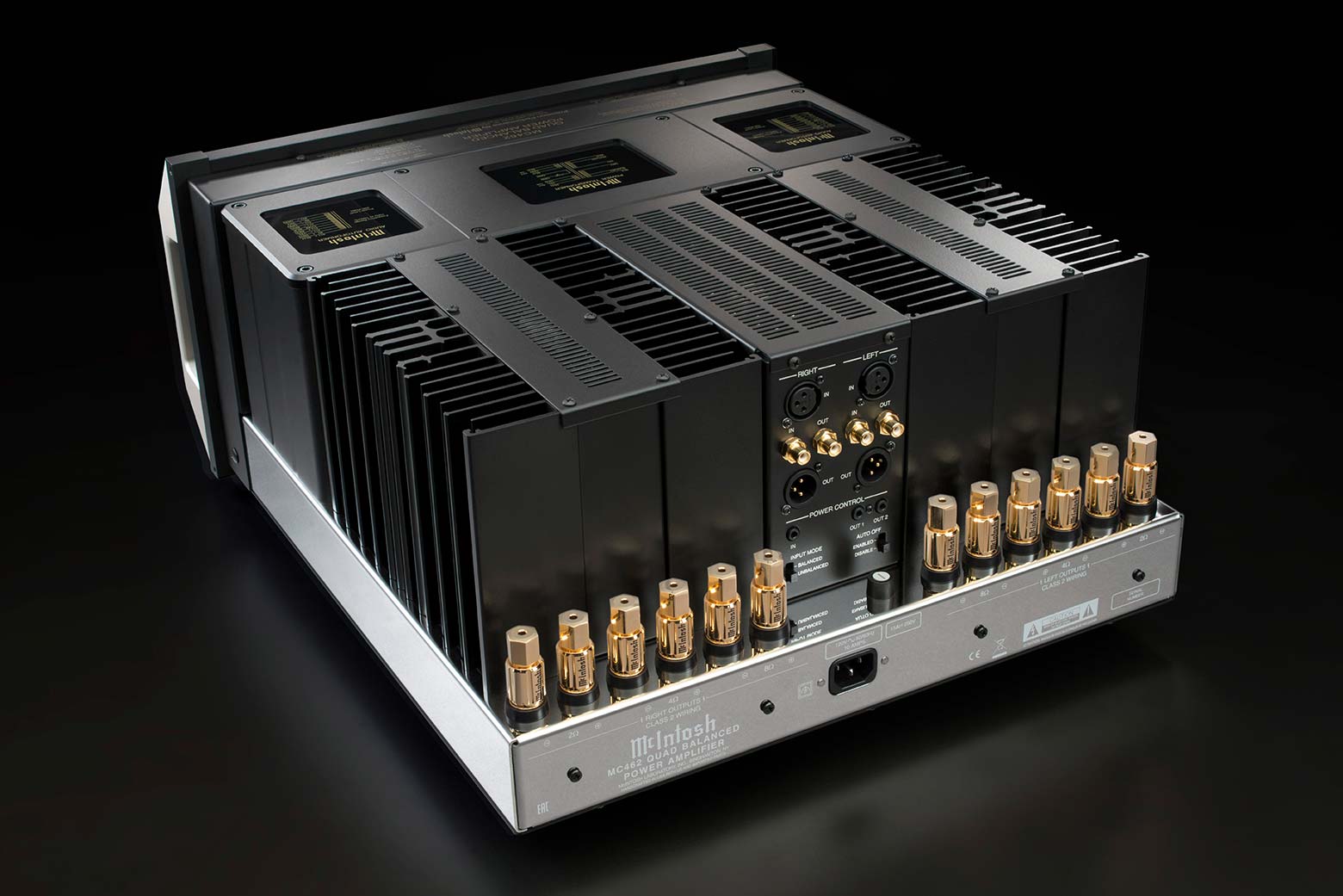
Here's a current model, the MC462.

MC462-Back-Angle-background.ashx
 
Totally agree. A 1W, 100 ohm resistor across the output terminals (of each channel) is usually sufficient to prevent oscillation in a tube amplifier (with no load connected otherwise).

16 ohm speakers on a 4 ohm amplifier should pose no threat whatsoever.
Do tube amps actually oscillate with no load? I know that removing a load can cause catastrophic failure due to the potential of the output transformer inductive kick breaking down output devices or transformer insulation , but do they actually oscillate if powered up with no load?
 
Do tube amps actually oscillate with no load? I know that removing a load can cause catastrophic failure due to the potential of the output transformer inductive kick breaking down output devices or transformer insulation , but do they actually oscillate if powered up with no load?

They can if they aren't well designed. Because the output transformer is included in a tube amplifier's negative feedback loop, certain load conditions can provoke certain amplifiers into instability and oscillation.

In general though, you're right, the primary danger with no load is the inductive kick you mention.
 
Do tube amps actually oscillate with no load? I know that removing a load can cause catastrophic failure due to the potential of the output transformer inductive kick breaking down output devices or transformer insulation , but do they actually oscillate if powered up with no load?

That has always been my understanding however, not necessarily are all tube amplifiers equally affected.

I'm fully prepared to defer to those with deeper knowledge on either point.
 
Back
Top Bottom