wyn palmer
Addicted Member
Interesting. Is it output transformer less? Why do they do this? What's the difference between the taps?From 1967 - present.
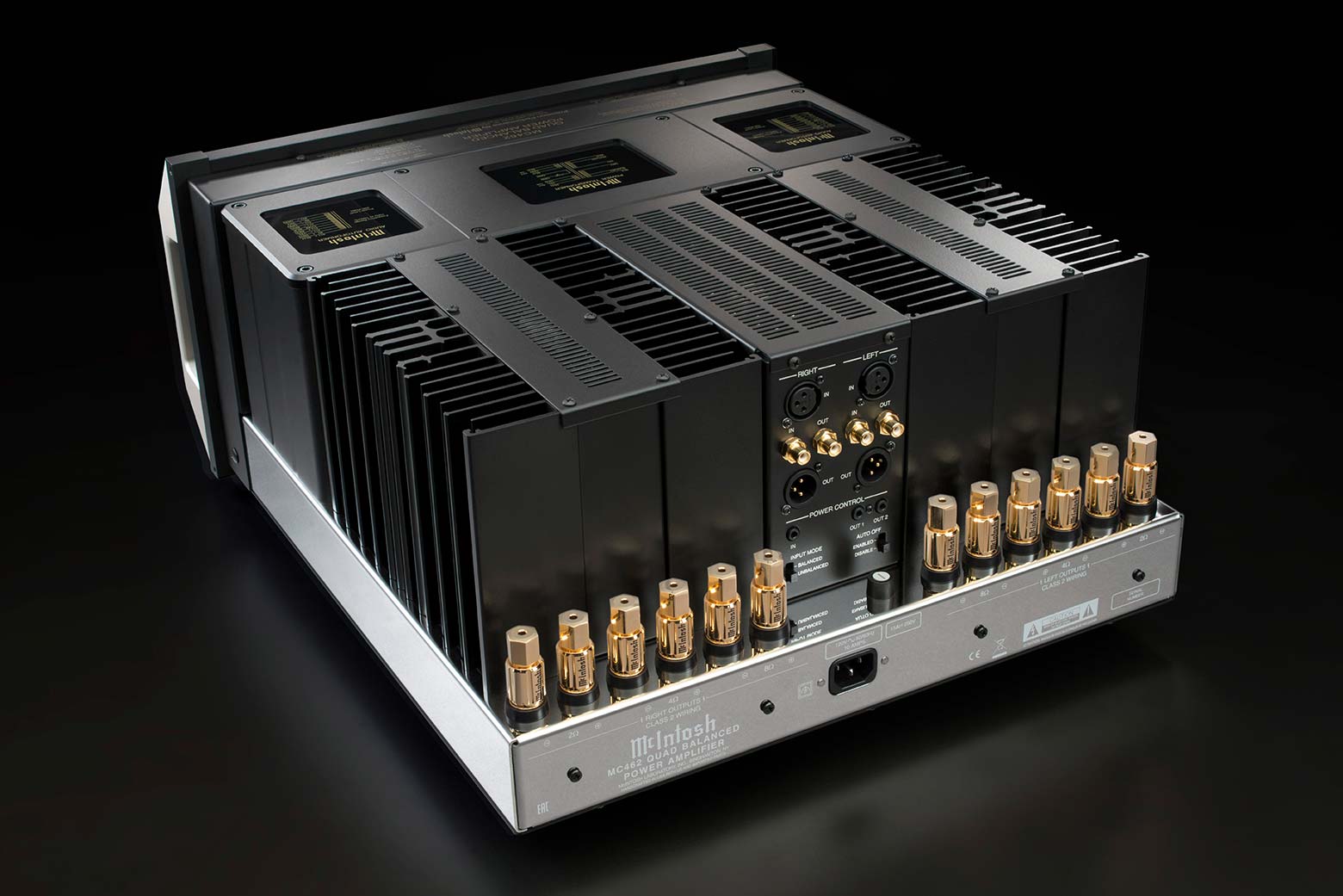
Here's a current model, the MC462.


Interesting. Is it output transformer less? Why do they do this? What's the difference between the taps?From 1967 - present.
Here's a current model, the MC462.
Yes, any poorly designed feedback amp can be induced to oscillate with unacceptable loads, and certainly not just tube amps.They can if they aren't well designed. Because the output transformer is included in a tube amplifier's negative feedback loop, certain load conditions can provoke certain amplifiers into instability and oscillation.
In general though, you're right, the primary danger with no load is the inductive kick you mention.

Interesting. Is it output transformer less? Why do they do this? What's the difference between the taps?


Interesting. Is it output transformer less? Why do they do this? What's the difference between the taps?
Actually I believe that running the tube amp with no load from power up is benign. Removing the load under drive causes a discontinuity in the current flowing through the secondary- which can cause an inductive voltage spike in order to not violate conservation of energy constraints (i.e. the current flow cannot instantaneously fall to zero) - and that in turn will cause a greater voltage spike at the primary winding if the output devices are not actively conducting current.Running a tube amp with signal and no load, will result in a high voltage being developed at the primary of the output transformer, somewhat similar to how an automotive ignition coil, or a TV flyback transformer works. This can cause catastrophic amplifier failure, in the worst case.
That said, a 16 ohm load on the 4 ohm tap is not the same thing as no load, and is very unlikely to cause any damage to the amp. The current will still have a place to go. Actually, many speakers raise to well above 16 ohms around their resonant frequency, so if 4x the nominal load resistance was enough to damage an amp, then every tube amp driving a speaker at its resonant frequency would sustain damage.
The main problem with the impedance mismatch, is that the voltage delivered to the speakers will limit how much power the amplifier can produce into the higher load impedance. The benefit of this is a better damping factor, which will result in less frequency response error due to the varying impedance of a speaker with respect to frequency. I routinely run 8 ohm speakers on 4 ohm taps for exactly this reason.. the damping factor is double, and with many tube amps the damping factor is marginal to begin with and needs all the help it can get.
For those who are more technical minded, try and draw the load line for the higher impedance load. I have tried this before, and run into only a load line which isn't optimized for power output, not anything terrible.
Ah! That explains it. Thank you. Very curious...It's an autotransformer, and it's intended to match the output stage of the amplifier, to the load. Since the speakers are coupled through a transformer, the amplifiers are technically not output transformerless. The difference between the taps, is some put out more voltage and less current for high impedance loads, others put out less voltage and more current into low impedance loads, net result being the same power. Why Mac still uses them?? I'll leave that question to someone else, I personally don't really get it
Actually I believe that running the tube amp with no load from power up is benign. Removing the load under drive causes a discontinuity in the current flowing through the secondary- which can cause an inductive voltage spike in order to not violate conservation of energy constraints (i.e. the current flow cannot instantaneously fall to zero) - and that in turn will cause a greater voltage spike at the primary winding if the output devices are not actively conducting current.

As I said- it's conservation of energy at work, so if no initial load and no current flow in the secondary, no problem...Overvoltage and flashes in an unloaded amp has nothing to do with nfb. It's stored magnetic
energy that suddenly has no proper way of release.
Think of it , one of the tubes are conducting ( as always in a push-pull amp), the current builds up
a magnetic field in the transformer. This field generates current in the secondary circuit. This current is
connected to the load. But if the load disappears the broken field acts exactly like an ignition coil
where the current in the coild is interrupted by the break points, the collapsing field causes
a voltage to appear, this voltage rises until somewhere the energy is consumed, usually in a flash
Same thing might happen in a tubeamp that has an output transformer, the flash will occur somewhere,
usually in the tube socket, but you never know. Any load ( 200ohm on the 8ohm circuit for instance)
will consume enough energy to prevent damage, and at the same time draw a negligable amount
in normal use.
Stability then ? Some amps might have stability problems, and may be worse when unloaded or
with a capacitive load. This will affect sound and might damage tweeters.
Transformerless amps has no stored magnetic energy and are unaffected when unloaded ( unless
they get unstable at this load), but no arcs .
If i have expressed unclear it might be that english is not my native language, fon't hesitate
to ask questions.

Well, my Rogue amps come with that warning. but I've accidentally operated them OC with no problems, and I've chatted with someone at Rogue about this and the issue is really about the disconnect.That makes a lot more sense, after all you can't interrupt current which isn't flowing in the first place. Tube amps often do come with a warning to never operate without a load though, so there's more to it than that, otherwise the warning would be don't connect or disconnect load when amp is on, or some such. I feel like output transformers "sing" a lot more under no load conditions too.

Overvoltage and flashes in an unloaded amp has nothing to do with nfb.
Stability then ? Some amps might have stability problems, and may be worse when unloaded or
with a capacitive load. This will affect sound and might damage tweeters.
Transformerless amps has no stored magnetic energy and are unaffected when unloaded ( unless
they get unstable at this load), but no arcs .
If i have expressed unclear it might be that english is not my native language, fon't hesitate
to ask questions.